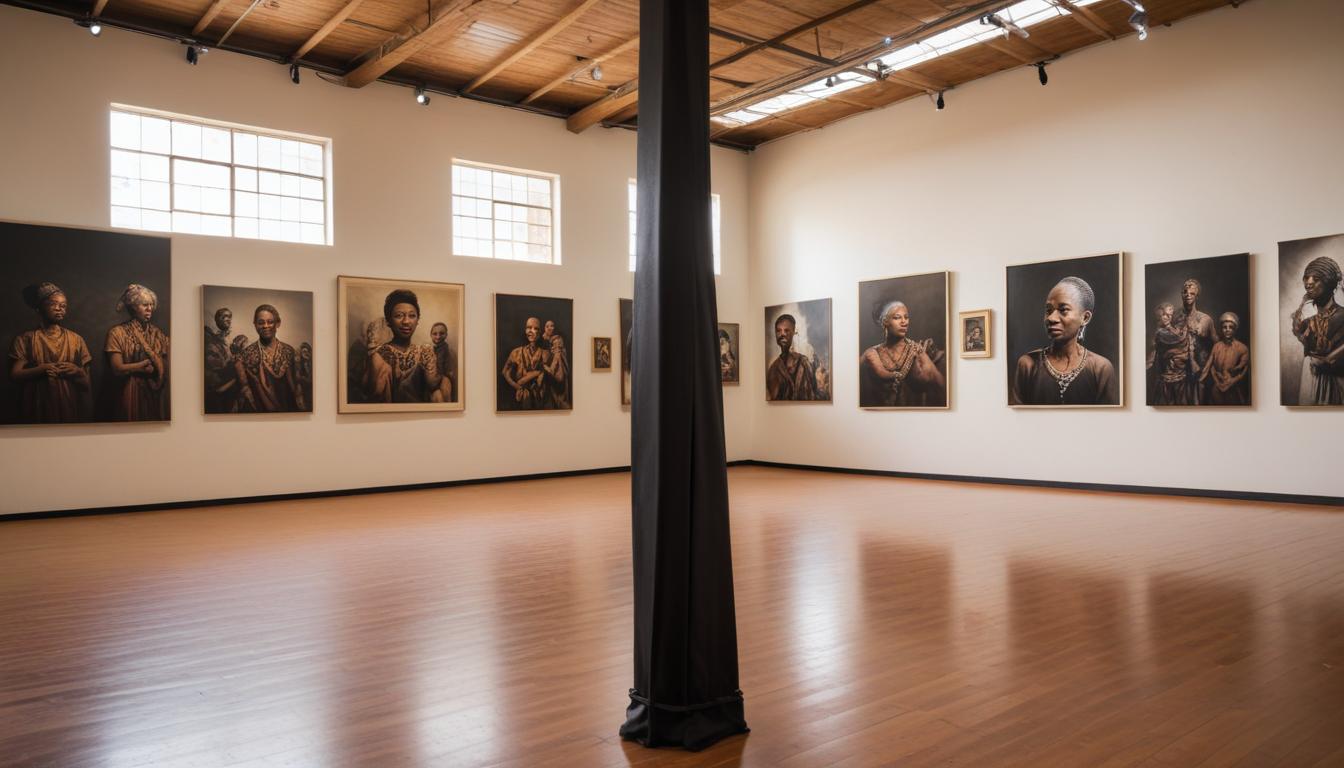
Who's Next? The emerging voices reshaping Johannesburg's cultural identity conversation
A new generation of historians, artists and curators are challenging how the city tells its own story—and they're doing it from Braamfontein to Soweto.
A new generation of historians, artists and curators are challenging how the city tells its own story—and they're doing it from Braamfontein to Soweto.
Walk into the Zeitz MOCAA on the Silo's ninth floor, and you'll notice something shifting. The conversations about Johannesburg's identity aren't happening exclusively in the institutional spaces anymore. They're happening in scrappy artist studios on Fox Street, in community halls across Soweto, and in the lecture theatres of Wits University's history department, where a cohort of researchers born after 1995 are asking questions their predecessors didn't think to ask.
This is the emerging wave reshaping how Johannesburg understands itself—and it looks markedly different from the gatekeeping culture establishment of previous decades. These are voices excavating forgotten narratives from the city's townships, interrogating the colonial archive, and refusing to accept sanitised versions of local history. They're the curators, writers, performers and documentarians who treat cultural identity not as a finished product but as an ongoing, contested conversation.
The infrastructure supporting them is still fragile. Funding remains elusive. Gallery hours are precarious. Yet momentum is building. Initiatives like the Soweto Museum Project, community-led initiatives in Braamfontein's creative districts, and university-backed residencies are creating spaces where younger cultural workers can experiment without the weight of inherited institutional hierarchies. The participation in local heritage festivals—which have grown to draw over 15,000 visitors annually across venues like the Market Theatre—speaks to genuine appetite for these fresh perspectives.
What distinguishes this generation is their refusal of singular narratives. They're not interested in telling one Johannesburg story. Instead, they're documenting the competing, overlapping histories that make the city what it is: migrant labour networks that built the mining economy, the intellectual traditions of Sophiatown, the radical history of Kliptown, the evolving identity politics of the inner city's regeneration. They're examining how ordinary residents understand their own neighbourhoods—not through the lens of architects or planners, but through lived experience and collective memory.
The impact is already visible in how cultural institutions are shifting programming. Smaller venues in areas like Marshalltown and Arts on Main are platforming these voices more regularly. Academic journals and podcasts focused on local history are gaining traction. Social media has democratised who gets to speak about Johannesburg's past.
What happens next depends partly on institutional support—whether galleries, universities and funders genuinely invest in nurturing this talent. But equally, it depends on whether the city's residents continue engaging with their own history as living, contested terrain rather than settled fact. For now, the conversation is open. That's progress.
This article was compiled by AI from the sources linked above and screened before publishing. See our editorial standards.
How does this story make you feel?
Spread the word
About this article
Published by The Daily Johannesburg
Daily brief
Free, in your inbox before 7am. Weekdays.
More in culture