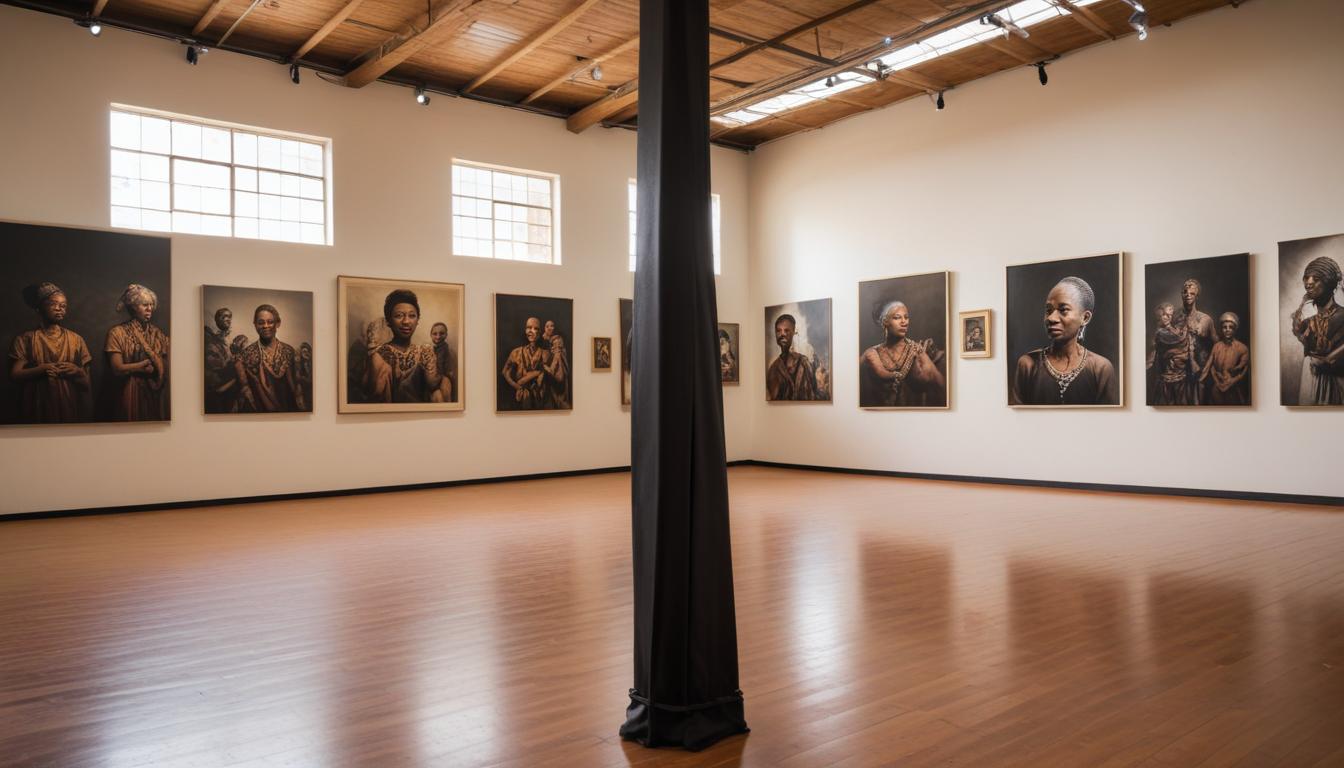
Walk through the Maboneng Precinct on a Friday evening and you'll witness something quietly revolutionary: a neighbourhood that, fifteen years ago, was largely abandoned industrial space now thrumming with creative energy. The transformation isn't accidental. It reflects a deliberate reclamation of Johannesburg's identity through art, one gallery opening, one exhibition, one conversation at a time.
The stats tell part of the story. The Johannesburg Development Agency has tracked over 120 formal art venues operating across the city's creative nodes, with gallery foot traffic in areas like Maboneng and the Arts on Main complex increasing by an estimated 40 percent since 2023. This isn't merely commercial activity—it's a reshaping of how the city sees itself and its future.
The Keyes Art Mile, anchored by the Goodman Gallery and Stevenson, continues to cement Johannesburg's position as Africa's contemporary art hub. Yet the real identity shift is happening in the interstices: in spaces like Fox Street's Artist Proof Studio, where emerging creatives work alongside established names; in the Apartheid Museum's provocative exhibitions that refuse easy narratives; in the smaller, quirkier venues tucked into Parkhurst and Rosebank that celebrate local experimental work.
What's remarkable is how these spaces are reclaiming Johannesburg's complicated history rather than erasing it. The city's gold-rush origins, its role as an anti-apartheid epicentre, its contemporary inequality—these aren't sanitised or hidden. Instead, they're examined, debated, and reimagined through art. The Museum of Africa on Market Street, alongside independent galleries focusing on township narratives and diaspora voices, has created a cultural conversation that's distinctly Johannesburg's.
Admission prices vary considerably—from free community exhibitions to upscale gallery openings—ensuring that the creative conversation, theoretically, extends across class lines, though access remains contested. Yet the commitment is visible: the Wits Art Museum's expanded programming, the community-focused initiatives at Blank Projects, and the growing number of artist-run spaces suggest a deliberate attempt to democratise cultural participation.
What's emerging is a city defining itself not by its past traumas or present contradictions alone, but by its refusal to look away from either. Johannesburg's gallery and museum scene reflects a city in active conversation with itself—messy, contested, but undeniably alive. That's the identity being forged in these spaces: not a polished, tourist-friendly version of Joburg, but a more honest one.
This article was compiled by AI from the sources linked above and screened before publishing. See our editorial standards.