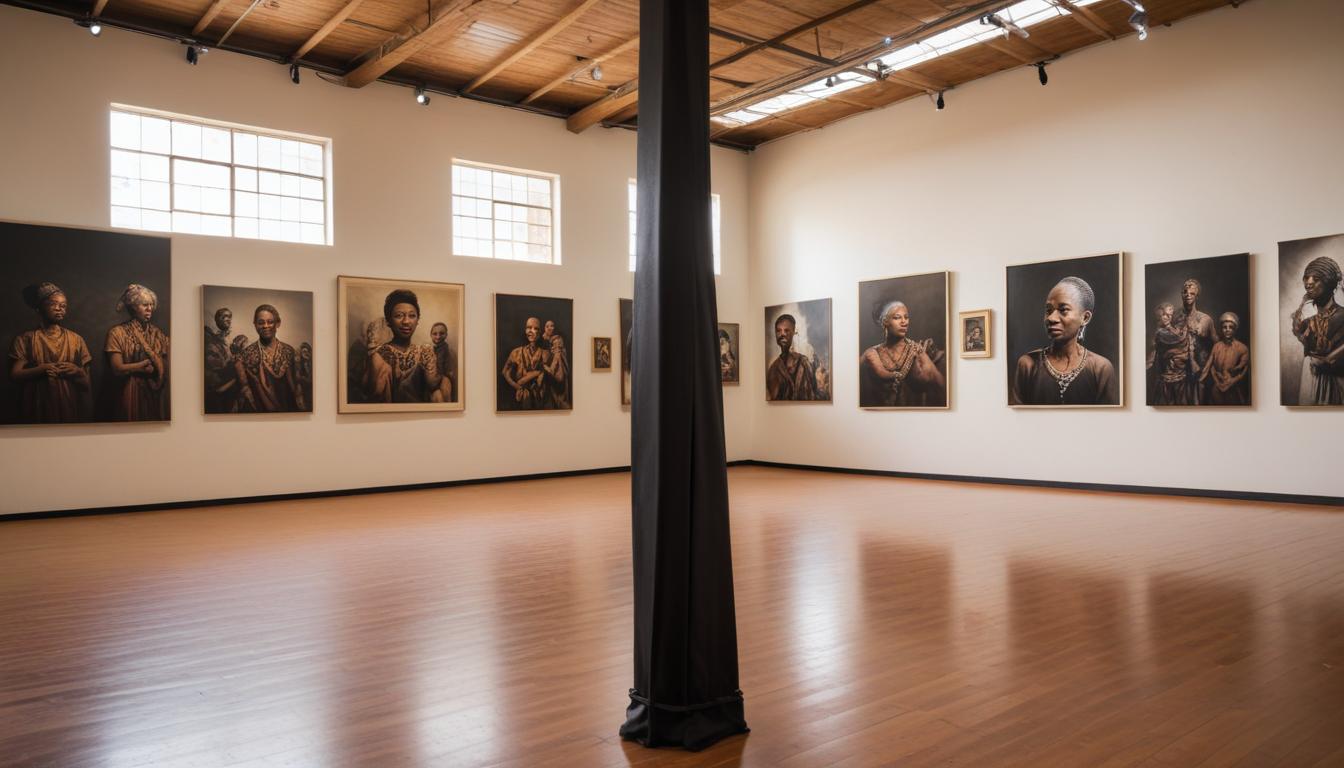
Walk through Maboneng Precinct on a Friday evening and you'll encounter a tableau that would have seemed impossible a decade ago: crowds spilling onto Fox Street, the air thick with anticipation, marquees glowing above converted industrial spaces. But this renaissance didn't materialise overnight. It emerged from the relentless work of theatre practitioners, choreographers, and cultural entrepreneurs who refused to accept that South Africa's biggest city was merely a financial hub.
The story begins in 2008, when property developer Jonathan Liebmann began acquiring derelict buildings along Fox Street and Kruger Street in the inner city. His vision attracted cultural operators like a beacon. By 2012, venues including The Joburg Theatre had already established themselves in Braamfontein, but Maboneng offered something different: raw space, low overhead, and a blank canvas for experimentation. Theatre collectives began occupying warehouses. Independent producers who couldn't afford Sandton's premium rates found homes here.
The Windybrow Arts Centre, rooted in Hillbrow since 1977, became a crucial catalyst, mentoring emerging artists and providing rehearsal space when commercial venues were prohibitively expensive—often charging between R150 and R350 per hour for studio rental. Meanwhile, grassroots organisations like the Market Theatre Foundation, still operating from its original Newtown location since 1976, continued developing local talent through workshops and public productions.
What distinguishes Johannesburg's current moment is the collaborative infrastructure these pioneers built. Theatre-makers, visual artists, and independent curators created networks rather than competing in silos. Open studios became common. Rent-sharing arrangements sustained multiple companies within single buildings. By 2024, Maboneng alone housed over 80 creative businesses, with performing arts accounting for roughly 30 percent.
The economic impact has been significant but uneven. Foot traffic to Fox Street increased 400 percent between 2015 and 2022. Yet gentrification pressures have displaced some of the original collectives—a tension that persists today. Rental costs have climbed from R3,000 to upwards of R12,000 monthly for modest studio spaces.
What remains constant is the ethos. Theatre-makers in Johannesburg continue operating on passion-driven economics rather than pure profit. Independent producers regularly stage productions at ticket prices between R80 and R250, making live performance accessible beyond the affluent northern suburbs.
As you sit in one of these venues—perhaps in a converted warehouse with original brick walls and industrial lighting—you're witnessing the legacy of people who believed that cities are built through culture, one performance at a time. That belief has fundamentally reshaped Johannesburg's identity.
This article was compiled by AI from the sources linked above and screened before publishing. See our editorial standards.