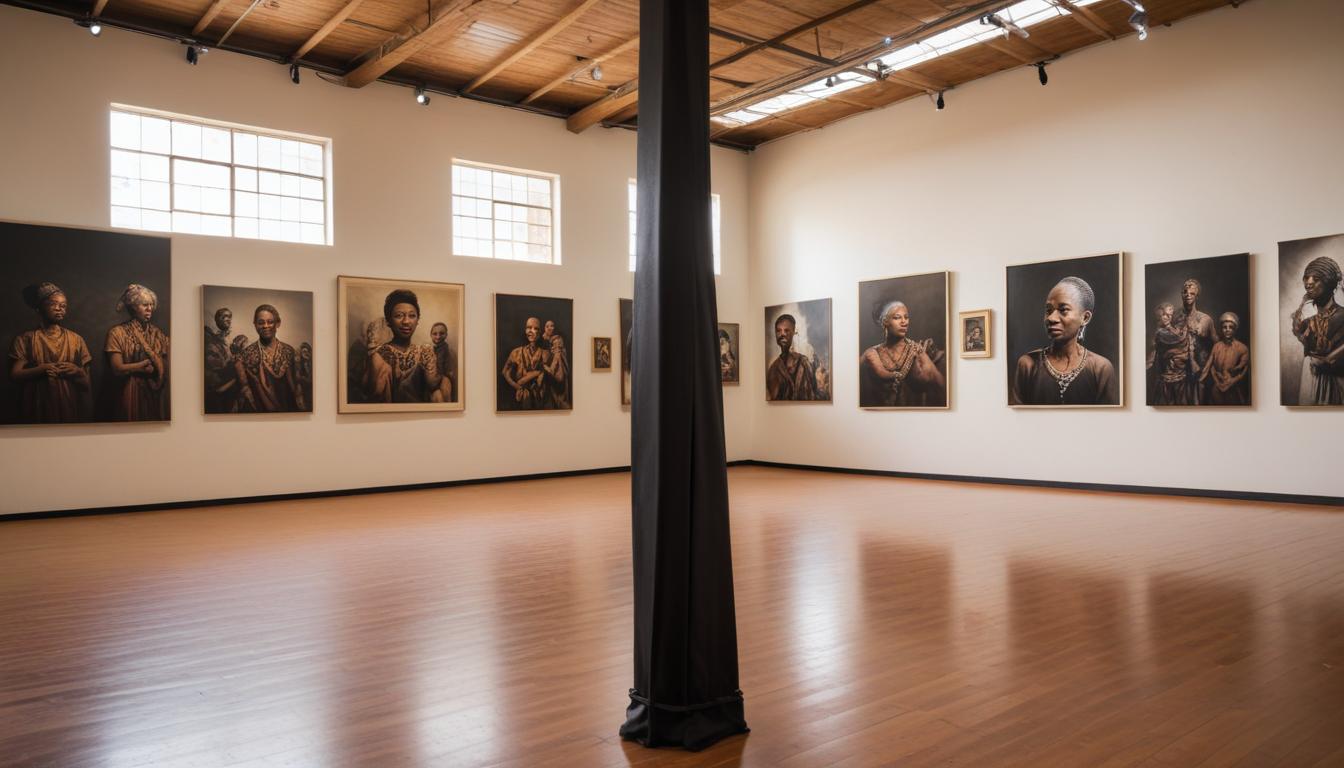
Walk down Fox Street in Braamfontein on any weekday afternoon and you'll find the old Textile House—a cavernous 1970s warehouse with industrial bones and peeling signage—unremarkable to most passersby. But inside, a dozen volunteers are wielding paint rollers and arguing passionately about sight lines for a main stage. By mid-July, this space will pulse with live music, installation art, and the kind of independent energy that has become rarer in Johannesburg's increasingly commercialised events landscape.
Resonance Festival, now in its third year, began as a conversation between four friends over coffee at Curiocity Café around the corner. What started as frustration with the city's festival circuit—dominated by corporate sponsorship and predictable programming—evolved into something more ambitious. The collective approached the Braamfontein Management District with a radical proposal: use vacant industrial space as a cultural commons.
"We wanted to prove that Johannesburg's creative economy doesn't depend on big money," explains one of the founding members, whose background spans theatre, visual art, and community organising. The team secured a five-year lease at a fraction of market rate, betting that activating neglected infrastructure would benefit the broader precinct.
The numbers tell a story of slow, organic growth. The inaugural event in 2024 drew 3,200 attendees across two days. Last year, that doubled to 6,400, with 45 percent attending from outside Johannesburg's northern suburbs. Ticket prices remain deliberately modest—R180 for day passes, R320 for full weekend access—keeping it accessible while covering artist fees and production costs.
What distinguishes Resonance from the Summers Series at Melrose Arch or even the more established AfrikaBurn model is its hyperlocal curatorial vision. Programming prioritises emerging South African artists, experimental performance, and participatory workshops. The 2024 iteration featured a collaborative sound installation with students from the University of Johannesburg's music technology programme, and a textile revival project that taught traditional weaving to teenagers from surrounding townships.
The collective has grown to include graphic designers, sound engineers, three full-time coordinators, and a rotating roster of 80-plus volunteers. Corporate sponsorship remains minimal—last year's budget of R850,000 came largely from ticketing, with modest grants from the Goethe-Institut and the British Council.
As Johannesburg grapples with urban decay and cultural brain drain, Resonance represents something quietly radical: the insistence that a world-class city is built not by municipal decree or developer money, but by creative people claiming space and saying yes to possibility.
This article was compiled by AI from the sources linked above and screened before publishing. See our editorial standards.