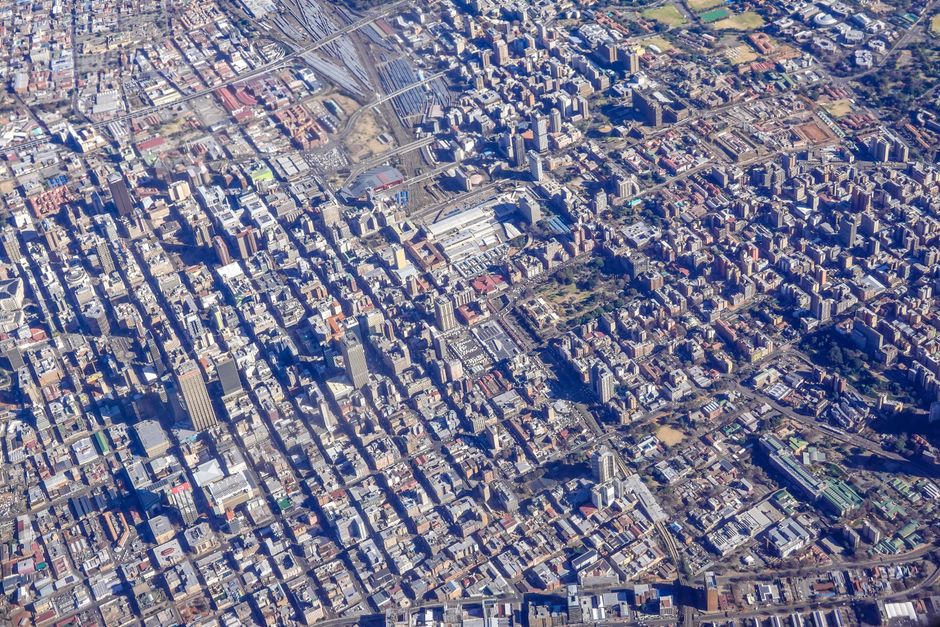
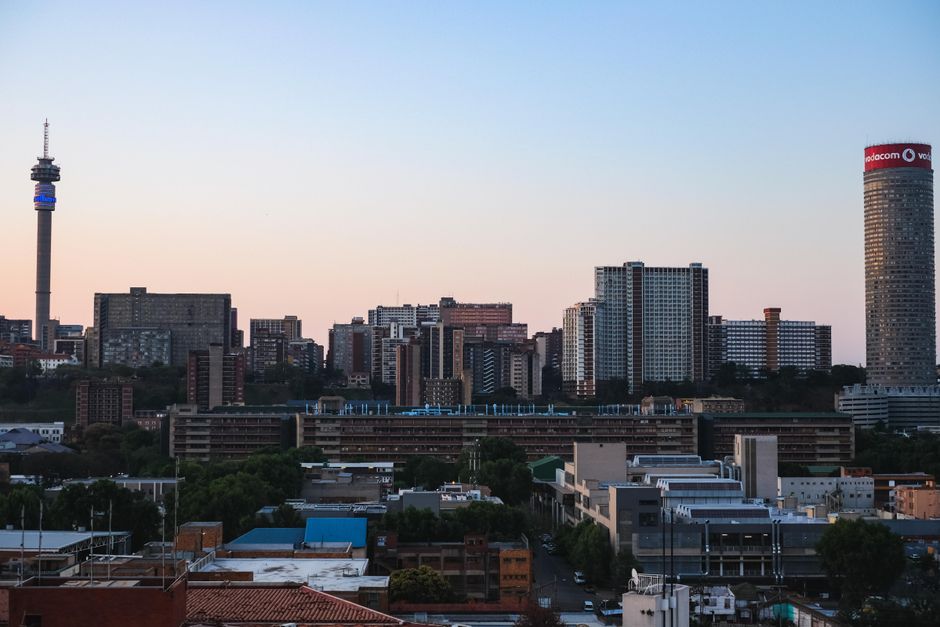
The commercial property market rarely makes headlines, yet it functions as one of South Africa's most honest economic barometers. Right now, what's happening in Johannesburg's office parks is sending mixed but important signals about investor confidence, capital flows, and the country's trajectory.
Over the past 18 months, vacancy rates in prime office space along the Sandton and Rosebank corridors have tightened measurably. While exact figures vary by source, commercial agents report that Grade A office space—particularly in newer, well-maintained buildings—has become harder to secure. A square metre of premium office space in the Sandton CBD currently commands between R220 and R280 per annum, representing steady demand despite broader economic uncertainty.
This matters because it reflects real capital allocation decisions. When multinational firms, local financial services companies, and tech startups commit to long-term leases, they're betting on stability. The fact that Johannesburg's office market hasn't collapsed—as some predicted during the 2020-2022 period—tells us that major employers still believe in the city's fundamentals.
However, the picture is nuanced. That same tightness in Grade A space coexists with significant oversupply in older, lower-grade office stock. Buildings in secondary locations, or those lacking modern amenities like reliable backup power and water systems, sit largely vacant. This divergence reveals how South Africa's rolling blackouts and infrastructure challenges are reshaping investment geography. Businesses paying premium rates demand reliability, pushing capital concentration into the most resilient properties.
International investment flows have also shifted. Previously, Middle Eastern and European investors dominated Johannesburg's commercial property market. Recently, local pension funds and insurance companies have become more active acquirers, suggesting that domestic capital—often more risk-averse—is finding the valuations attractive enough to justify deployment.
What does this mean for the broader economy? Office market tightness typically precedes or accompanies economic growth, as businesses expand hiring and footprints. Yet the simultaneous glut of secondary stock hints at structural, not cyclical, challenges. South Africa's energy crisis and municipal service failures are forcing a geographic and quality-based recalibration of commercial real estate.
For investors watching from afar, Johannesburg's office market offers a clear lesson: South Africa remains investable, but only for those targeting resilience. The capital flowing into modern, well-managed properties in Sandton and Rosebank is voting with confidence in those specific assets—not necessarily in the economy as a whole. That distinction matters enormously for predicting what happens next.
This article was compiled by AI from the sources linked above and screened before publishing. See our editorial standards.