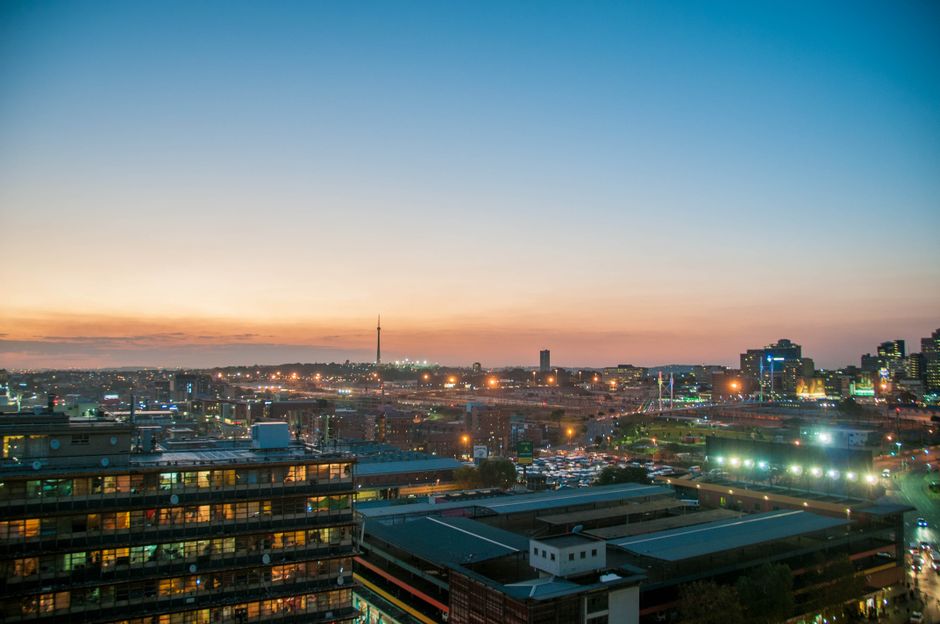
How Johannesburg's Housing Crisis Became the Crisis We Live With Today
Decades of policy missteps, from apartheid-era spatial planning to failed post-1994 delivery targets, have created the perfect storm of urban dysfunction.
Decades of policy missteps, from apartheid-era spatial planning to failed post-1994 delivery targets, have created the perfect storm of urban dysfunction.
The housing crisis gripping Johannesburg did not emerge overnight. It is the product of three decades of policy decisions, missed opportunities, and systemic failures that have transformed the city's urban landscape into a patchwork of extremes—gleaming northern suburbs alongside sprawling informal settlements that house over 1.2 million residents.
The roots run deep into apartheid's spatial engineering. The Group Areas Act forcibly relocated hundreds of thousands of Black residents to the city's periphery—Alexandra, Soweto, and the East Rand—creating vast distances between home and employment. When democracy arrived in 1994, the new government inherited a fractured city, with prime real estate in the CBD and northern areas inaccessible to the majority. The Reconstruction and Development Programme promised housing delivery on an unprecedented scale, but the reality disappointed. By 2000, fewer than 300,000 units had been built against targets of over 1 million.
The 2000s brought new complications. Property booms in areas like Sandton and Rosebank created a two-speed market. Middle-class aspirants could access mortgages, while the poorest remained locked out. Simultaneously, the City's planning departments failed to integrate housing development with public transport infrastructure. The Gautrain, completed in 2010, served commuters from Sandton to OR Tambo, but did little to address housing affordability for workers in Diepsloot or Soweto.
The turning point came around 2008, when land invasions accelerated across Johannesburg—in Vlakfontein, Thembelihle, and along the M1 corridor. These were not random; they reflected a desperate population excluded from formal markets. Average house prices in Johannesburg surged from under R400,000 in 2008 to over R1.2 million by 2020, pricing out millions.
Recent policy pivots—including the City's housing strategy updates and the Integrated Development Plan amendments—have attempted course correction. Initiatives promoting inner-city regeneration around the Braamfontein precinct and mixed-income developments near Johannesburg Station signal recognition that sprawl is unsustainable. Yet implementation remains sluggish, hampered by funding constraints and inter-departmental coordination failures.
The harsh truth: Johannesburg's housing dysfunction is not accidental. It reflects decades where planning followed profit rather than principle, where transport and housing were developed in silos, and where political will wavered when confronted with the scale of need. Understanding this history is essential—because every policy choice made today will echo through the next generation of Johannesburg residents.
This article was compiled by AI from the sources linked above and screened before publishing. See our editorial standards.
How does this story make you feel?
Spread the word
About this article
Published by The Daily Johannesburg
Daily brief
Free, in your inbox before 7am. Weekdays.
More in News