Walk through Melville on a Saturday morning and you'll encounter something increasingly rare in global megacities: a community actively reshaping its relationship with green space, not through top-down municipal planning, but through grassroots intervention and creative resilience.
This is what sets Johannesburg apart from London's manicured Hyde Park, New York's iconic Central Park, or Singapore's state-orchestrated Gardens by the Bay. Our city's outdoor living renaissance isn't scripted by heritage institutions or wealthy municipalities with centuries of preservation budgets. It's messy, evolving, and deeply rooted in how Johannesburg—a city born from mining excavation—has learned to reclaim and reimagine its relationship with land itself.
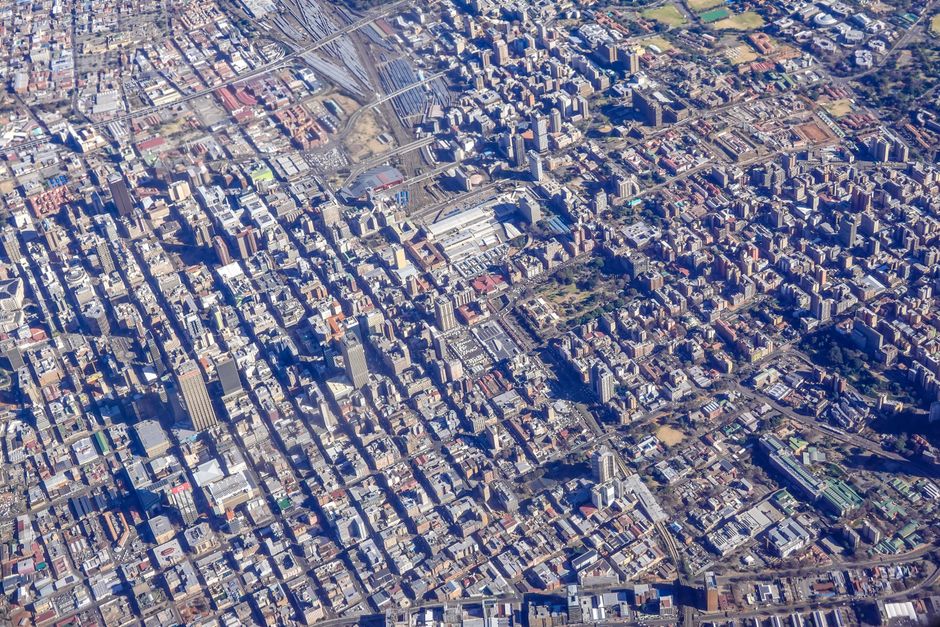
Consider the statistics. Johannesburg covers 1,645 square kilometres with approximately 6 million residents. Yet unlike established global capitals, roughly 40% of the city remains underdeveloped or transitional space—a legacy of apartheid-era planning and industrial extraction. Parks like Delta Park in Johannesburg's northern suburbs offer 120 hectares of indigenous woodland, yet remain vastly underutilised compared to equivalent spaces in established cities, reflecting the reality that access and safety perceptions still shape how residents use public green space.
What makes this unique is how community organisations like Johannesburg City Parks and Zoo, alongside informal initiatives in Braamfontein and Fordsburg, are recalibrating urban nature. The Mohlatsele Walking Trail, stretching across the southern ridge, wouldn't exist in cities with rigid zoning laws. Pop-up gardens in Maboneng's alleyways—cultivated by residents, not curated by corporations—represent a form of urban greening virtually impossible in heavily commodified spaces like Miami or Dubai.
Prices tell another story. A family picnic in a Johannesburg park costs significantly less than equivalent experiences in comparable global cities. Yet this accessibility masks a deeper truth: outdoor living here requires negotiation with infrastructure gaps, water constraints, and safety considerations that fundamentally differ from London or Barcelona's leisurely park culture.
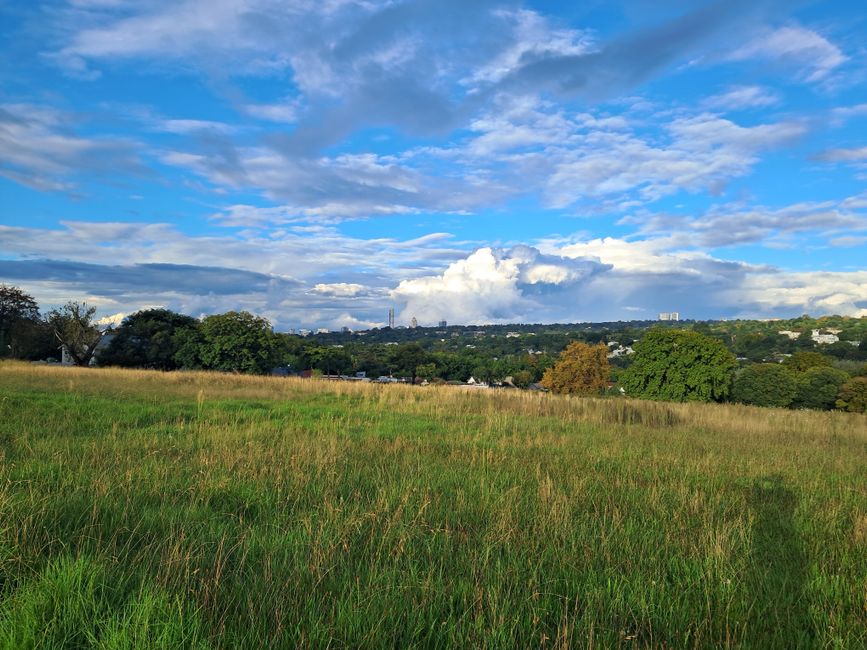
The city's altitude—at 1,753 metres above sea level—creates distinct seasonal patterns and a high-altitude light quality that shapes how residents experience outdoor spaces. Winter afternoons in Emmarentia Dam or along the Braamfontein Spruit offer an atmospheric clarity rarely found in lower-elevation global cities.
Johannesburg's emerging green space identity isn't about competing with established park capitals. It's about a city unlearning extractive relationships with land and experimenting with what urban nature can become when shaped by necessity, community creativity, and geographic specificity rather than heritage preservation or corporate branding.
This article was compiled by AI and screened before publishing. See our editorial standards.