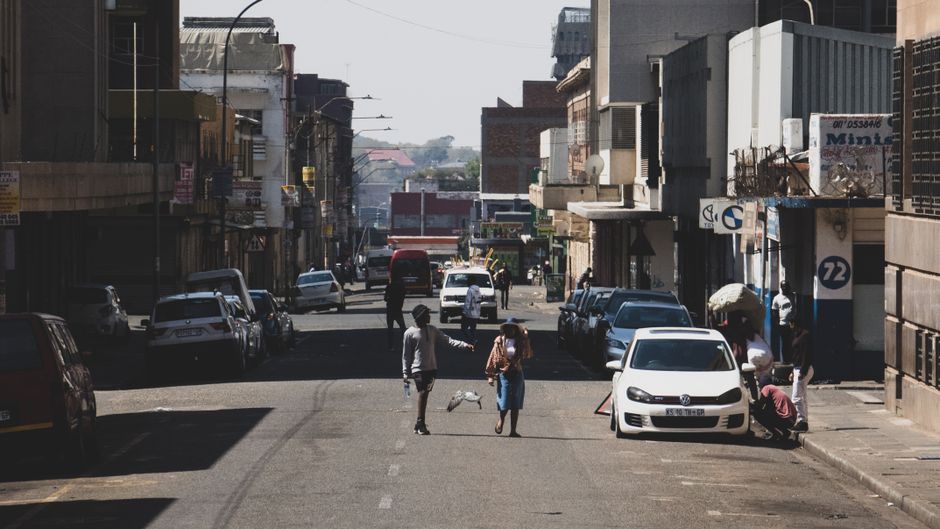
Johannesburg's Fourth of July has never been about fireworks or burgers. Today, as temperatures soar across the hemisphere and cities from Washington to Philadelphia cancel outdoor festivities, the city's cultural venues are packed with a different kind of celebration entirely—one engineered by a tight network of artists, curators, and community organisers who saw opportunity in an American holiday to tell their own stories.
The phenomenon started small. Five years ago, a cluster of galleries in the Arts on Main building in Maboneng began using July 4th as a loose anchor for programming that had nothing to do with American patriotism. Instead, they scheduled exhibitions, film screenings, and performances that tackled post-colonial identity, migration, and resistance. What began as aesthetic coincidence became deliberate strategy. Today, the date draws thousands of visitors to venues across the inner city precisely because it offers an alternative to the commercial spectacle happening elsewhere globally.
"We realised we could hijack the date," said one programmer at the Maboneng Precinct, which now hosts six major venues within a four-block radius. That wasn't hyperbole. From 10am onwards, the Goodman Gallery on Eastwood Street is showing work that addresses displacement in the city's gentrifying neighborhoods. Two blocks away, at the Market Photo Workshop on Newtown's Harrow Road, archivists are presenting documentation from the anti-apartheid movement—material that directly challenges the narrative of freedom that July 4th conventionally represents. The Joburg Art Fair, held at venues throughout the precinct, runs through tomorrow and features 45 galleries, many curated specifically for today's programming.
Who Built This and How It Grew
The infrastructure behind these events traces back to the Johannesburg Development Agency's cultural activation initiatives, launched in 2015. That program pumped R12 million annually into supporting independent galleries and artist collectives in the inner city—not to create tourist attractions, but to establish economic anchors that could stabilise historically abandoned neighborhoods. The strategy worked differently than anticipated. Rather than gentrifying the area into a sanitised precinct, the funding allowed artists to stay and define the terms of cultural production themselves.
Venues like Project Space and blank projects, both operating since 2017 in converted warehouse spaces, became incubators for the July 4th programming model. Their founders—mostly South African and immigrant artists who couldn't afford studio space elsewhere—began collaborating on shared calendar planning. By 2021, the coordination became formalised through the Maboneng Arts Collective, an umbrella organisation that now manages scheduling across nine independent venues and negotiates directly with the city on infrastructure and security.
The numbers reveal scale. Last year's July 4th events attracted 18,000 visitors across Maboneng and surrounding precincts, according to footfall data collected by the Johannesburg Tourism Company. That's not trivial for a city of 5.6 million. Most visitors were South African—roughly 70 percent from the greater Gauteng region and 30 percent from across the country. Only 12 percent came from overseas, despite international marketing efforts. This isn't a date designed to pull tourists. It's designed for people who live here.
What's Happening on the Ground Today
The schedule speaks to intentionality. The Stevenson gallery on Main Road is opening a retrospective of Zanele Muholi's photographic work addressing queer identity in South Africa. At Circa Gallery nearby, a collective of young artists is installing an interactive piece about housing precarity in Alexandra township. These aren't neutral exhibitions tagged to an American holiday. They're precisely calculated interventions using the calendar space to gather attention.
Admission to most venues runs between R80 and R150, with several offering free entry until 2pm. Food vendors from across the city—many of them informal operators who've formalised partnerships with venues—will set up along Fox Street through tomorrow. The Maboneng Precinct anticipates congestion; the area's three main streets will have extended parking and additional taxi marshals on duty from 6am through midnight.
If you're heading out today, start in Maboneng before noon. The light is best then, and the crowds manageable. Work your way east towards Newtown if you want archival material and historical depth. By evening, the energy shifts toward performance—multiple venues host DJ sets and live music starting at 6pm. This isn't a destination for spectacle. It's for people who want to understand how a city's cultural infrastructure actually gets built.