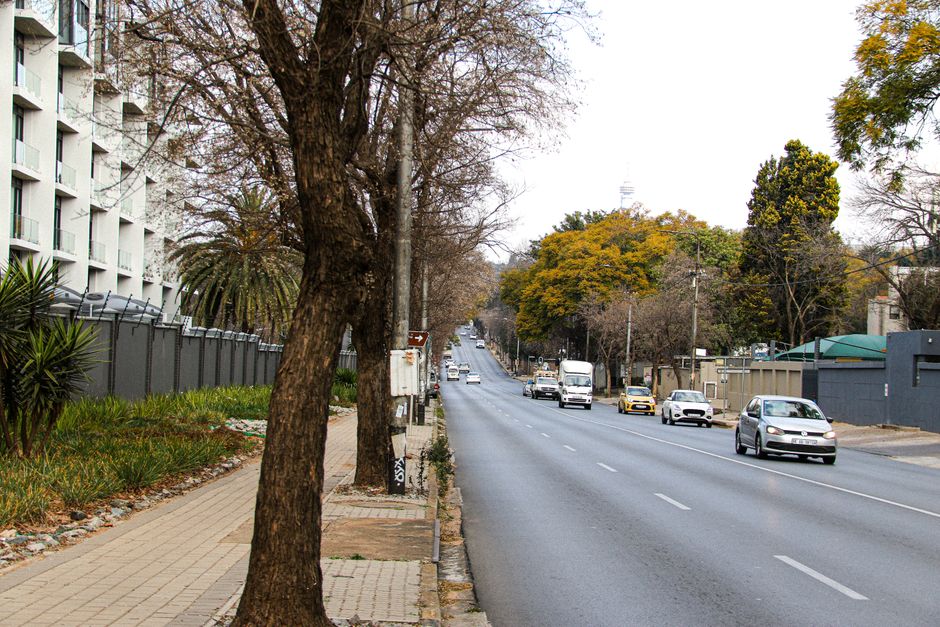
For years, Bryanston occupied an awkward middle ground in Johannesburg's property hierarchy—too expensive for entry-level buyers, yet perpetually outshone by Sandton's glittering credentials and Fourways' expansion momentum. But that narrative is shifting sharply as investors wake up to a suburb sitting at a genuine inflection point.
Property data from the first half of 2026 reveals Bryanston values hovering around ZAR 2.1–2.8 million for well-positioned residential properties, representing a notable premium over the Joburg average of ZAR 1.5 million, yet substantially undervalued compared to Sandton's ZAR 4+ million baseline. The differential is attracting a new breed of investor: those seeking strong fundamentals without the Sandton tax.
The catalyst is infrastructure. The recently upgraded William Nicol Drive corridor has transformed accessibility towards the Cradle of Humankind, while the proximity to the Bryanston Shopping Centre and the emerging tech and hospitality precincts along Grayston Drive signals sustained economic activity. Several corporate headquarters have relocated to the area, anchoring employment and foot traffic.
What's particularly compelling is the sectional title market, traditionally strong in Johannesburg with investors. Bryanston's new cluster developments—particularly around the Bryston Square area—are offering competitively priced apartments and townhouses that appeal to both owner-occupiers and buy-to-let investors seeking monthly rental yields between 6–8 percent. This contrasts with oversupplied developments in nearby Midrand, where yield compression has become problematic.
Estate agents report a marked uptick in enquiries from investors previously locked into Sandton, now seeking geographical diversification. The suburb's demographic profile—young professionals, growing families, and corporate relocations—underpins rental demand stability.
However, investors must look closely at individual precincts. Properties closer to Main Road and Bryston Drive command stronger fundamentals than those deeper in residential zones. Location remains granular in Bryanston; not all corners share equal potential.
The timing mirrors a broader pattern in property cycles: established neighbourhoods with improving infrastructure and demographic tailwinds often rerate sharply once liquidity and institutional interest peak. Bryanston appears to be at that threshold now.
For investors with a medium-term horizon—three to five years—and appetite for active management, Bryanston offers the rarest commodity in Johannesburg's current market: genuine value with momentum behind it. Whether it sustains depends on continued commercial investment and transport improvements, but early signals suggest this neighbourhood's quiet emergence is just beginning.
This article was compiled by AI and screened before publishing. See our editorial standards.