Johannesburg's ultra-luxury property corridor is experiencing a seismic shift, driven not by interest rates or global sentiment, but by a quieter force: planning policy. Recent decisions by the Johannesburg Metropolitan Municipality to relax zoning restrictions in prime nodes have fundamentally altered where the city's wealthiest buyers—and their money—are headed.
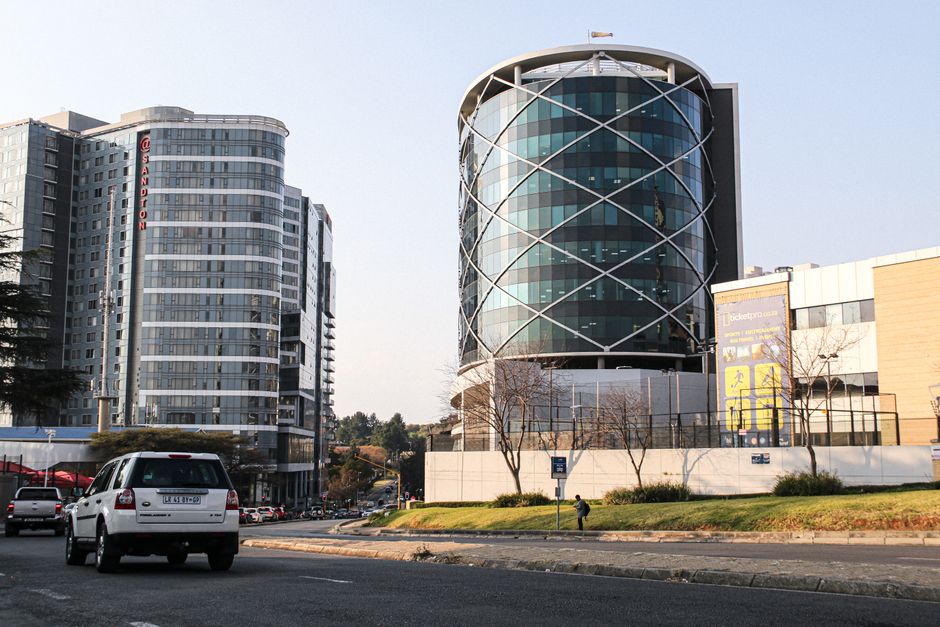
The catalyst came in early 2026, when the JMM approved revised Land Use Management Scheme (LUMS) amendments permitting residential-commercial hybrid developments in Sandton's core precincts and along the Fourways-Midrand corridor. The impact has been immediate and pronounced. Properties along Sandton Drive and within the Sandton City precinct have seen renewed investor appetite, with some luxury apartments commanding prices north of ZAR 12 million—a 15% appreciation since the announcement, according to estate agents working the ultra-premium segment.
"Policy certainty drives capital," explains the rationale commonly heard among high-end brokers navigating the market. Mixed-use zoning removes ambiguity about future development, making it safer for investors to commit substantial capital. Properties in traditionally residential Sandton enclaves like the Dainfern estate and around Morningside have particularly benefited, as buyers anticipate future commercial activation nearby without sacrificing neighbourhood character.
However, the policy pendulum has swung against some traditional strongholds. Strict heritage protection orders introduced for parts of Melville's Victorian streetscapes—a response to aggressive infill development—have cooled speculative interest there, despite the neighbourhood's celebrated urban renewal trajectory. Agents report that boutique properties that might have commanded ZAR 8-10 million are now moving more slowly, as developers face additional approval layers and conservation compliance costs.
Fourways and Midrand present a contrasting picture. Relaxed floor-area ratios (FARs) in the Fourways precinct have triggered a luxury residential boom, with sectional title developments now attracting serious institutional investment. Previously, the area was considered secondary to Sandton; today, it's positioning itself as an alternative for wealthy buyers seeking modern amenities without the Sandton premium—properties here ranging ZAR 5-8 million for comparable specifications.
The broader implication? In Johannesburg's luxury market, policy now competes with location and architecture as a primary value driver. Developers and investors have learned to read municipal intentions as carefully as architectural blueprints. As the city refines its spatial development frameworks and grapples with density versus character trade-offs, expect further market recalibration—rewarding neighbourhoods aligned with official vision, penalising those caught on the wrong side of regulatory change.
This article was compiled by AI from the sources linked above and screened before publishing. See our editorial standards.