First-Time Buyer Grants: What Investor Yields Actually Return in Today's Joburg Market
Government assistance schemes promise affordability, but the real numbers reveal who truly wins when first-home buyers enter Johannesburg's property cycle.
Government assistance schemes promise affordability, but the real numbers reveal who truly wins when first-home buyers enter Johannesburg's property cycle.
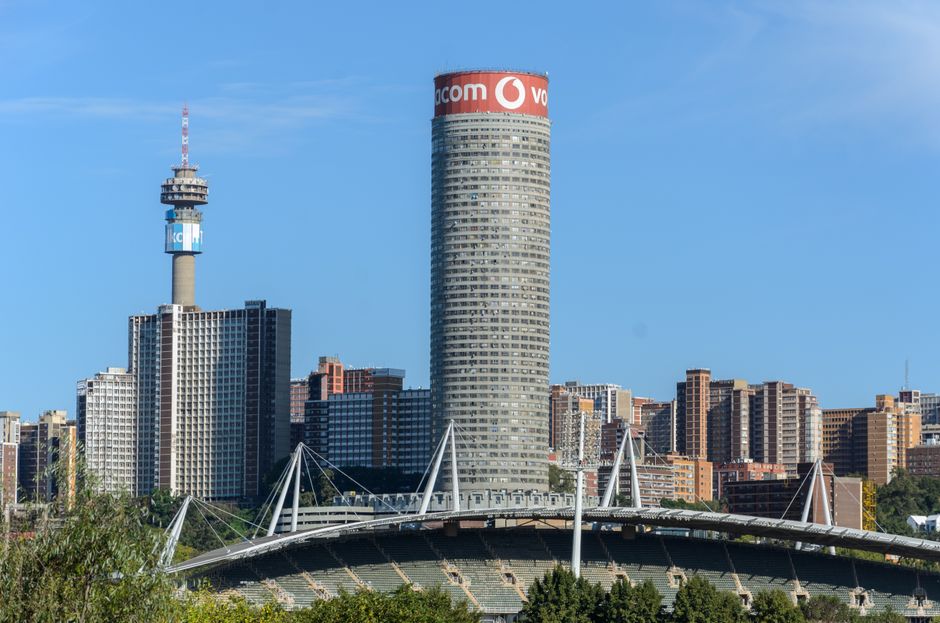
The narrative around first-home buyer grants in South Africa has always been simple: unlock ownership, build equity, secure futures. But in Johannesburg's fractured property market, where prices swing wildly between a modest ZAR 1.5 million average and Sandton's stratospheric premiums, the investment mathematics tell a more nuanced story.
The Department of Human Settlements' grant system—capped at ZAR 87,000 for qualifying applicants—has historically targeted buyers in the ZAR 250,000 to ZAR 550,000 bracket. Yet contemporary data from property analysts reveals the scheme's real-world impact has shifted dramatically. First-time buyers accessing grants are increasingly targeting sectional title units in up-and-coming corridors like Melville and the Fourways-Midrand axis, where rental yields hover between 6.5% and 8.5% annually.
Consider the numbers: A grant-assisted buyer acquiring a two-bedroom sectional title apartment in Melville for ZAR 1.2 million puts down ZAR 87,000 in government subsidy, reducing mortgage liability immediately. If that same unit secures rental income of ZAR 8,500 monthly (conservative for the neighbourhood), that's an 8.5% gross yield—materially higher than Johannesburg's broader market average of 5.8%. Over fifteen years, mortgage amortisation plus accumulated rental income positions that investor with tangible asset appreciation and cash-flow cushioning.
The Fourways and Midrand precincts tell a compelling story. These zones have attracted institutional interest precisely because entry-level pricing—ZAR 1.4 million to ZAR 2.1 million—combined with strong tenant demand from corporate parks along Thabo Mbeki Road creates a compelling investor thesis. Grant recipients entering here typically see capital growth averaging 4.2% annually, alongside rental expansion averaging 6% year-on-year.
Yet grants reveal their limitations outside these sweetspots. In Sandton, where average sectional title units exceed ZAR 3.5 million, the ZAR 87,000 grant is negligible. Conversely, in outlying areas where prices dip below ZAR 900,000, liquidity suffers and tenant quality becomes unpredictable, suppressing yields below 5%.
The data suggests optimal grant deployment occurs in managed intermediary zones—neighbourhoods with established infrastructure, emerging professional demographics, and rental demand anchored by nearby employment nodes. Melville's urban renewal trajectory and the Midrand corporate corridor fit this profile precisely.
For first-time buyers, the lesson is clear: grants unlock meaningful advantage only when paired with disciplined location selection and realistic yield expectations. Generic subsidy doesn't equal automatic returns; geography, timing, and product type determine whether that government support translates into genuine wealth creation or merely subsidised occupancy.
This article was compiled by AI from the sources linked above and screened before publishing. See our editorial standards.
How does this story make you feel?
Spread the word
About this article
Published by The Daily Johannesburg
Daily brief
Free, in your inbox before 7am. Weekdays.
More in Property