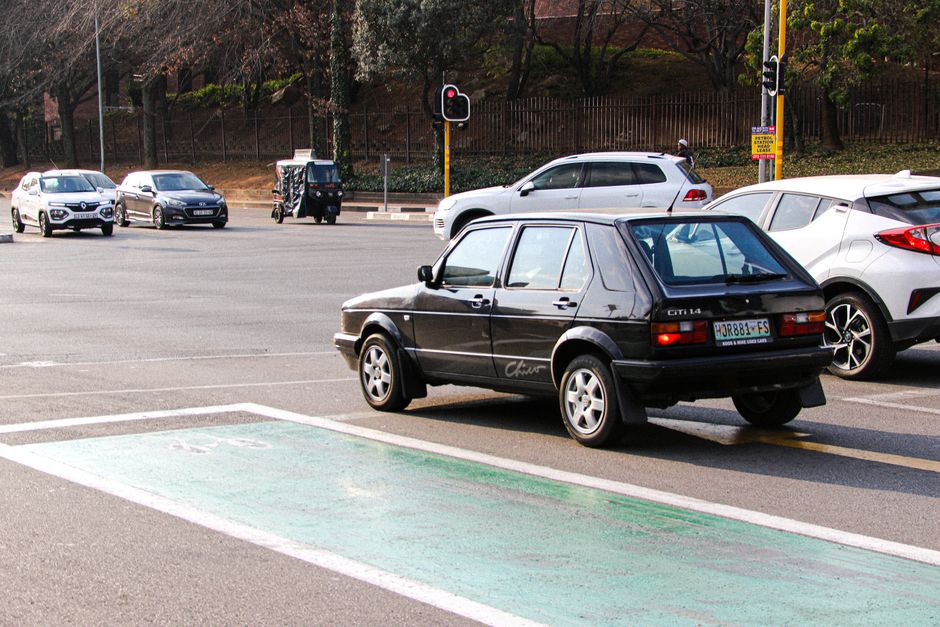
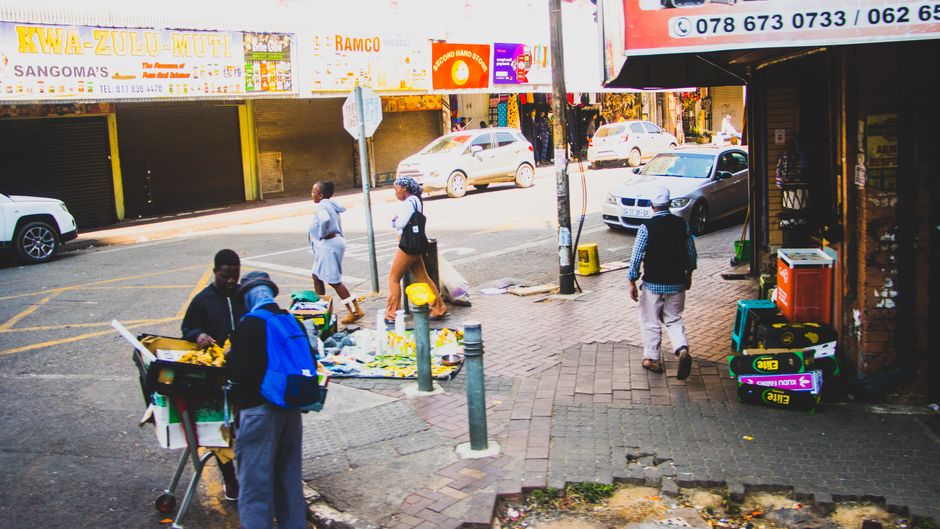
Residents in at least four Johannesburg townships reported zero running water for more than 72 consecutive hours last week, according to the Joburg Water fault-reporting dashboard. In Eldorado Park, families queued at a single municipal tanker by 5 a.m. on Thursday. In Soweto's Meadowlands zone, a WhatsApp group of 1,400 residents has been coordinating borehole access since March. The city's own infrastructure report, tabled before the Gauteng Provincial Legislature in May, acknowledged that 38 percent of the water network loses supply through pipe leaks before it reaches a tap.
The timing matters. South Africa's National Water and Sanitation Master Plan, launched in 2019 and updated in 2023, set a deadline of December 2025 to eliminate basic water backlogs in all metros. That deadline passed. Johannesburg, home to roughly 6 million people and the commercial engine of the continent, missed it. Meanwhile, the ANC-DA coalition running Gauteng has staked political credibility on visible service-delivery wins ahead of the 2026 municipal review cycle, making the water file politically radioactive.
The air-quality picture is equally grim. The South African Air Quality Information System recorded PM2.5 particulate levels above 35 micrograms per cubic metre on 61 days in the greater Joburg area during the first half of 2026 — a threshold the World Health Organisation classifies as unhealthy for sensitive groups. The Vaal Triangle airshed, which bleeds pollution northward into southern Johannesburg suburbs like Turffontein and Glenvista, has been classified a priority area by the Department of Forestry, Fisheries and the Environment since 2006. Twenty years of classification have produced marginal improvement. Eskom's Lethabo power station, 70 kilometres south of the CBD, remains the single largest industrial emitter feeding that corridor.
What Other Cities Have Actually Done
The comparison is uncomfortable but instructive. Lagos, a city of comparable size and infrastructure debt, launched a Water Sector Reform Programme in 2021 backed by a $500 million World Bank facility. By mid-2025 the Lagos State Water Corporation had reduced non-revenue water losses from 54 percent to 41 percent across its Island network — still high, but measurably moving. Nairobi's Athi Water Works Development Agency cut its pipe-leakage rate in the Westlands and Lavington corridors by ring-fencing a dedicated maintenance levy in the 2022-23 budget cycle. The levy — equivalent to roughly R18 per household per month — was politically unpopular but survived legal challenge.
On air quality, Delhi's Graded Response Action Plan, operational since 2017, is frequently cited as a cautionary tale as much as a model: enforcement collapsed repeatedly. But the plan's core mechanism — tiered industrial shutdowns triggered by real-time monitoring data — is precisely what Johannesburg lacks. The city's own Air Quality Management Plan, adopted in 2021, calls for 24 real-time monitoring stations across the metro by 2025. As of June 2026, nine are operational.
What the City Says It Will Do Next
The City of Johannesburg's Group Corporate and Shared Services directorate confirmed this week that a R2.3 billion emergency infrastructure allocation, approved in the May adjustment budget, will target bulk water main replacements in Diepsloot, Orange Farm, and the Soweto bulk supply zone over the next 18 months. The Joburg Water entity has also signed a technical assistance agreement with the German development agency GIZ, effective from August 2026, to run a pressure management pilot on the Alexandra township reticulation network.
For residents, practical options are limited but not absent. The South African Human Rights Commission's Johannesburg regional office, based on Simmonds Street in the CBD, accepts water and sanitation complaints that can compel municipal response within 30 days under the Water Services Act. The Vaal Environmental Justice Alliance, which has litigated against Lethabo emissions before, is preparing a fresh application to the Mpumalanga High Court this quarter. Neither path is fast. But residents who have documented outages with timestamped photographs and logged formal complaints through the City's C3 notification system report a measurably faster tanker response than those who rely on ward councillors alone.