How Johannesburg's Transport Crisis Became the Crisis We Know Today
Decades of underinvestment, political delays and competing priorities have shaped the city's infrastructure emergency—and the urgent projects trying to fix it.
Decades of underinvestment, political delays and competing priorities have shaped the city's infrastructure emergency—and the urgent projects trying to fix it.
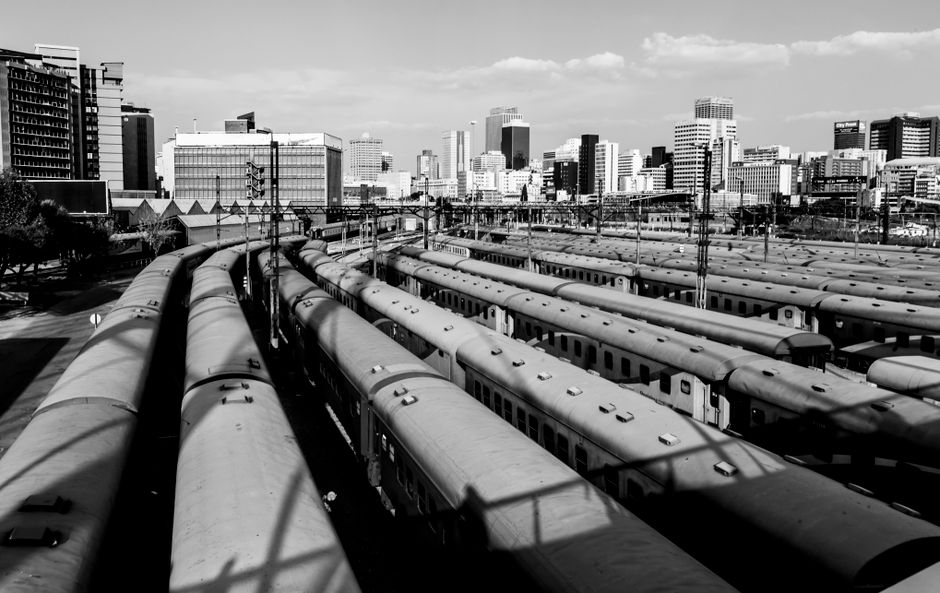
The Gauteng government's decision last month to fast-track R85 billion in transport infrastructure spending represents not a sudden epiphany, but rather the culmination of nearly two decades of neglect, failed planning cycles, and the slow-motion collapse of the systems that move millions through Johannesburg daily.
When the Gauteng Development Plan was first drafted in the mid-2000s, Johannesburg's transport landscape looked radically different. The Rea Vaya bus rapid transit system was still a gleam in planners' eyes, intended to revolutionise mobility across the sprawling metropolitan area. Yet by 2015—nearly a decade later—the reality of what Rea Vaya had actually delivered fell short of ambitious projections. Cost overruns and operational challenges meant the system, while operational on the Soweto-Johannesburg corridor, never scaled to the transformative vision once promised.
The Metrorail network, meanwhile, had been deteriorating for years. By the early 2020s, services on critical routes like the Johannesburg-Pretoria line were running at less than 40% capacity during peak hours, with aging infrastructure between central Johannesburg and Braamfontein shedding commuters to already-congested minibus taxi routes and private vehicles.
What changed the calculus was simple mathematics. Data released by Statistics South Africa showed that commuting costs—already consuming 15-18% of household income for working-class Johannesburgers—had become unsustainable. Simultaneously, congestion on the N1, M2, and key arterial routes like Jan Smuts Avenue and Louis Botha Avenue reached crisis points, with average commute times from outlying areas like Soweto, Alexandra, and Ekurhuleni surging past 90 minutes.
The decision to invest in the Bus Rapid Transit expansion to the East Rand, coupled with fresh commitments to rehabilitate Metrorail corridors and improve connectivity at Johannesburg Park Station and Bree Street transport interchange, represents acknowledgment that previous piecemeal approaches had failed. The city's competitive edge—its ability to attract investment and talent—was being undermined by the simple fact that getting from point A to point B had become exhausting and expensive.
Political transitions at municipal level, which saw multiple administrations with different priorities, also slowed momentum. The result: a city that invested sporadically rather than systematically, allowing infrastructure deficits to compound.
Understanding this history matters because it explains why the current R85 billion commitment feels urgent rather than routine. We didn't arrive here through foresight. We arrived here because the alternative—continued deterioration—had become impossible to ignore.
This article was compiled by AI from the sources linked above and screened before publishing. See our editorial standards.
How does this story make you feel?
Spread the word
About this article
Published by The Daily Johannesburg
Daily brief
Free, in your inbox before 7am. Weekdays.
More in News


