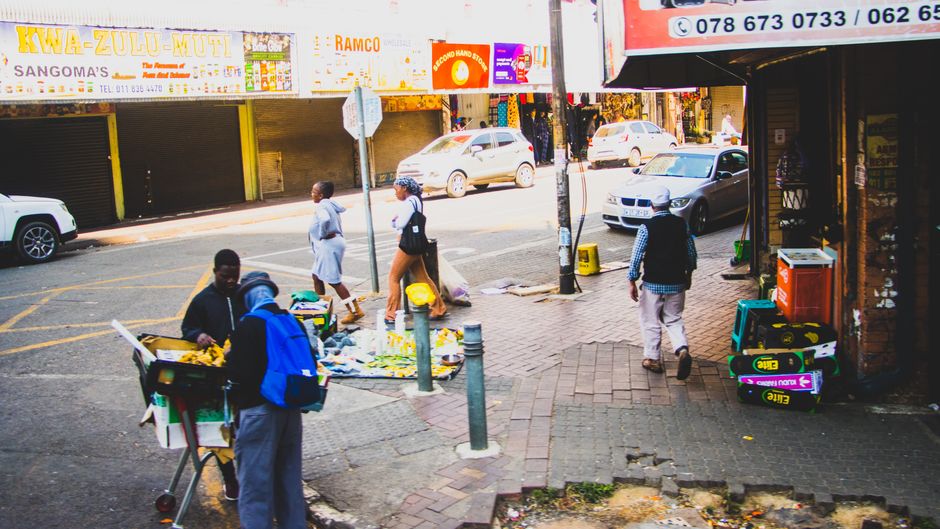
Walk through Braamfontein on a Saturday morning and you'll notice something has shifted. The markets that once occupied parking lots and street corners with ad-hoc vendors have evolved into structured, Instagram-worthy retail experiences. Pop-up stalls now feature QR code payment systems. Vintage clothing vendors operate alongside ethical jewellery makers and craft coffee roasters. This isn't accident—it's the deliberate transformation of Johannesburg's street market culture.
The Sunday Slow Market in Maboneng has become emblematic of this shift. What began five years ago as a modest neighbourhood gathering now draws crowds exceeding 2,000 visitors weekly, with vendor fees rising from R200 to R800 per stall. Retailers who once viewed informal markets as temporary solutions are now treating them as permanent retail channels. "The margins are better than mall rental," explains the economic reality facing many Johannesburg entrepreneurs, though this success comes with gentrification concerns for long-standing traders.
Parkhurst's Thursday evening market and the Roosevelt Park flea markets reflect similar patterns. These spaces have attracted younger entrepreneurs—many from the creative industries—who've brought design sensibility and digital marketing to traditionally unstructured commerce. Local fashion designers, particularly those based in the Arts on Main precinct, now use these markets as launch platforms. Small business owners report consistent month-on-month growth, with successful vendors scaling from single tables to semi-permanent structures.
But the evolution reveals tensions. Traditional vendors who've operated from Johannesburg street corners for decades find themselves priced out as property developers and organised retail networks professionalise these spaces. The City of Johannesburg has introduced new informal trading regulations, requiring permits and compliance certifications—measures that formalise the sector but create barriers for entry-level traders.
Infrastructure improvements tell the story too. Markets in Braamfontein now feature proper sanitation facilities and security measures. WiFi access at some venues enables digital transactions. Yet purists worry something authentic is being lost. The chaotic energy of unregulated street commerce—the haggling, the neighbourhood character—risks becoming sanitised.
What's undeniable is that shopping markets have moved from economic necessity to lifestyle choice for many Johannesburgers. The shift reflects broader city trends: the return to inner-city neighbourhoods, the premium placed on local and artisanal goods, and the desire for experiences over transactions. As June 2026 data shows, informal retail's contribution to Johannesburg's local economy continues climbing, though the definition of "informal" grows increasingly blurred.
For visitors and residents alike, Johannesburg's evolving markets represent something compelling—retail spaces that reflect the city's energy while grappling with questions of equity and authenticity that define modern urban life.
This article was compiled by AI from the sources linked above and screened before publishing. See our editorial standards.