Risk-On Roars Back: Wall Street Charges Higher While Gold Signals Something Darker
Equities and gold are rallying simultaneously, a rare combination that tells Johannesburg investors the global mood is more complicated than a simple bull run.
Equities and gold are rallying simultaneously, a rare combination that tells Johannesburg investors the global mood is more complicated than a simple bull run.
Gold at $4,187 an ounce. The S&P 500 up 1.71% to 7,483. Bitcoin surging 6.66% to $62,456. On the surface, Friday's global session looked like a textbook risk-on day, the kind that sends portfolio managers in Sandton reaching for their phones to check JSE resource counters. But the details are messier than the headlines suggest, and Johannesburg investors would do well to read them carefully.
A genuine risk-on day, in classical market theory, sees money pour into equities, crypto and cyclical commodities while safe havens like gold and the dollar get sold. That is not what happened. Gold jumped 4.10%, its sharpest single-session gain in months, even as the Nasdaq Composite climbed 1.87% to 25,833 and tech stocks led Wall Street's advance. When both the S&P 500 and gold rise sharply on the same day, it typically means different pools of money are doing very different things at once. Some investors are buying growth. Others are buying protection. The two crowds are not talking to each other, and that divergence is itself a warning sign.
The oil market is telling yet another story. WTI crude fell 2.78% to $68.78 a barrel, a meaningful drop that cuts against any narrative of booming global industrial demand. Crude is one of the most reliable barometers of real-economy activity, and its slide on a day when equities are climbing suggests traders are not convinced the growth they are pricing into stocks will actually materialise in factories and freight terminals. For South Africa, where Sasol's earnings swing on the rand oil price and fuel levies feed directly into inflation, a softer crude print offers some relief, though the rand's own trajectory matters as much as the dollar price.
The euro gained 0.47% against the dollar to 1.1440, continuing a broader trend of dollar softness that has been a defining feature of 2026's second quarter. A weaker dollar is generally constructive for emerging-market currencies, including the rand, because it reduces the relative cost of holding local assets and eases pressure on commodity prices denominated in dollars. JSE-listed miners, from Gold Fields to Harmony, earn in dollars but report in rands, so dollar weakness combined with surging gold prices can produce outsized rand earnings even when production volumes are flat. Investors tracking AngloGold Ashanti's performance on the JSE should be watching the dollar-gold price with particular attention today.
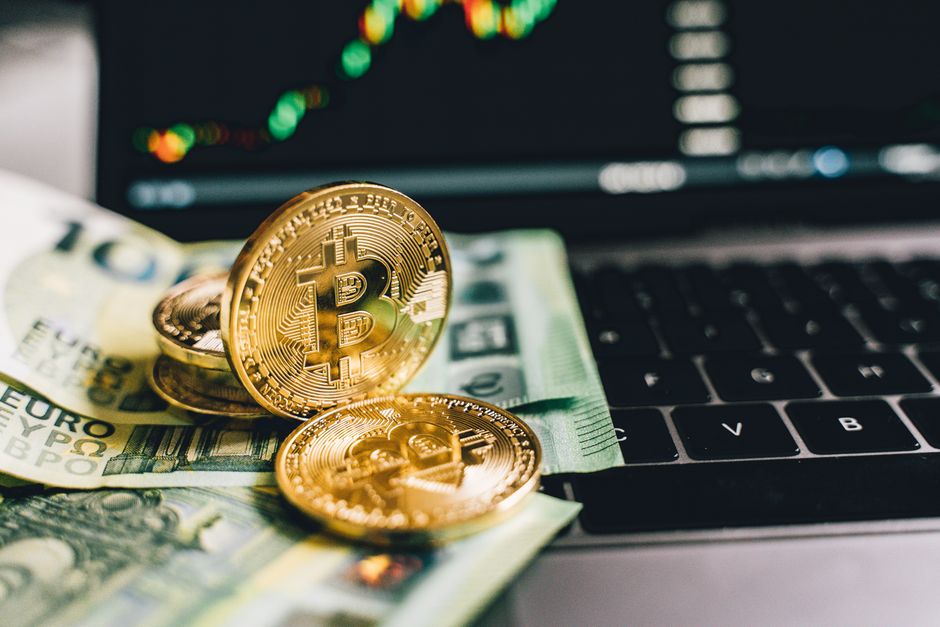
Bitcoin's 6.66% surge to $62,456 adds another layer. Crypto tends to move with risk appetite, acting as a high-beta expression of the same optimism that pushes growth stocks higher. The fact that bitcoin is rallying hard alongside gold, rather than at gold's expense, reinforces the sense that different market segments are responding to different stimuli. Some analysts have begun treating large-cap crypto as a dollar debasement hedge, similar to gold but with far greater volatility. South African retail investors, who have shown growing appetite for crypto exposure through platforms registered with the Financial Sector Conduct Authority, are effectively making a dollar-weakness bet when they buy bitcoin at these levels.
For the JSE specifically, the session sets up an interesting open on Monday. Resource stocks will take their cue from gold's surge, and the precious metals counters on the Johannesburg bourse have consistently amplified moves in the spot price, given South Africa's outsized share of global gold-mining capacity. The broader industrial and financial stocks are likely to track Wall Street's mood, which for now is cautiously positive. The FTSE/JSE All Share Index has broadly tracked global risk sentiment through the first half of 2026, and nothing in today's session changes that underlying dynamic.
The harder question for local fund managers is duration. Risk-on rallies driven by liquidity and momentum rather than earnings fundamentals have a habit of reversing sharply when the catalyst disappears. The simultaneous bid for gold suggests enough institutional money is already hedging against exactly that scenario. Pension funds administered through South African retirement fund administrators should consider how their offshore allocation, typically capped at 45% under Regulation 28 of the Pension Funds Act, is positioned between growth and defensive assets. Today's session does not resolve the debate between those two camps. If anything, it sharpens it.
The honest read of Friday's global tape is this: Wall Street is up, but the market is not unanimous about why, and the assets that tend to do well when things go wrong are doing just as well as the assets that do well when things go right. That is not a contradiction to ignore. It is the signal worth paying attention to.
How does this story make you feel?
Spread the word
About this article
Published by The Daily Johannesburg
Daily brief
Free, in your inbox before 7am. Weekdays.
More in Finance