Johannesburg's Gallery Boom Reshapes City Identity Beyond Finance
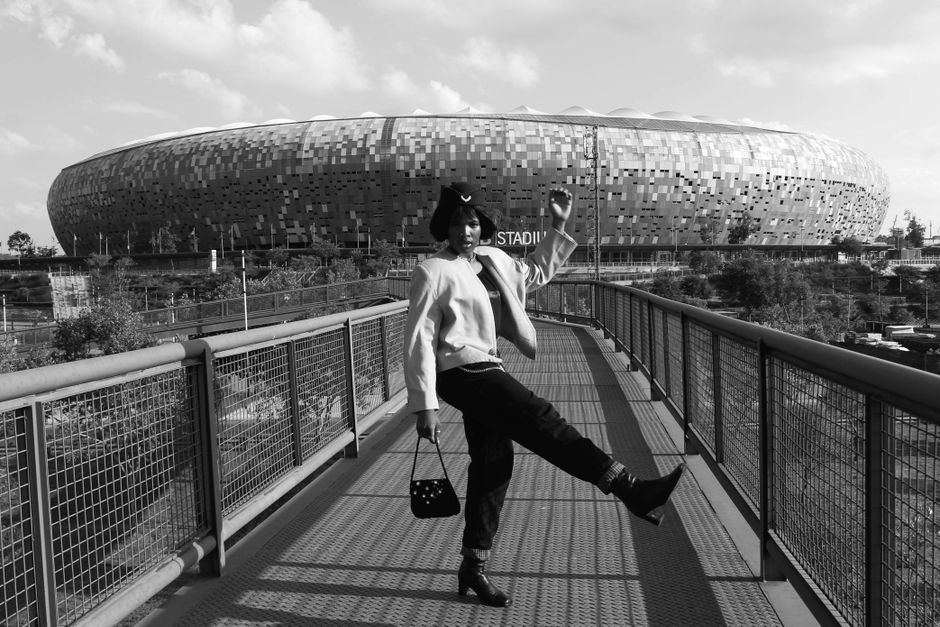
From Maboneng to Norwood, a renaissance in contemporary art spaces is reshaping Johannesburg's identity as a creative powerhouse rather than merely a financial centre.
From Maboneng to Norwood, a renaissance in contemporary art spaces is reshaping Johannesburg's identity as a creative powerhouse rather than merely a financial centre.
Listen to this article · 3:44
Walk through the Maboneng Precinct on a Friday evening and you'll encounter something that would have seemed unlikely a decade ago: galleries thrumming with energy, their white walls holding conversations between local and international audiences, young artists from Alexandra and Soweto alongside established names from Cape Town and beyond. This is the new Johannesburg telling itself a different story.
The city's gallery and museum landscape has undergone a profound transformation since 2015, when spaces like Circa on Stiemens Street and the Goodman Gallery on Jan Smuts Avenue began anchoring what would become a deliberate reclamation of creative identity. Today, the sector contributes an estimated R2.3 billion annually to the city's economy, according to research by the Johannesburg Development Agency, with over 80 registered contemporary art galleries operating across key precincts.
What makes this moment distinct is not merely the proliferation of spaces, but their ideological positioning. The Zeitz MOCAA model in Cape Town invited competition and imitation; Johannesburg's galleries are doing something different. They're interrogating power, interrogating history, interrogating who gets to narrate the city itself. At spaces like Thupelo on Fox Street and Unit London in Parkwood, you'll find work engaging directly with xenophobia, inequality, technological disruption—the lived realities of a global city grappling with its own contradictions.
The Apartheid Museum and the Soweto Uprising Memorial remain foundational institutions, anchoring collective memory. But the real cultural pivot has happened in the independent sector. The Market Photo Workshop in Newtown, established in 1989, has experienced a renaissance, documenting the city's transformation through emerging photographers. Meanwhile, smaller projects—artist-run spaces in converted warehouses on the edges of Braamfontein—are creating infrastructure for experimentation that major institutions simply cannot.
What's particularly significant is that this isn't a top-down cultural investment. It's grassroots capitalism meeting genuine artistic conviction. Gallery owners report that international collectors are increasingly tracking Johannesburg-based artists, with works selling at auction for between R150,000 and R3 million. Local attendance at gallery openings has grown steadily, suggesting the conversation is no longer confined to insiders.
The city has always been defined by hustle and invention. Now, increasingly, it's defined by creative voice. In a global moment where cities compete on cultural authenticity, Johannesburg's advantage lies in its refusal to polish its contradictions away. Its galleries and museums are where that messy, vital truth gets articulated.
This article was compiled by AI and screened before publishing. See our editorial standards.
How does this story make you feel?
Spread the word
About this article
Published by The Daily Johannesburg
Daily brief
Free, in your inbox before 7am. Weekdays.
More in culture