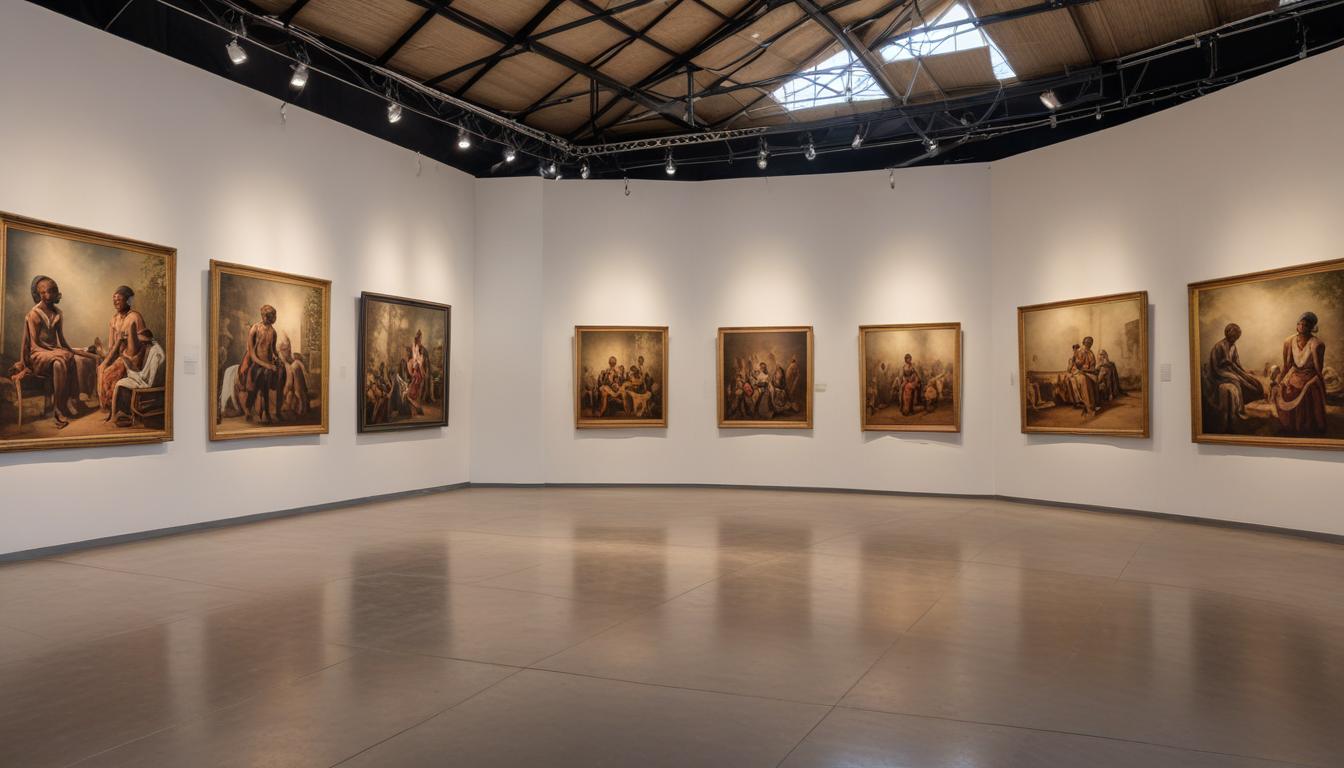
Walk down Fox Street in Braamfontein on any weekday and you'll pass the hulking concrete structure that locals had written off as yet another industrial relic—a 1970s printing factory abandoned for two decades, its windows boarded, its potential invisible. By mid-July, that same building will host over 8,000 visitors across a weekend, with tickets sold out three weeks in advance.
The Concrete & Clay festival, now in its fourth iteration, represents a quiet revolution in how Johannesburg's cultural activists approach urban regeneration. What began in 2022 as a guerrilla art project by five friends—a sculptor, a sound engineer, an urban planner, and two community organisers—has become a blueprint for revitalising the city's neglected precincts without displacing their existing residents.
"The first year, we didn't have permission," says one of the founding collective members, who preferred to remain anonymous given the legal ambiguities of those early days. "We knew this space was culturally dead but structurally sound. We spent months just cleaning, mapping, understanding what the building wanted to be."
That ethos of patient listening has defined the festival's growth. Unlike mainstream cultural events that parachute into neighbourhoods, Concrete & Clay embedded itself into Braamfontein's fabric—partnering with the Hilbrow Community Centre, employing 60 percent of its crew from the surrounding five kilometres, and committing 40 percent of ticket revenue back to local arts education programmes.
This year's festival, running July 18-20, features over 140 artists across installation, performance, film and craft. The production budget has swelled to R2.8 million—substantial for an independent venture, yet modest compared to corporate-sponsored alternatives. Ticket prices remain accessible at R180 for day passes, deliberately undercut to prevent the gentrification spiral the organisers witnessed devastate similar initiatives in Newtown.
The collective's most radical decision came in 2024 when they refused a major corporate sponsorship offer that would have tripled their budget but required curatorial control. "We said no," the organiser explained. "That money would have fundamentally changed who got to make art here and for whom."
As Johannesburg continues wrestling with cultural identity and urban renewal, Concrete & Clay offers a counternarrative: slow growth, community sovereignty, and the revolutionary act of believing that a disused factory on Fox Street deserves a second life on its own terms.
This article was compiled by AI from the sources linked above and screened before publishing. See our editorial standards.