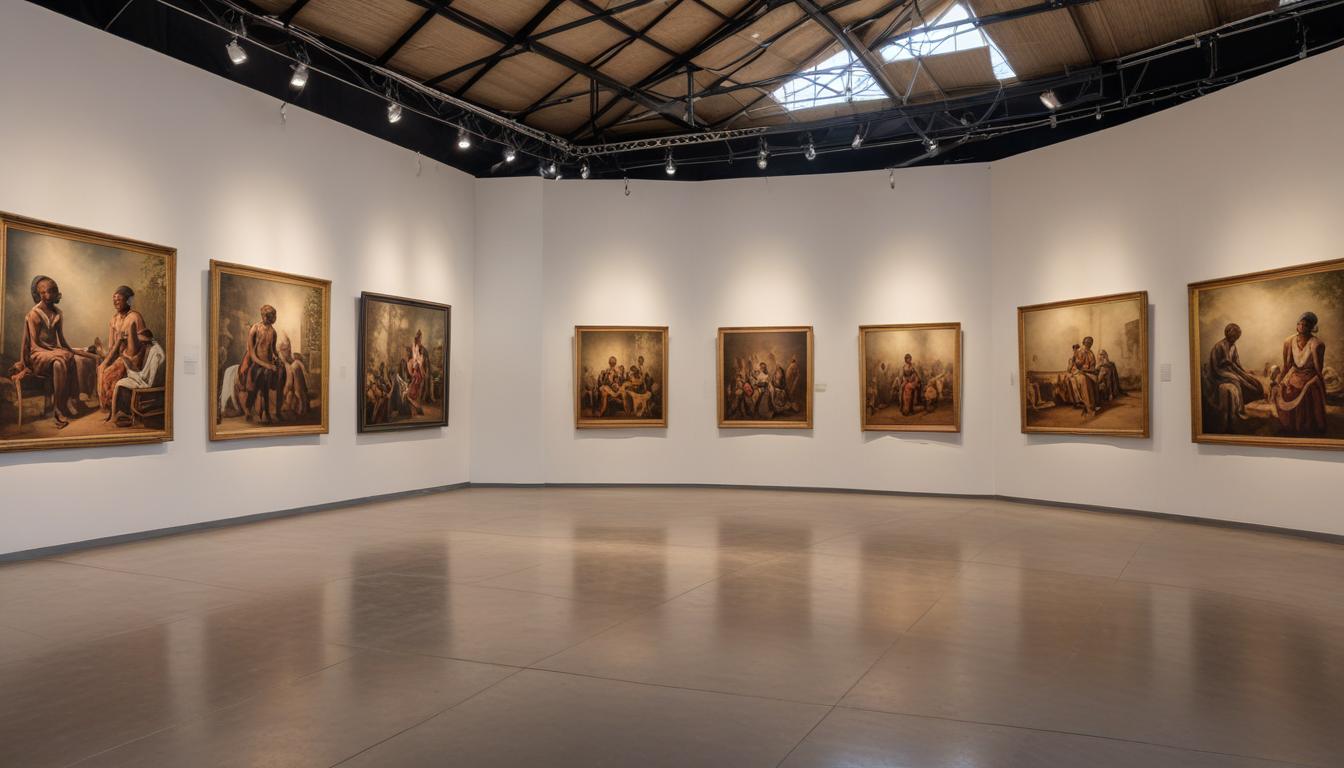
Walk through Maboneng Precinct on a Friday evening and you'll encounter dozens of galleries spilling onto Fox Street's pavements, their white-washed walls glowing under string lights. But this thriving cultural quarter didn't emerge overnight—it's the result of nearly two decades of deliberate vision from artists, entrepreneurs and cultural activists who refused to accept Johannesburg's post-apartheid reputation as a city to escape.
In the early 2000s, when Fox Street warehouse conversions seemed impossibly risky, pioneers like David Krut—whose printmaking studio became the nucleus for creative redevelopment—took calculated gambles. His 40,000-square-metre compound evolved from an industrial space into a destination that now hosts over 15 galleries, restaurants and creative studios. "The transformation wasn't inevitable," says the history embedded in Maboneng's infrastructure. Artists priced out of London and Cape Town recognised opportunity; landlords recognised that cultural tenants stabilised precarious neighbourhoods.
Meanwhile, across Johannesburg, institutional architects shaped the city's intellectual landscape. The Apartheid Museum—opened in 2001 on the Orts Gold Mine in Nasrec—emerged from grassroots community dialogue rather than top-down curatorial decree. Its 22 exhibition halls were designed with input from survivors, historians and educators who insisted the museum serve as a truth-telling space, not mere monument. Today it attracts over 800,000 visitors annually, establishing Johannesburg as a global centre for difficult heritage conversations.
The Goodman Gallery's expansion from a single room in Randburg (1966) to its sprawling Maboneng flagship represents another invisible infrastructure—the collectors and trustees who stewarded South African contemporary art through decades of international indifference. Their decisions to champion township photographers, anti-apartheid painters and now-canonical figures sustained galleries through periods when few commercial buyers existed.
Less visible are the community curators—the Soweto Gallery Walk organisers, the Origins Centre at Wits University researchers, the Sci-Bono Discovery Centre educators—who democratised access beyond the collector class. Gallery entry in Maboneng typically costs R80-150; at major institutions it ranges from free to R200, yet these figures mask hours of unpaid labour by cultural workers sustaining programming.
As Johannesburg enters 2026, this scene faces new pressures: gentrification displacement, funding volatility, the tension between commercial viability and community accountability. Yet its foundation rests on something durable—the conviction held by dozens of named and unnamed cultural architects that cities are shaped by those audacious enough to imagine them differently.
This article was compiled by AI from the sources linked above and screened before publishing. See our editorial standards.