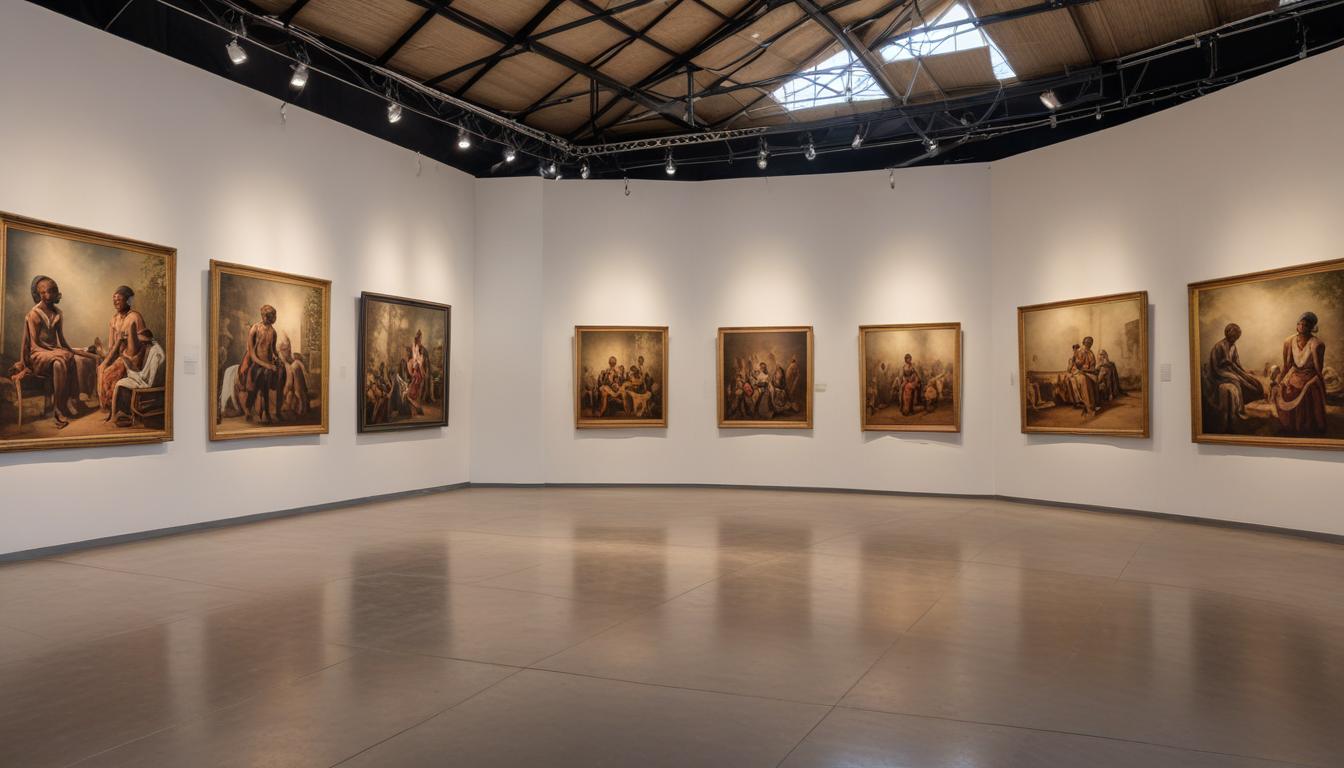
Canvas and Conscience: The Activists Who Transformed Johannesburg's Walls Into Open Galleries
From Maboneng to Newtown, a generation of street artists built South Africa's most daring creative districts—against the odds and often without permission.
From Maboneng to Newtown, a generation of street artists built South Africa's most daring creative districts—against the odds and often without permission.
Walk down Fox Street in Maboneng on a Saturday afternoon and you'll encounter what looks like an outdoor museum—except the artists never waited for institutional approval. The towering murals depicting everything from Zulu warriors to abstract geometric patterns represent nearly two decades of grassroots creative rebellion that transformed Johannesburg's urban landscape and, in the process, reshaped how the city sees itself.
The story of how this happened reveals less about individual celebrity artists and more about the collectives, informal networks, and risk-taking organisers who believed derelict inner-city spaces could become cultural laboratories. Beginning in the early 2010s, groups like the Maboneng Precinct emerged not as polished developer projects but as organic interventions where property owners, artists, and community organisers aligned—however imperfectly—around a shared vision. The initial murals weren't commissioned; they were negotiated, sometimes contentious, always improvised.
What's less visible are the infrastructure builders behind the scenes. Community art centres in Newtown, particularly around the Dorkay House precinct, became crucial anchors. These spaces offered studio access at rates between R150 and R400 monthly—affordable by Johannesburg standards—and mentorship that connected township-based artists with the visibility and resources the inner city could provide. By 2019, informal surveys suggested the Maboneng creative district alone generated over R12 million annually through artist sales, studio rentals, and gallery traffic.
Yet the story includes uncomfortable truths. Gentrification followed investment. Artists who pioneered Fox Street and Marshall Street found themselves priced out as property values climbed 40-60% between 2015 and 2023. Some relocated to Troyeville and Lorentzville, where similar dynamics began repeating. The democratisation of artistic space created economic pressures that displaced the very communities whose creative energy had sparked the transformation.
Today's conversation among Johannesburg's street art organisers reflects this tension. Many now work intentionally with residential committees and community trusts to ensure creative activation doesn't simply precede displacement. Initiatives targeting youth in Orange Farm and Soweto aim to distribute creative infrastructure more equitably across the metro, rather than concentrating it in valuable real estate zones.
The murals remain stunning. But their creation story—messy, compromised, generative, and contested—matters more than the finished image. It reminds us that cultural districts don't emerge from planning documents. They emerge from people willing to paint walls without permission, organise communities without funding, and imagine cities differently than those who own them.
This article was compiled by AI from the sources linked above and screened before publishing. See our editorial standards.
How does this story make you feel?
Spread the word
About this article
Published by The Daily Johannesburg
Daily brief
Free, in your inbox before 7am. Weekdays.
More in culture