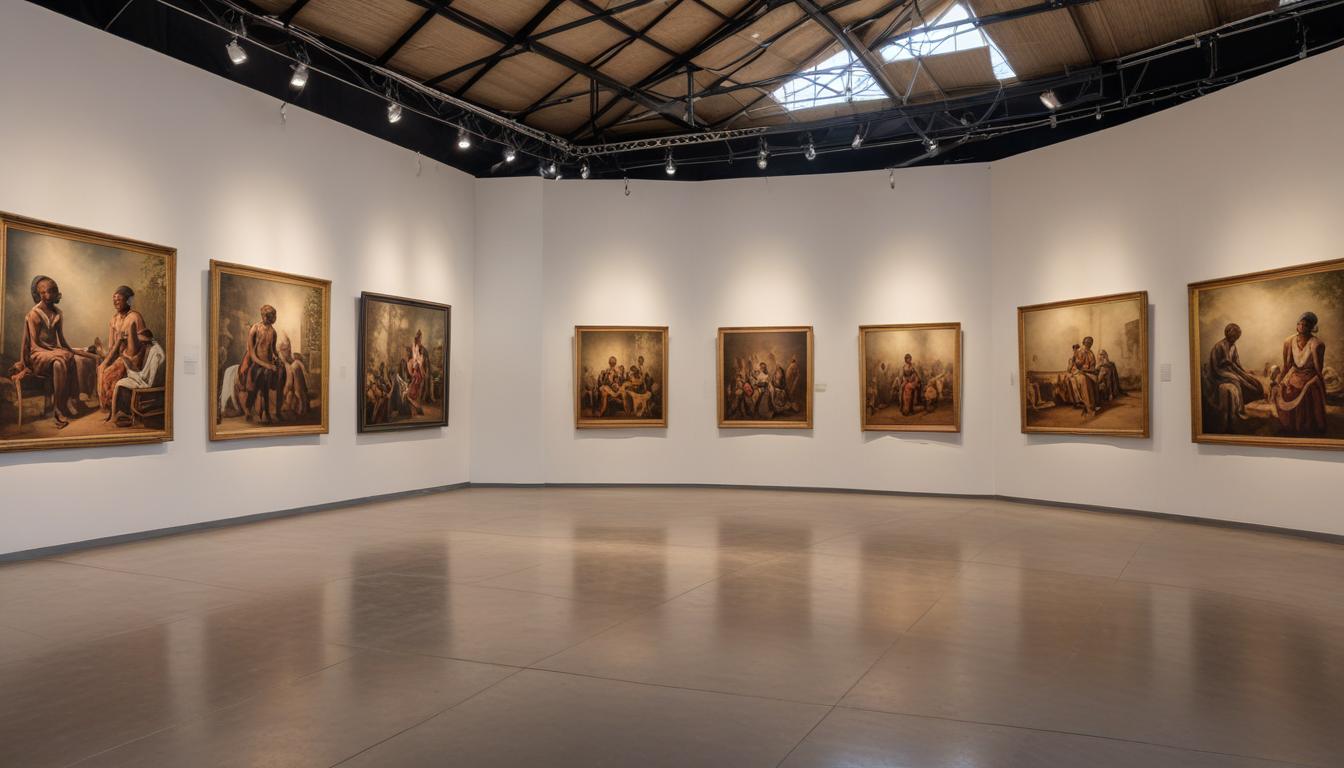
How a New Generation of Activists is Reclaiming Johannesburg's Fractured History
From Newtown to Fordsburg, grassroots collectives are reshaping how the city remembers its past—and what that means for its future.
From Newtown to Fordsburg, grassroots collectives are reshaping how the city remembers its past—and what that means for its future.
On a Saturday morning in Newtown, a handful of volunteers sweep debris from the forecourt of the Everard Read Gallery, preparing for another installment of "Memory Maps," a community-led oral history project that has quietly become one of Johannesburg's most significant cultural interventions. Over the past eighteen months, the collective behind it has recorded over 400 testimonies from long-time residents, transforming fragmented personal narratives into a shared archive that challenges official versions of the city's past.
"We started because we were tired of waiting for institutions to tell our stories," explains one of the project's founding members, speaking on condition of anonymity—a common practice among the group, which operates with deliberate opacity to remain accountable to communities rather than funders or media. The initiative emerged from informal gatherings in Fordsburg coffee shops and Braamfontein studios, drawing artists, historians, and residents aged 19 to 78. What began as a WhatsApp group now coordinates activities across five neighbourhoods.
The shift reflects a broader restlessness with how Johannesburg's heritage infrastructure operates. The Apartheid Museum and Constitution Hill remain essential institutions, but younger cultural workers increasingly argue they function as sealed narratives—official, curated, complete. The new movement seeks something messier and more alive: heritage as process rather than product.
Similar energy animates the Maboneng Precinct's recent pivot toward artist-run programming and the emergence of independent collectives in Braamfontein, where studio rents have dropped by roughly 35 percent since 2023, creating space for experimentation. The Sci-Bono Discovery Centre in Newtown has become an unlikely hub for these networks, hosting late-night forums where participants debate how to decolonise memory work without romanticising the past.
What distinguishes this movement is its suspicion of spectacle. There are no branded festivals, no corporate sponsorships, no Instagram-friendly installations (though documentation exists). Instead, there are walking tours led by people who lived through the 1980s, kitchen-table conversations transcribed into zines, and modest community centres becoming archives. The work often happens on shoestring budgets—R2,500 per month in shared studio space—relying on swapped labour and donated equipment.
City officials have begun noticing. The Johannesburg Development Agency recently commissioned research into informal heritage practices, though whether this attention will translate into meaningful partnership or absorption remains unclear. For now, the movement's power lies in its refusal of neat closure: these are communities insisting that their city's history remains contested, living, and fundamentally theirs to interpret.
This article was compiled by AI from the sources linked above and screened before publishing. See our editorial standards.
How does this story make you feel?
Spread the word
About this article
Published by The Daily Johannesburg
Daily brief
Free, in your inbox before 7am. Weekdays.
More in culture