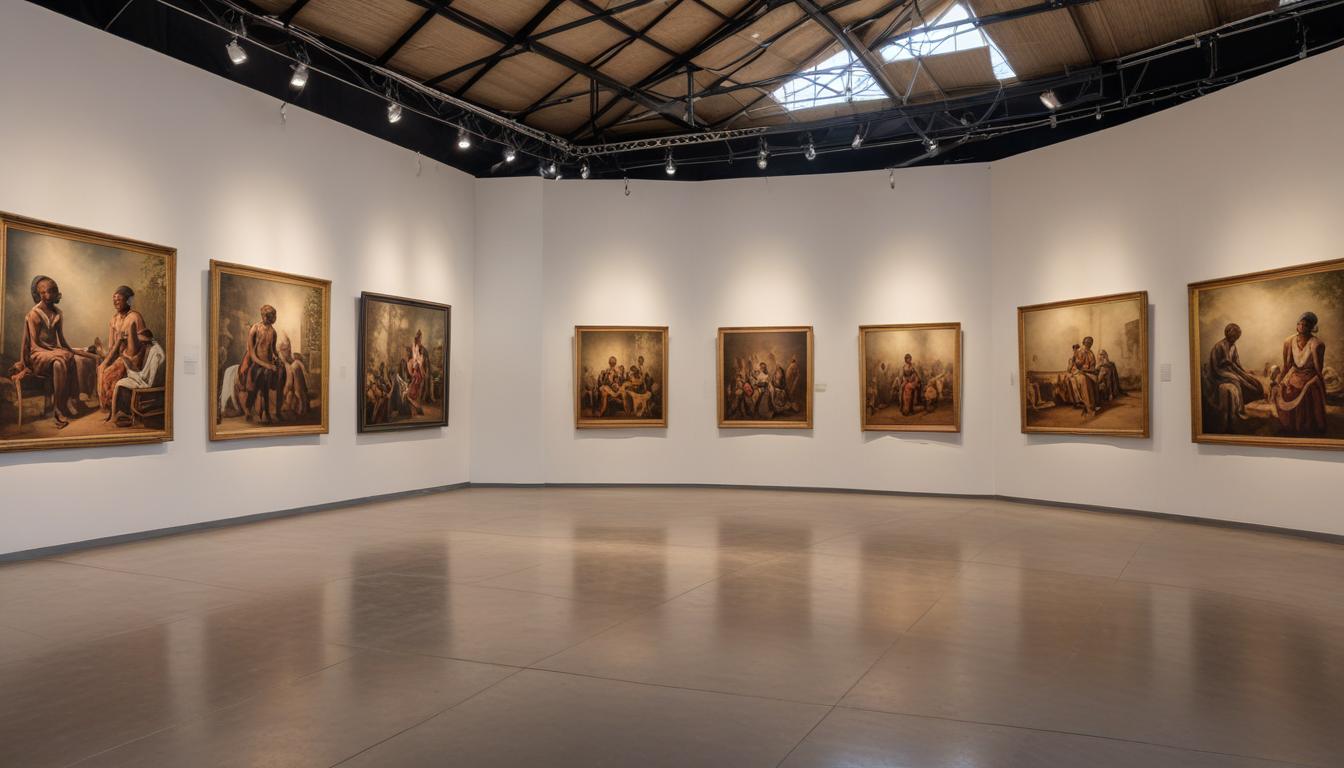
Walk through the Maboneng Precinct on a Saturday afternoon and you'll witness Johannesburg's peculiar alchemy: crumbling industrial warehouses transformed into galleries, studios and performance spaces where young artists grapple with the city's fractured history. This isn't nostalgia—it's the deliberate act of a city remembering itself into a new identity.
Over the past five years, heritage tourism in Johannesburg has grown by an estimated 23%, according to the Johannesburg Development Agency, with sites like the Apartheid Museum, Constitutional Court and Soweto's iconic Vilakazi Street drawing nearly 2 million visitors annually. But the real cultural shift is happening in smaller, grassroots spaces where local creatives are decolonising the narrative.
The Kruger Street Precinct in Braamfontein has emerged as a focal point for this reckoning. Here, organisations like the Goodman Gallery—alongside newer collectives—are hosting exhibitions that interrogate Johannesburg's role as a site of resistance, labour exploitation and Black reinvention. Gallery nights attract increasingly diverse crowds, from inner-city residents to international art seekers, paying entrance fees between R80 and R150.
Musician and cultural commentator spaces in Newtown are similarly pivotal. The city's music scene—historically dominated by kwaito, gqom and hip-hop—is now fusing these genres with storytelling rooted in local geography. Artists reference specific addresses, street names and neighbourhood histories, making their work inseparable from Johannesburg's physical and social landscape.
What's distinctive is how this identity-building extends beyond the CBD. Community museums in Alexandra, heritage walking tours in Hillbrow and the repurposing of former mining sites in Roodepoort are all part of a larger conversation about who gets to tell Johannesburg's story and how. The city's 2030 cultural strategy explicitly prioritises local history as an economic and social asset.
The irony is sharp: Johannesburg, built on extraction and exploitation, is now mining its own difficult past as a resource for creative meaning-making. Street art adorning the Mandela Bridge doesn't simply beautify concrete—it inscribes contemporary South African identity directly onto the city's skeleton.
For emerging creatives, understanding this history isn't academic. It's survival. In a city where cultural work rarely pays corporate salaries, the ability to tap into Johannesburg's complex heritage as material, context and audience is essential. The city's creative identity is no longer something imposed from above; it's being authored from the streets up, one project at a time.
This article was compiled by AI from the sources linked above and screened before publishing. See our editorial standards.