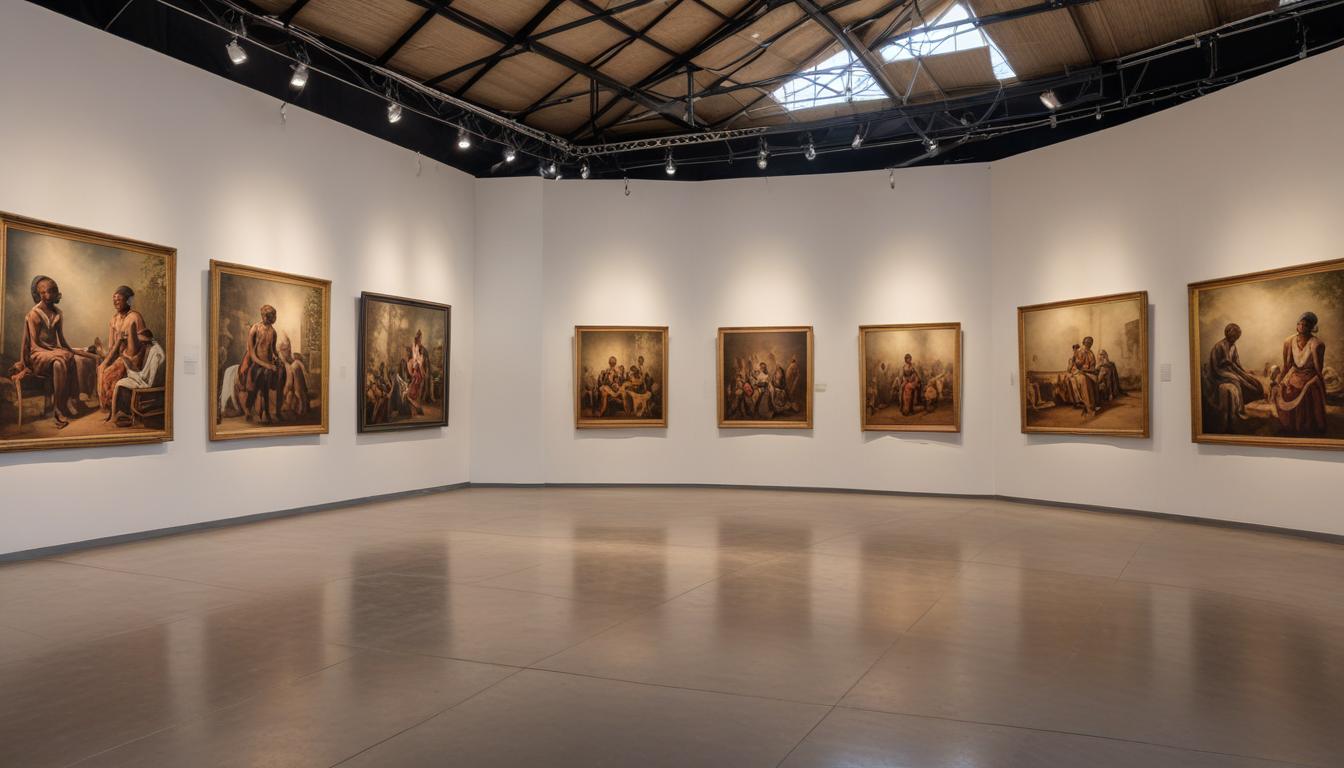
When the Goodman Gallery first opened its doors on Rue Street in Johannesburg's northern suburbs during the 1960s, it was a radical act of resistance. At a time when apartheid strangled cultural expression, this modest space became a sanctuary for anti-establishment artists and a gathering point for those who dared to challenge the regime through paint and provocation. That history—raw, urgent, defiant—forms the bedrock of what Johannesburg's arts scene has become today.
The trajectory from those clandestine beginnings to the contemporary landscape tells a distinctly Johannesburg story. The Apartheid Museum, which opened in 2001 near the Maropeng Precinct in Soweto, fundamentally shifted how the city engaged with its own past through curatorial practice. Meanwhile, institutions along the Maboneng Precinct in the inner city—including the revitalised spaces of Keleketla! and the Artist Proof Studio—began attracting international attention by the early 2010s, transforming what was once considered a no-go zone into a vibrant creative hub.
Today's ecosystem is remarkably diverse. The Zeitz MOCAA (Museum of Contemporary Art Africa) in the Silo District, which opened in 2017, represents an estimated R250 million investment and has positioned Johannesburg as a serious contender on the continental and global contemporary art circuit. Yet the city's smaller independent galleries—scattered across Braamfontein, Parkwood, and Rosebank—continue to incubate experimental work in the tradition of their predecessors, albeit with considerably better profit margins and Instagram followings.
Data from the Johannesburg Development Agency suggests that gallery tourism has increased by approximately 35 percent since 2019, with international visitor numbers rebounding strongly post-pandemic. Entry fees typically range from R120 to R180 for local museums, with contemporary galleries often operating on a free or donation basis to maintain accessibility—a principle rooted in the democratic ethos of the anti-apartheid movement.
What makes this evolution particularly significant is how it mirrors the city itself. Just as Johannesburg has grappled with inequality, reinvention, and the weight of history, so too has its cultural infrastructure. The Johannesburg Art Gallery, established in 1910, once served primarily white audiences; it now actively contextualises its collection within post-colonial frameworks. The Market Photo Workshop in Newtown, founded in 1989, continues to train young photographers from township communities.
As the city enters its second century, the challenge remains constant: maintaining the radical, questioning spirit that defined these spaces while securing the resources and audiences necessary for sustainability. Johannesburg's gallery scene endures precisely because it refuses to choose between being a world-class institution and a community mirror.
This article was compiled by AI from the sources linked above and screened before publishing. See our editorial standards.