Joburg Property in 2026: How This Market Stacks Up Against the 2021 Boom
Five years on from the pandemic-era buying frenzy, Johannesburg's residential market is moving again — but the drivers, the hotspots, and the risks look very different.
Five years on from the pandemic-era buying frenzy, Johannesburg's residential market is moving again — but the drivers, the hotspots, and the risks look very different.
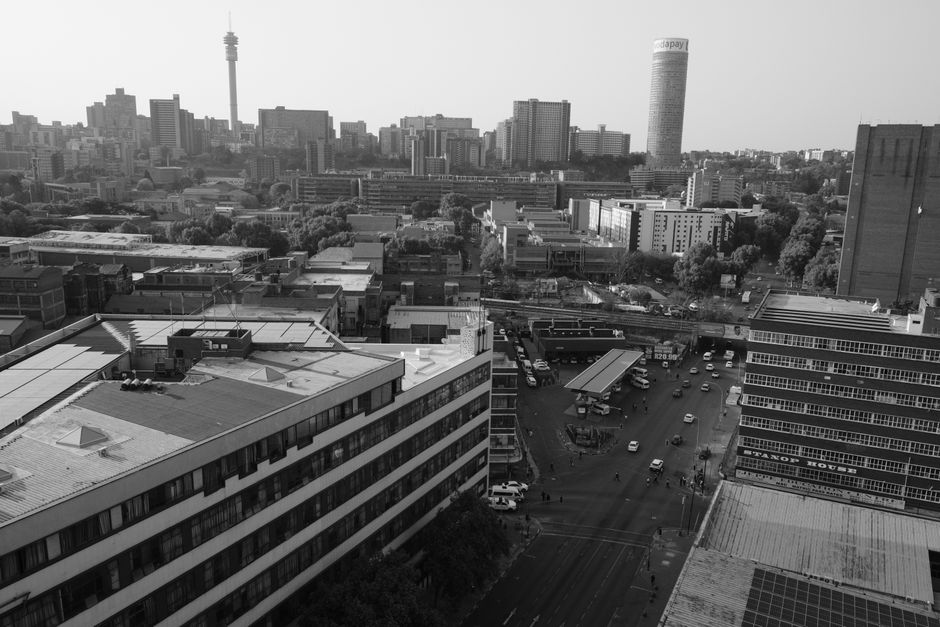
Johannesburg's average residential asking price has climbed back to R1.5 million in mid-2026, recovering ground lost during the 2023–2024 interest rate squeeze and prompting comparisons with the last time agents couldn't keep listings on the books. That was 2021, when sub-7% prime lending rates and a work-from-home scramble for space sent transaction volumes surging. The conditions today are fundamentally different, yet the momentum is real enough that buyers are again being told to move fast or miss out.
Why does the 2021 comparison matter right now? Because that boom produced a specific kind of buyer behaviour — panic purchases, waived contingencies, properties in Bryanston and Bedfordview going for 8–12% above asking — that distorted valuations for years afterward. Understanding whether 2026 rhymes with that period, or merely borrows its energy, shapes how seriously both buyers and sellers should treat current asking prices. With the South African Reserve Bank having cut the repo rate twice since February, mortgage appetite is up, but the economy remains fragile and load-shedding, while reduced, has not disappeared entirely.
The Sandton central node — Rivonia Road, Sandton Drive, the precinct around Nelson Mandela Square — continues to anchor the premium end of the market. Sectional title units in Sandton City-adjacent complexes are trading at R22,000–R26,000 per square metre, roughly 18% above their 2021 peak values, reflecting sustained institutional demand and the rand's relative weakness making rand-denominated property attractive to returning diaspora buyers. That is a markedly different dynamic from 2021, when the premium was driven almost entirely by domestic buyers fleeing sectional title for freehold in the northern suburbs.
Fourways and the Midrand corridor are generating the kind of volume numbers that make agents talk about the market the way they did four years ago. The Leaping Frog node near Cedar Road has seen more than 340 residential transfers registered in the first half of 2026, according to Deeds Office data compiled by Lightstone Property. Comparable six-month figures for the same area in 2019 — the pre-pandemic baseline — sat at around 210. The buyers are younger, more likely to be first-time purchasers using the FLISP subsidy program, and more price-sensitive than the 2021 cohort, who were often trading down from larger freehold properties and arriving with cash in hand.
Melville, where the Johannesburg Property Owners and Managers Association has been tracking urban renewal activity along 7th Street, tells a more nuanced story. Freehold homes in the R1.1 million–R1.6 million band are moving steadily, with average days-on-market dropping from 94 in January to 61 in June. In 2021, that figure briefly touched 38 days across comparable inner-city nodes. The gap signals that 2026 is not a repeat of the frenzy — it is a structured, rate-sensitive recovery with genuine underlying demand rather than speculative heat.
The sectional title segment warrants particular attention. Levy arrears in many older Johannesburg complexes, a legacy of the financially stressed 2022–2024 period, are still surfacing in pre-purchase due diligence. The National Credit Regulator flagged in its May 2026 quarterly report that home loan approval rates, while improving, remain 11 percentage points below their 2021 peak. That ceiling limits how far this market can run on sentiment alone.
Sellers who bought at the top of the 2021 boom — particularly those in Ruimsig and Equestria where freehold prices were bid up aggressively — should not assume 2026 energy translates into the same premiums. Many of those suburbs are only now recovering to 2021 nominal values, which in real terms still represents a loss. Buyers, for their part, have more leverage than the current mood suggests. Locking in a fixed-rate component on a new bond before the Reserve Bank's September meeting, when another 25-basis-point cut is widely anticipated, remains sensible strategy. The market is moving. It is not yet running away.
How does this story make you feel?
Spread the word
About this article
Published by The Daily Johannesburg
Daily brief
Free, in your inbox before 7am. Weekdays.
More in Property