Johannesburg Tackles the Duplicate Image Problem Choking Its Digital Infrastructure
As cities from Nairobi to São Paulo wrestle with redundant visual data clogging municipal systems, Joburg is taking its own path — and the results are mixed.
As cities from Nairobi to São Paulo wrestle with redundant visual data clogging municipal systems, Joburg is taking its own path — and the results are mixed.
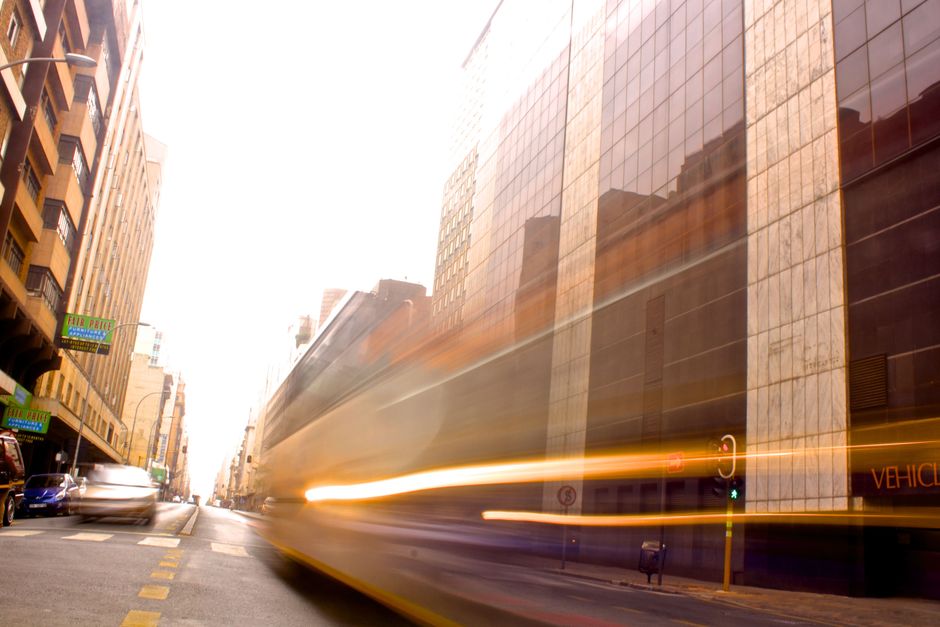
Johannesburg's City of Joburg Metropolitan Municipality confirmed this week that duplicate imagery — identical or near-identical digital photographs stored multiple times across disconnected departmental servers — now accounts for a measurable share of the city's total data storage burden. The acknowledgment, buried in an internal ICT infrastructure review circulated to council committees in late June 2026, marks the first time the municipality has formally categorised the problem as a cost driver.
The issue sounds mundane. It isn't. Duplicate images inflate cloud and on-premise storage bills, slow down search and retrieval tools used by planners and law enforcement, and create version-control chaos when agencies try to share visual records. For a city already managing tight budgets under the ANC-DA coalition arrangement in Gauteng, every wasted rand on redundant data is a rand not spent on service delivery. Load shedding may have eased, but the city's digital housekeeping has lagged behind its infrastructure ambitions.
Two programs are currently operational. The Johannesburg Development Agency, which oversees urban regeneration projects stretching from the Newtown Cultural Precinct to the corridors of Crown Mines Road, has been running a deduplication pilot on its property and planning image libraries since March 2026. The pilot uses hash-based comparison software to flag identical files before archiving. Separately, the City's Group Information and Communications Technology directorate launched a broader data hygiene initiative in January 2026 targeting all departments that feed into the Integrated Development Plan reporting cycle.
The results at the JDA have been encouraging on a small scale. Across roughly 80,000 project images accumulated since 2019, the pilot reportedly identified significant duplication rates — though the municipality has not released a specific verified figure publicly, so that number cannot be reported as confirmed fact. What is confirmed: the directorate has allocated R4.2 million in the 2026-27 budget cycle toward storage consolidation across four departments, according to the budget schedule published by the City of Joburg in May 2026.
On the ground, the practical effects are visible in places like the Johannesburg Roads Agency's records office near Ellis Park, where staff have historically received image batches from ward councillors, contractors and inspectors with no standardised naming convention. A pothole on Eloff Street might exist as six separate photographs in three separate folders across two servers. Multiply that by 135 wards and thousands of service requests annually, and the storage problem compounds fast.
Other major cities in the Global South have grappled with the same issue, with varying degrees of institutional seriousness. Nairobi's City Hall, working with a World Bank-backed digital governance program, began mandatory deduplication protocols for its urban planning image databases in 2024. Lagos State's Ministry of Physical Planning similarly introduced a centralised digital asset management system in early 2025 as part of a broader smart-city push backed by private sector partnerships. São Paulo's Prefeitura has gone furthest, embedding automated deduplication into its 311 civic request platform, meaning images submitted by residents are screened for duplicates at the point of upload.
Joburg's approach is less integrated. The deduplication work is reactive rather than structural — cleaning up existing archives rather than preventing new duplicates from being created. That distinction matters because without upstream controls, the problem regenerates faster than archivists can address it. Cities like Lagos and São Paulo are solving the problem at the source; Johannesburg is still mostly mopping the floor while the tap runs.
For residents and businesses in Sandton, Soweto and beyond who interact with city digital services, the practical advice is straightforward: when submitting images to the City's public platforms — whether for a rates query, a building application through the Development Planning department, or a Joburg Connect service request — compress files before upload and avoid submitting multiple nearly identical photographs. It reduces the burden on systems that are, by the city's own admission, still catching up. The ICT directorate is expected to present a consolidated deduplication roadmap to the mayoral committee before the end of the third quarter of 2026.
How does this story make you feel?
Spread the word
About this article
Published by The Daily Johannesburg
Daily brief
Free, in your inbox before 7am. Weekdays.
More in News