Johannesburg Leads Africa on Duplicate Image Replacement — But Still Trails Nairobi and São Paulo
Cities worldwide are racing to strip outdated, repeated visuals from public digital infrastructure, and Joburg's record is patchy at best.
Cities worldwide are racing to strip outdated, repeated visuals from public digital infrastructure, and Joburg's record is patchy at best.
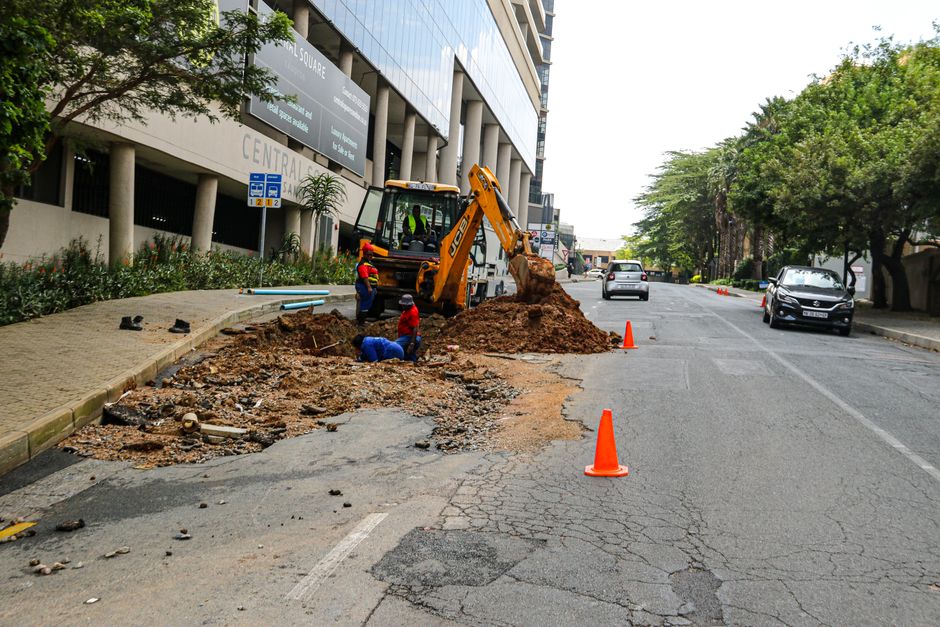
The City of Johannesburg's e-services portal carried the same stock photograph of a Sandton skyline on at least 14 separate departmental pages as recently as March 2026 — an embarrassment that digital governance advocates say is symptomatic of a deeper problem with how South African municipalities manage visual assets online. Now, with the ANC-DA coalition in Gauteng under pressure to demonstrate administrative competence, city officials have quietly begun an audit of duplicated imagery across all public-facing platforms.
The issue matters beyond aesthetics. Duplicate images slow page-load times, inflate server costs, and — crucially — erode public trust in the accuracy of official communications. When a resident in Soweto's Protea Glen visits the Joburg Water billing portal and encounters a photograph labelled 'Joburg 2018 infrastructure upgrade' that has been recycled across five unrelated departments, the signal sent is one of institutional sloppiness. That perception problem has real consequences in a city where digital service uptake remains the primary battleground for coalition credibility heading into the 2026 local governance review cycle.
Nairobi's City Digital Services Directorate completed a full duplicate-asset purge across 38 municipal web properties in February 2025, reducing page-weight on its primary citizen portal by roughly 23 percent, according to figures published by the Kenya ICT Authority. São Paulo's Secretaria Municipal de Inovação e Tecnologia launched a similar programme in mid-2024, using automated hash-matching software to flag repeated images across more than 200 city subdomains. Both cities invested in centralised digital asset management systems — Nairobi chose an open-source repository built on ResourceSpace, while São Paulo opted for a custom-built solution integrated into its existing SAP environment.
Johannesburg has no equivalent centralised system yet. The City's Group Information and Communications Technology department, based on Loveday Street in the CBD, has acknowledged the gap in internal circulars circulated to councillors earlier this year, though no public rollout date has been confirmed. Lagos, by contrast, only began digitising departmental content at scale in 2023 and is not yet at the stage of managing duplication — meaning Joburg, despite its shortcomings, is still ahead of several comparable African metros on the underlying infrastructure.
The Joburg Development Agency, which manages digital content for the Newtown Cultural Precinct and several Inner City regeneration zones, piloted a basic image-deduplication workflow in late 2025 using open-source tools. The pilot covered roughly 4 200 image assets and identified 31 percent as duplicates or near-duplicates — a figure that alarmed programme managers but aligned with what independent digital auditors typically find in municipal environments that have grown organically over a decade without centralised governance.
Pressure on the Gauteng coalition to act is building from two directions. Civil society organisations working in the digital access space, including the Johannesburg-based nonprofit The Grid Collective, which operates out of a shared workspace on Rissik Street, have begun advocating for a Joburg Digital Asset Register — a single source of truth for all publicly used imagery, updated quarterly. Meanwhile, national government's Department of Communications and Digital Technologies has flagged duplicate content management as a compliance consideration under the revised Government Communication and Information System guidelines expected to be formalised before the end of 2026.
For residents and local businesses, the practical upshot is this: cleaner, faster city websites mean faster access to billing statements, zoning applications, and service-delivery updates — services that residents in areas like Alexandra and Diepkloof have historically struggled to access reliably on mobile data. Metrorail's Joburg commuter information pages, already under reform as part of the broader Passenger Rail Agency of South Africa restructuring, have been cited internally as a priority for the image audit given their high daily traffic volume.
The city's digital team has signalled it wants a prototype centralised asset management system in place before the end of the third quarter of 2026. Whether the procurement timeline holds — procurement in Joburg has a habit of slipping — will be the clearest early test of whether the coalition's digital governance ambitions amount to more than a set of well-circulated PowerPoint decks.
How does this story make you feel?
Spread the word
About this article
Published by The Daily Johannesburg
Daily brief
Free, in your inbox before 7am. Weekdays.
More in News