news
Johannesburg's Housing Crisis: Decades of Apartheid Planning, Policy Failures Explained
From apartheid-era spatial planning to post-1994 delivery backlogs and a flood of new arrivals, Johannesburg's housing deficit didn't happen overnight, and fixing it won't either.
How we reported this
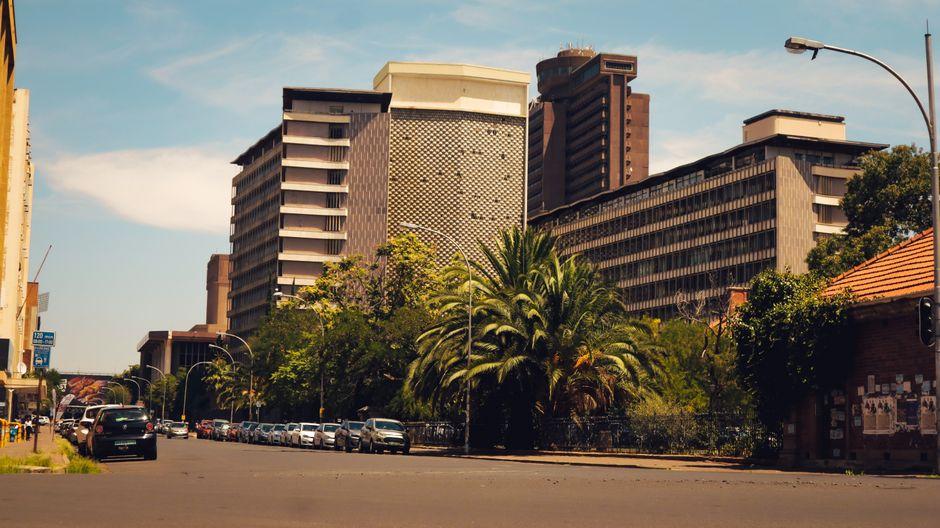
Johannesburg needs roughly 300,000 housing units right now. That figure, drawn from the City of Johannesburg's own housing backlog estimates and repeated in municipal budget documents tabled in May 2026, sits at the centre of a crisis that successive administrations, apartheid and democratic alike, helped create. The ANC-DA coalition running Gauteng inherited the number. They did not invent it.
The timing matters. With global attention fixed on housing affordability crises from London to Nairobi, Johannesburg offers one of the starkest case studies of what happens when urban policy fails across multiple generations. The city's population has grown from roughly 1.6 million in 1990 to an estimated 6.1 million today, yet the spatial logic baked in by apartheid planners, Black workers housed in Soweto and Tembisa, capital concentrated in Sandton, has proved almost impossible to undo at pace.
The Geography of Exclusion, Preserved in Asphalt
The M1 highway is more than a commuter artery. It is a dividing line. West of it, in suburbs like Brixton and Mayfair, former working-class white neighbourhoods have gentrified unevenly and filled with Zimbabwean and Mozambican migrants, many of them unable to access formal rental contracts because landlords demand South African IDs. East of the CBD, Hillbrow, a single square kilometre that once housed 100,000 people, remains the emblem of what urban planners call densification without services.
The Johannesburg Social Housing Company, known as JOSHCO, was established in 2004 specifically to bridge the gap between state RDP housing and open-market rentals. By 2025 it had delivered roughly 8,500 units across projects in Turffontein, Orange Farm and Devland. Substantial, but against a backlog measured in hundreds of thousands, inadequate. The Inner City Partnership Forum, which brings together property owners and the City of Johannesburg, has pushed since 2019 for the conversion of vacant commercial buildings along Commissioner Street and Jeppe Street into affordable residential stock. Progress has been slow, partly because building conversion costs in Joburg's CBD routinely exceed R15,000 per square metre.
Comparison with other cities sharpens the picture. In Nairobi, the Kenyan government's 2023 Affordable Housing Programme committed to 200,000 units annually, a target it has also largely missed. In Mumbai, informal settlements occupy land valued at billions of dollars while residents lack title deeds, a dynamic almost identical to what plays out in Cosmo City and Diepsloot. London's housing crisis, rooted partly in a failure to build social housing after Thatcher-era privatisation in the 1980s, offers the most instructive parallel: when a city allows its affordable stock to erode without replacement, the deficit compounds across decades. Johannesburg began that erosion under a different political logic, forced removals, townships, bantustans, but arrived at the same mathematical problem.
What the Numbers Actually Show
The average monthly rental for a bachelor flat in Randburg sits at approximately R6,800 in mid-2026, according to property portal data collated by Lightstone. In Soweto's Dobsonville, the same money buys a three-bedroom house in the secondary market, if you can secure a bond. Many can't. The National Credit Regulator's 2025 annual report found that 40 percent of South African credit applicants were rejected, disproportionately those earning below R10,000 a month. That bracket covers most of the city's formal workforce outside Sandton.
The Gauteng Department of Human Settlements spent R4.2 billion on housing delivery in the 2024-25 financial year, yet auditor-general findings released in March 2026 flagged irregular expenditure of R680 million within that allocation, much of it linked to contractor non-performance in Soweto and Tembisa projects.
For residents on the waiting list, some of whom registered with the City of Johannesburg as far back as 2003, the practical advice from housing advocacy groups like Ndifuna Ukwazi's Gauteng affiliate is blunt: engage ward councillors directly, document every interaction with the housing department, and join a registered community housing association where possible, since association members have historically been prioritised in allocation processes. None of that makes the wait shorter. It just makes people harder to ignore.