Joburg's Housing Debate Cracks Open: What Officials, Experts and Key Figures Are Actually Saying
A city of eight million people, a backlog of 300,000 housing units, and two fundamentally incompatible visions for what gets built next.
A city of eight million people, a backlog of 300,000 housing units, and two fundamentally incompatible visions for what gets built next.
The City of Johannesburg's housing directorate and its Gauteng provincial counterparts are openly at odds over whether to densify the inner city with high-rise developments or pour resources into subsidised low-rise housing on the periphery — and the disagreement is no longer happening behind closed doors. At a Housing Indaba convened at the Johannesburg City Hall on June 27, officials from at least four departments talked past each other for three hours before the session ended without a resolution.
The timing matters. The ANC-DA coalition governing Gauteng has made affordable housing one of its stated joint priorities for the 2025-2029 term, yet eighteen months in, no unified strategy has been tabled before the Gauteng legislature. Meanwhile, the city's own figures show the formal housing backlog sitting at roughly 300,000 units — a number that has barely shifted in a decade despite billions of rand flowing through the Breaking New Ground subsidy programme.
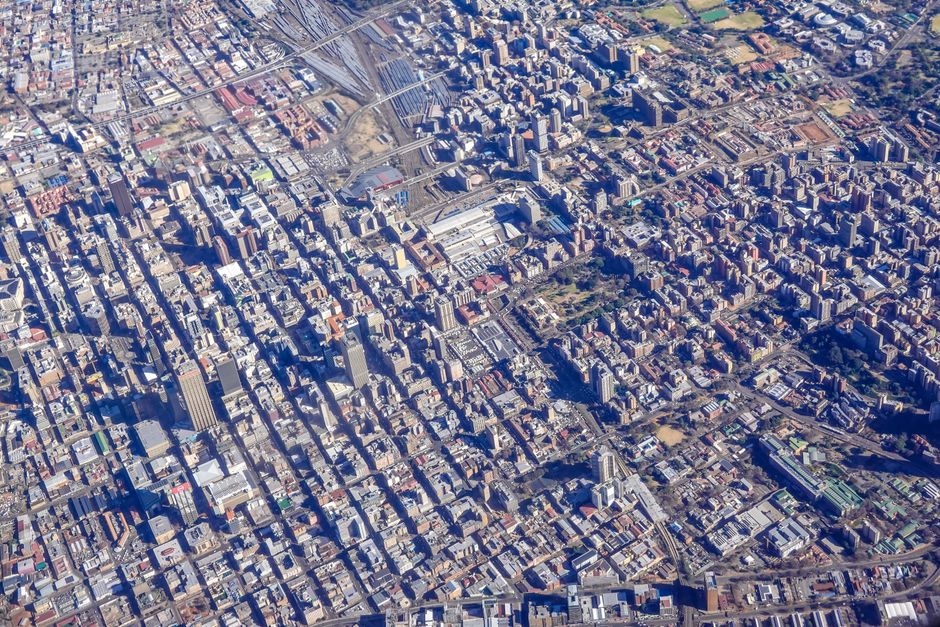
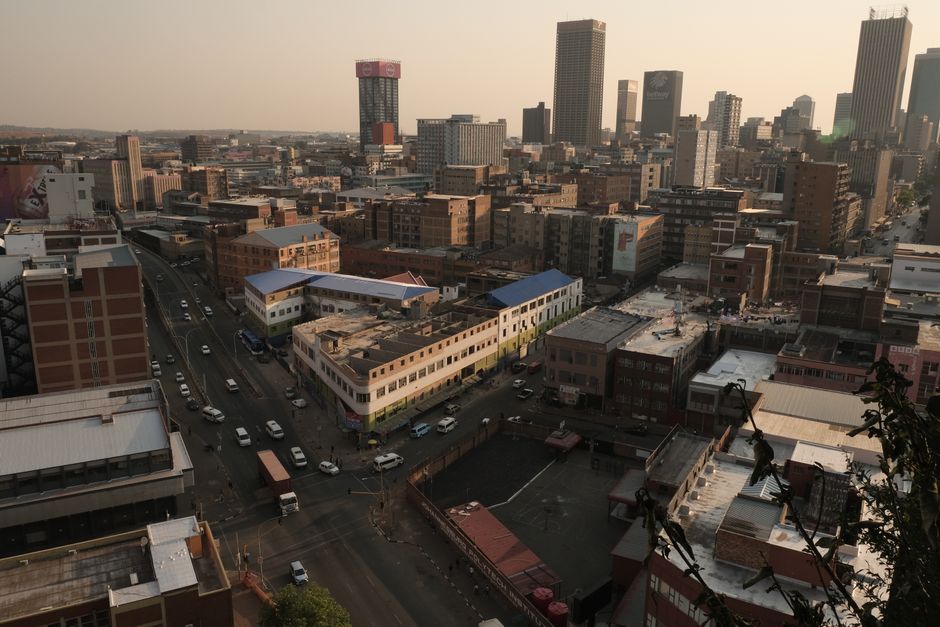
On one side sits a bloc of officials within the City of Johannesburg's Department of Human Settlements who argue the answer lies in Johannesburg's inner city. Their preferred model: mixed-income high-rise towers, built on publicly owned land already serviced with water and electricity, concentrated along the corridors of Bree Street, Jeppe Street and around the Park Station precinct. The Urban Land Institute's South Africa chapter, which briefed council members in May, put the cost of a new high-rise unit in that corridor at between R480,000 and R620,000 to construct — expensive upfront, but cheaper per hectare than greenfield sprawl.
On the other side, Gauteng's MEC for Human Settlements has backed a plan to accelerate delivery of Breaking New Ground units in areas like Vlakfontein and Lawley in the south of Johannesburg, where land is cheaper and bulk infrastructure can be extended. Supporters of that approach, including the South African Local Government Association, point out that inner-city densification has been promised repeatedly since the 2013 Corridors of Freedom initiative and produced only a fraction of projected units.
The Johannesburg Inner City Partnership, which represents private property owners and investors in the CBD, has publicly backed the high-rise route, arguing that empty and hijacked buildings along Pritchard Street and Plein Street could be converted or replaced. The organisation estimates more than 4,000 residential units could come from conversions of derelict commercial stock in Newtown and Marshalltown alone, without touching a single new parcel of land.
The statistics undercut both camps in different ways. City of Johannesburg data from the 2025-2026 municipal budget shows only R2.1 billion earmarked for human settlements capital expenditure — against an estimated need of R14 billion to clear the backlog within fifteen years at current building costs. Breaking New Ground units delivered in Gauteng dropped from 11,200 in 2022-2023 to approximately 7,400 in 2024-2025, according to the Gauteng Department of Human Settlements' own annual report. High-rise projects in the inner city, meanwhile, have stalled repeatedly: the City Deep mixed-use development announced in 2022 is still awaiting environmental authorisation.
Academics at the University of the Witwatersrand's School of Architecture and Planning have argued in a paper circulated to council this year that the binary choice is a false one — that Soweto's existing housing stock, much of it single-storey RDP, could absorb densification through backyard rental formalisation at a fraction of the cost of either new greenfield or high-rise construction. Wits researchers estimate roughly 85,000 informal backyard dwellings already exist in Soweto alone, housing an estimated 200,000 people with no formal tenure.
A technical committee is expected to present a consolidated housing strategy to the Johannesburg Executive Mayor's office before the end of August. Housing advocacy groups, including Ndifuna Ukwazi's Johannesburg affiliate, say they will mount a legal challenge if the final plan does not include binding affordability thresholds — specifically, units priced below R3,500 per month for households earning under R15,000. Without that floor, critics say, any high-rise scheme risks repeating the gentrification cycle that has already pushed low-income residents from Maboneng toward the East Rand.
How does this story make you feel?
Spread the word
About this article
Published by The Daily Johannesburg
Daily brief
Free, in your inbox before 7am. Weekdays.
More in News