The Numbers Behind Joburg's R47-Billion Transport Crossroads
Three rival infrastructure projects are competing for the same pot of city money — and the statistics reveal exactly who wins and who loses depending on which one gets built.
Three rival infrastructure projects are competing for the same pot of city money — and the statistics reveal exactly who wins and who loses depending on which one gets built.
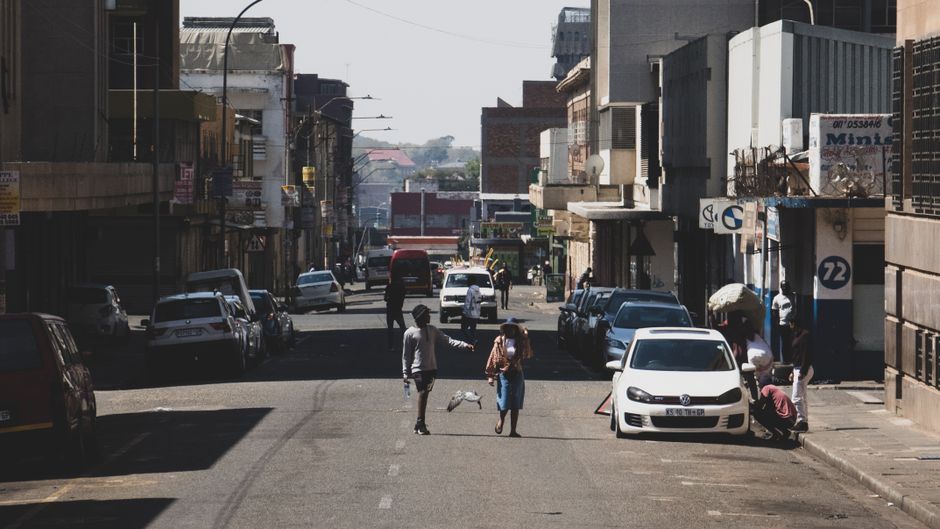
The City of Johannesburg has until September 30 to commit its infrastructure capital allocation for the 2027–2029 medium-term expenditure framework, and officials are staring at three projects that cannot all be funded simultaneously. The choice — between a Metrorail modernisation corridor, a Bus Rapid Transit extension along Empire-Perth Road, and a new Rea Vaya phase linking Soweto to Sandton — will define how roughly 4.2 million daily commuters move across the city for the next two decades.
The timing is not incidental. The ANC-DA coalition governing Gauteng has made urban mobility a stated priority in its 2025-2030 compact, and the national Department of Transport is requiring municipalities to submit binding project mandates before accessing a R12-billion conditional infrastructure grant that opens in January 2027. Miss the deadline, and Johannesburg forfeits its portion to metros that filed on time — Cape Town and Ekurhuleni have both already submitted preliminary proposals.
The Metrorail Corridor Upgrade — formally the Joburg Inner-City Rail Rehabilitation Programme — carries the largest price tag at R21.3 billion over six years. It would rebuild the Park Station to Naledi line through Soweto, replacing rolling stock that averages 38 years old and currently runs at 34 percent on-time reliability, according to Passenger Rail Agency of South Africa figures from its March 2026 operational audit. Ridership on that corridor collapsed from 175,000 daily boardings in 2015 to under 62,000 last year, largely because of cable theft and service unpredictability. Backers argue those passengers can be won back.
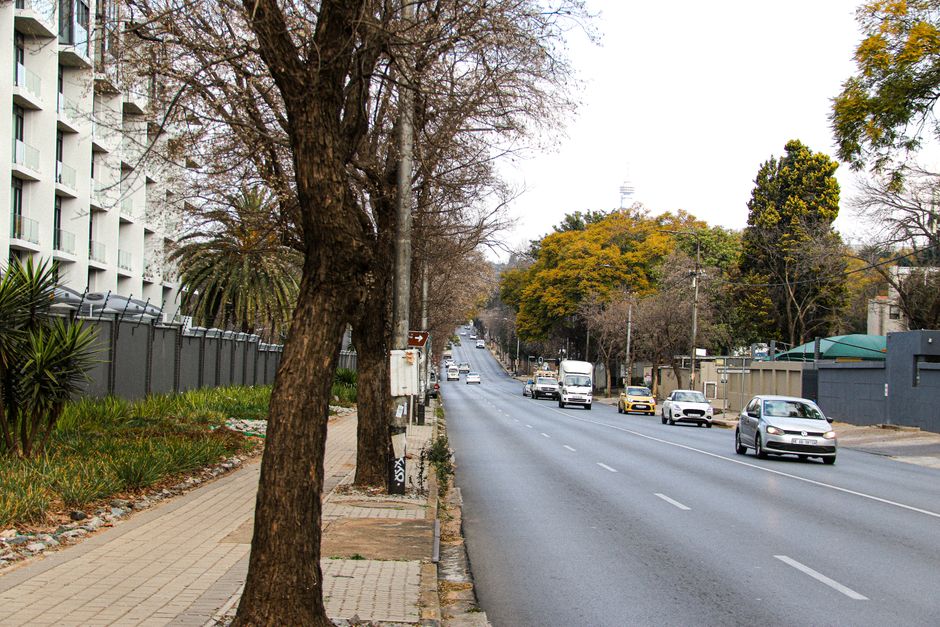
The Empire-Perth BRT extension is the cheapest option at R8.9 billion. It would run dedicated bus lanes from Auckland Park through Braamfontein, connecting to the existing Rea Vaya network at the Queen Elizabeth Bridge interchange. The route passes Wits University, where 37,000 students currently rely on a patchwork of minibus taxis and unreliable Metrobus services. Johannesburg's own modelling, contained in a February 2026 transport department scoping report, projects 94,000 daily BRT passengers within three years of opening — but critics say that figure assumes a modal shift from private cars that Joburg commuters have historically resisted.
The third option, Rea Vaya Phase 3C, is priced at R16.8 billion and is the most politically charged. It would run from Thokoza Park in Soweto along the N1 corridor to Sandton's Katherine Street terminus, a 34-kilometre spine through some of the city's densest informal settlements. The Phase 3C business case, drafted by the Johannesburg Development Agency in April 2026, shows a projected 22-minute reduction in average commute time between Diepkloof and the Sandton CBD — a trip that currently averages 78 minutes by public transport and over 50 minutes by car during peak hours on the M1.
The raw passenger numbers favour Metrorail if recovery targets are even half-achieved: rail carries exponentially more people per rand of operating cost at full capacity than BRT. But the R21.3-billion figure requires federal co-financing that is not yet guaranteed, and PRASA's institutional record since 2015 gives financiers and rating agencies reason for scepticism. Moody's flagged PRASA's governance in its May 2026 South Africa infrastructure risk note as a factor weighing on municipal bond appetite.
The Empire-Perth BRT, by contrast, sits on land the city already owns along most of its alignment, reducing expropriation costs that ballooned the Phase 2 Rea Vaya rollout by R2.1 billion between 2018 and 2023. It could realistically open sections by late 2028. Phase 3C's Soweto-to-Sandton appeal is obvious — it targets the commute that defines economic inequality in Johannesburg more viscerally than almost any other — but its elevated sections near Crown Interchange require engineering work that two independent quantity surveyors say could push the real cost above R19 billion.
The Johannesburg Metropolitan Council's transport portfolio committee is scheduled to hear public submissions at the Civic Centre on Loveday Street on July 22 and July 29. Residents, particularly those in Soweto, Braamfontein and along the Empire Road corridor, can register as presenters through the City's e-participation portal before July 15. Whatever council recommends goes to the Mayoral Committee by August 12 — leaving just seven weeks to pick a direction that will outlast every politician currently in the room.
How does this story make you feel?
Spread the word
About this article
Published by The Daily Johannesburg
Daily brief
Free, in your inbox before 7am. Weekdays.
More in News