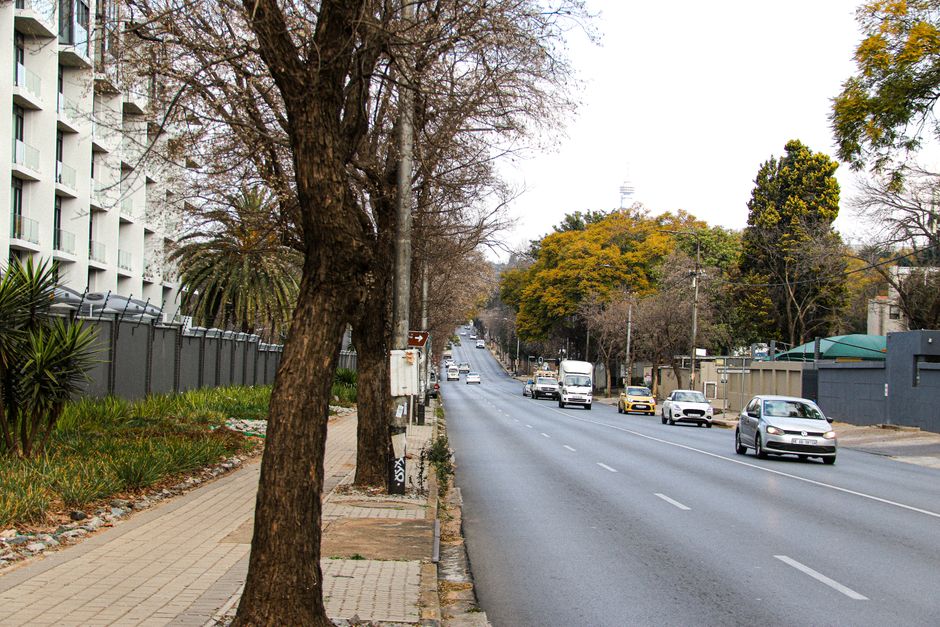
The City of Johannesburg's Environment and Infrastructure Services Department confirmed last month that its Integrated Climate Action Plan — a 2023 policy framework targeting a 43 percent reduction in municipal emissions by 2030 — is now in its third year of implementation. The numbers look promising on paper. On the ground, the picture is messier.
The timing matters. Load shedding has eased significantly since late 2024, with Eskom's national grid stabilising enough that many Joburg households have seen fewer than four interrupted days per month in the first half of 2026. That breathing room has created political space for the ANC-DA coalition in Gauteng to accelerate green-infrastructure spending without the immediate backlash that came when rolling blackouts dominated every conversation. Officials now have a window. Whether they use it effectively is the question experts are pressing hardest.
Solar in Soweto, Hesitation in the Suburbs
In Orlando East, the Soweto Renewable Energy Co-operative has connected 340 households to a shared solar micro-grid since its pilot launch in January 2025. The programme, funded partly through the City's R2.1 billion Green Economy Budget allocation, charges members roughly R450 per month — less than half what many were paying Eskom before system stabilisation. Ward councillors in Diepkloof and Meadowlands have asked for replication, but officials at the Metropolitan Centre on Loveday Street say procurement delays in the second quarter of 2026 have slowed expansion plans by at least six months.
Dr. Nompumelelo Dube, a climate policy researcher at the University of the Witwatersrand's African Centre for Cities, told colleagues at a June seminar that the city's approach suffers from a design problem. Initiatives are built for communities, she argued, not with them. Her research, covering 12 Johannesburg wards between 2024 and 2025, found that fewer than 30 percent of residents in targeted low-income areas reported receiving meaningful consultation before green infrastructure was installed in their neighbourhoods.
Sandton tells a different story — or at least a shinier one. The Sandton City mall complex completed a 2.4-megawatt rooftop solar installation in March 2026, one of the largest commercial arrays in Gauteng. Rosebank's The Zone shopping centre followed in May with a 900-kilowatt system. Private capital is moving. Joburg's wealthier nodes are essentially building their own green grid, which pleases the city's climate targets but raises uncomfortable equity questions that officials are only beginning to answer publicly.
What the City Says — and What Critics Hear
Johannesburg's mayoral committee member for environment, speaking at a press briefing at the Civic Theatre in Braamfontein on 18 June, described 2026 as a "decisive implementation year" and pointed to the planting of 50,000 trees across the city since 2024 under the Greening Joburg programme. Conservation NGO Wildlife and Environment Society of South Africa (WESSA) welcomed the figure but noted in its April 2026 report that tree mortality rates in high-density areas like Alexandra and Tembisa — due to inadequate maintenance budgets — are running at close to 35 percent within the first two years of planting.
The Joburg Metrorail reform process, still grinding through funding negotiations with the Passenger Rail Agency of South Africa, also intersects directly with green goals. Every commuter kept off the N1 highway is a measurable emissions saving, but officials at Park Station have repeatedly warned that the rail upgrade timeline, originally set for partial completion by December 2026, is slipping toward mid-2027.
For residents in areas like Doornfontein and Jeppestown — inner-city precincts absorbing large numbers of migrants from Zimbabwe and Mozambique — green policy often feels abstract against immediate concerns about electricity access and housing. Community leaders there say they want solar. They also want functioning sewage infrastructure first.
The city's next public accountability session on the Integrated Climate Action Plan is scheduled for September 2026, with ward-level feedback sessions planned across all seven regions. Experts say that session will be a genuine test: whether the coalition government treats it as a consultation or a press release.