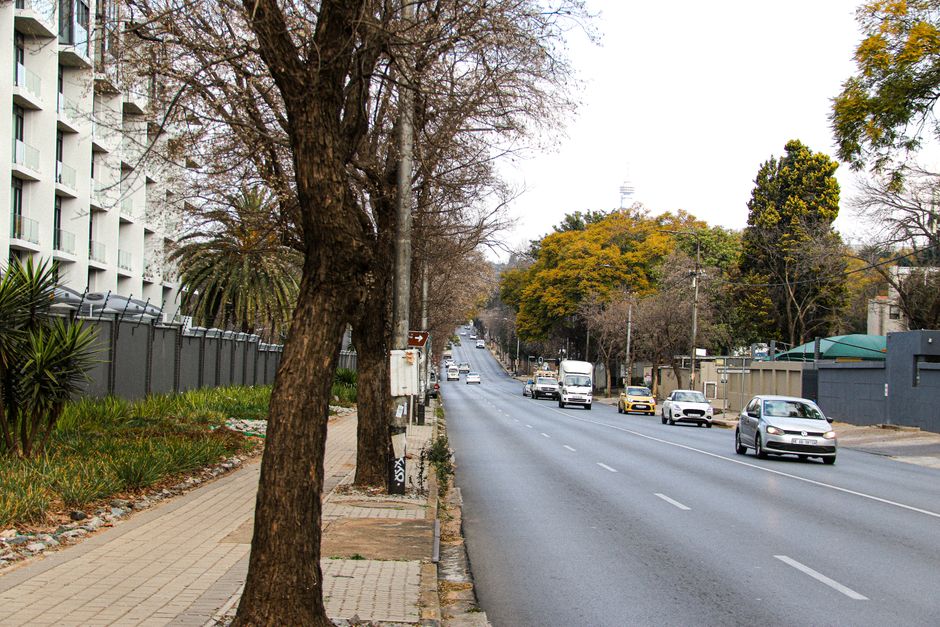
Johannesburg's public transport crisis deepened this week after the City of Joburg's own quarterly progress report, tabled on Tuesday, confirmed that fewer than 40 percent of the promised Rea Vaya Bus Rapid Transit Phase 1C route extensions have been completed — more than three years past the original 2023 target date. The document, reviewed by The Daily Johannesburg, shows R1.2 billion in capital allocations sitting unspent across the transport and roads portfolio as of the end of June 2026.
The timing is brutal. Johannesburg is bidding to host the 2030 World Urban Forum, a United Nations-backed event that would bring delegates and media from over 190 countries to Sandton. Transit connectivity is among the formal assessment criteria. Cape Town and Nairobi are watching, and so are Bogotá and Kuala Lumpur, both of which have submitted competing bids. A city that cannot move its own residents efficiently is a difficult sell as a model for 21st-century urbanism.
The Routes That Went Nowhere
The Rea Vaya Phase 1C expansion was supposed to link Soweto's Dobsonville and Jabulani precincts to the existing trunk route along Empire Road and deliver a new corridor stretching into the inner city via Bree Street. That corridor remains partially operational. Dedicated bus lanes on sections of Ontdekkers Road in Roodepoort have been painted and then repainted twice, but the infrastructure behind them — sheltered stations, ticketing kiosks, feeder routes — has not materialised on schedule.
Metrorail is no less troubled. The Prasa-operated Central Line, which carries commuters between Park Station in the Johannesburg CBD and communities as far as Naledi in Soweto, recorded an on-time performance rate of just 54 percent in May, according to the Passenger Rail Agency of South Africa's own operational data. That figure is down from 61 percent in January. The Johannesburg Development Agency, which is coordinating transit-oriented development nodes at sites including the Marlboro Gautrain interchange and a proposed precinct near Doornfontein Station, has warned in internal presentations that delays to rail reliability are eroding developer confidence in those nodes.
Commuters are making the calculation themselves. A minibus taxi from Soweto's Maponya Mall to the Sandton CBD costs roughly R30 one way and takes between 45 minutes and two hours depending on traffic. The same journey on a functioning Rea Vaya trunk service would cost R14 and, theoretically, bypass congestion in dedicated lanes. The gap between the theory and the lived experience is where the city keeps losing ground.
Coalition Politics Adding Friction
The ANC-DA coalition governing Gauteng province has added a layer of institutional complexity to what should be technical decisions about bus depots and signalling upgrades. The two parties disagree on the extent to which the Johannesburg Roads Agency should be merged with the Rea Vaya operating entity, a restructuring the DA supports and the ANC's caucus has resisted. That fight has sat unresolved since February, and it has held up at least two contractor appointments in the Soweto corridor.
The city's transport MMC told a council committee on Wednesday that a revised implementation timeline for the Phase 1C completion would be presented before the August recess. That deadline has slipped before — an identical commitment was made in October 2025 and again in March 2026. Residents along the planned Dobsonville extension have heard the same language at community meetings for four consecutive years.
What happens next depends largely on whether the coalition can reach agreement on the JRA restructuring before the August recess, and whether Prasa releases the R680 million in deferred maintenance funds for the Central Line that National Treasury approved in the February budget but that have not yet been drawn down. If neither moves, the World Urban Forum bid faces a credibility problem that no glossy presentation deck will paper over. Johannesburg has the bones of a major transit city. The question, increasingly urgent, is who is going to build on them.