City of Johannesburg officials and Gauteng provincial government representatives clashed publicly this week over a R9.1-billion rapid transit expansion proposal, with the ANC-DA coalition administration at the City blocking provincial efforts to fast-track the project through the Gauteng Department of Roads and Transport. The dispute has now escalated to the point where two separate environmental impact assessments are under review simultaneously — one commissioned by the City, one by the province — for what is supposed to be the same infrastructure corridor.
The timing matters because Johannesburg is running out of road, literally. The Rea Vaya Bus Rapid Transit system, launched with considerable fanfare in 2009 ahead of the FIFA World Cup, has not had a single new trunk route added since Phase 1C was completed in 2016. That year, the City committed to extending the network from Soweto's Thokoza Park terminus through to Sandton's Katherine Street interchange by 2020. The deadline passed. Then 2022 passed. The project stalled repeatedly over land acquisition disputes along the Empire-Perth corridor and a persistent funding shortfall that worsened after the COVID-19 pandemic hammered municipal revenue.
The Corridor That Nobody Agrees On
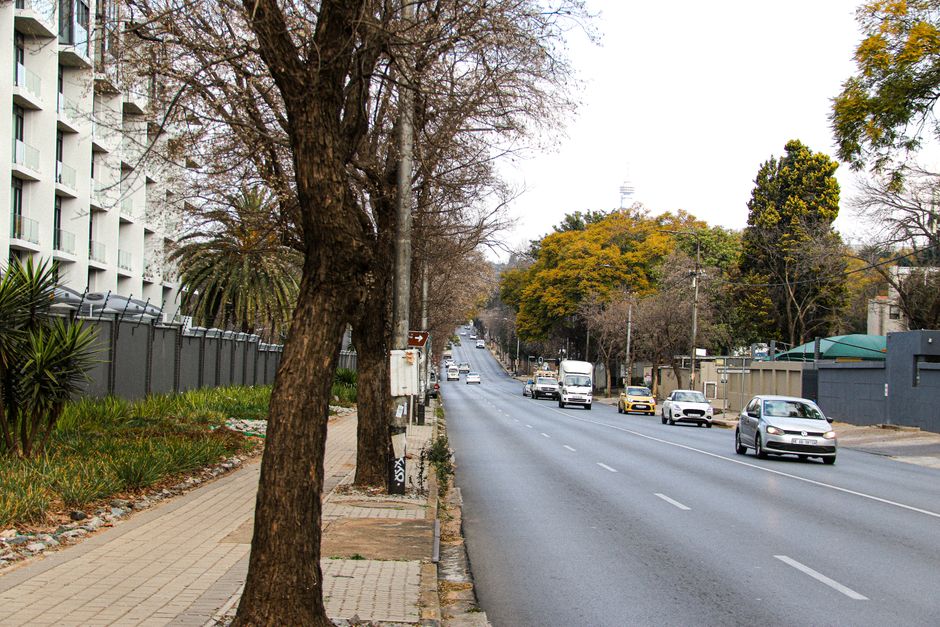
The current $500 million proposal — the figure comes from a July 2025 feasibility study tabled before the City's Transport Portfolio Committee — covers three potential corridors. The first runs from Soweto's Orlando East along Potchefstroom Road into the CBD. The second follows the Louis Botha Avenue spine north through Yeoville, Highlands North and Bramley into Alexandra. The third, and most contested, extends the existing Sandton Gautrain node westward toward Fourways Mall and Diepsloot. Provincial officials want the Diepsloot route prioritised, arguing it serves one of the fastest-growing low-income settlements in Gauteng, where the population crossed 400,000 last year according to Gauteng City-Region Observatory estimates. City transport planners counter that the Louis Botha corridor carries over 85,000 commuter trips daily and already has the density to make BRT financially viable without a provincial subsidy.
The Metrorail dimension complicates everything. The Passenger Rail Agency of South Africa has been slowly restoring Central Line services following years of vandalism and theft that left commuters stranded across the south of the city. PRASA's Johannesburg Regional Manager confirmed in May that the Naledi-to-Park Station corridor was operating at roughly 60 percent of pre-2019 capacity. Many commuters who abandoned the train shifted to minibus taxis. Bringing them back onto any formal rapid transit system — bus or rail — means competing with an entrenched taxi industry that fought Rea Vaya violently when it launched on the Old Potchefstroom Road route in Phase 1.
Coalition Politics Add Another Layer
The ANC-DA governing coalition at the City of Johannesburg, which has held together since the 2024 local government elections, is straining under this particular disagreement. The DA's transport caucus favours a public-private partnership model that would bring in an operator similar to the arrangement used for the Gautrain, managed under Bombela Concession Company. ANC councillors, particularly those representing Soweto wards, are pushing for the City to retain operational control and cross-subsidise fares below R12 per single trip — the current Rea Vaya base fare set in January 2026. Neither side has a majority large enough to push the other's model through council unilaterally.
The next formal decision point is a special sitting of the Johannesburg Metropolitan Council scheduled for 17 July, where the Transport Portfolio Committee is expected to present a recommendation on which corridor to prioritise for Phase 2 of Rea Vaya. If the council cannot agree, the default outcome is that the R9.1-billion allocation sits unspent while provincial and national treasury officials watch the 2026/27 financial year clock down. Commuters along Louis Botha Avenue, many of whom travel from as far as Tembisa into the CBD each morning, will be watching closely. They have been watching for a long time.