More than 300,000 undocumented migrants are estimated to be living in Johannesburg's inner city and surrounding townships, according to the South African Human Rights Commission's 2025 urban displacement report — and despite a surge in targeted attacks since March, the vast majority are staying put. The calculation is brutal and simple: the dangers here, for most, still fall short of whatever they fled at home.
That arithmetic matters now because tensions have visibly sharpened in recent weeks. Vigilante groups operating out of sections of Soweto and the Johannesburg CBD have been circulating lists on community WhatsApp groups, and at least four foreign-owned spaza shops on Bree Street were destroyed in June alone. The ANC-DA coalition running Gauteng has so far failed to agree on a unified enforcement strategy, leaving the Johannesburg Metro Police Department caught between competing provincial directives.
The Long Build-Up Behind the Current Violence
This did not arrive suddenly. The pressure has been building since at least 2008, when the first major wave of xenophobic attacks killed 62 people and displaced roughly 100,000 across Gauteng. What changed in the years since is the scale of arrivals. Zimbabwe's economic implosion accelerated departures after 2020, and by 2023 Statistics South Africa estimated that Zimbabweans alone accounted for nearly 40 percent of all cross-border migrants entering the country. Mozambicans, Malawians, and a growing number of Congolese nationals followed similar patterns.
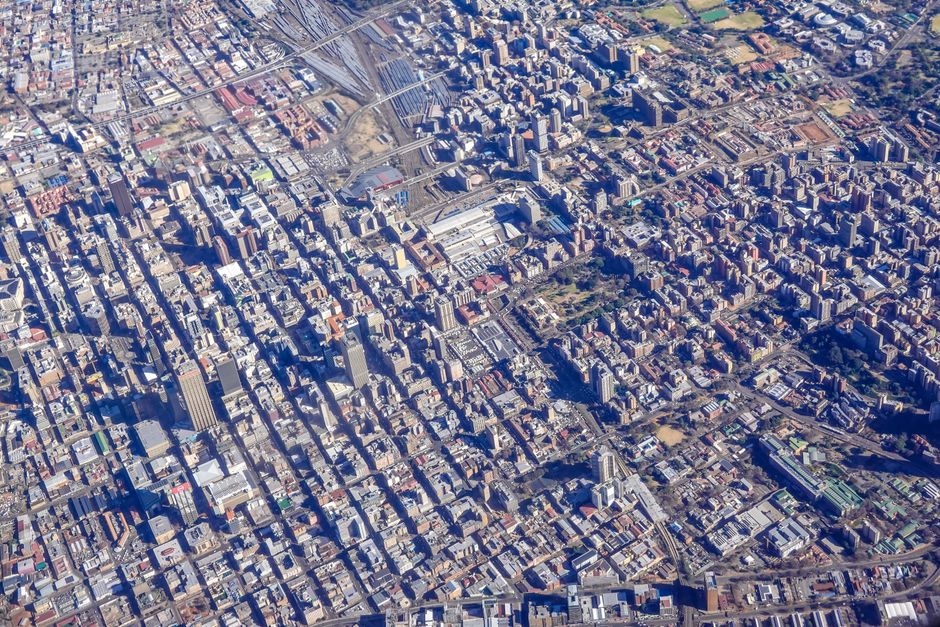
Johannesburg absorbed the bulk of them. Hillbrow, once a largely South African neighbourhood, now functions as a de facto reception district with an estimated resident population that is more than 60 percent foreign-born. The suburb's density — roughly 50,000 people per square kilometre by some municipal counts — has strained water, waste removal, and electricity infrastructure to the point where residents, South African and foreign alike, cycle through daily crises. Load shedding reduction progress at a national level has helped marginally, but the inner city grid still experiences unscheduled outages three to four times a week.
The economic grievance that feeds anti-migrant sentiment is concentrated but real. Unemployment in Soweto sits above 42 percent among adults under 35, according to a Gauteng City-Region Observatory survey published in April 2026. When foreign nationals operate informal businesses at lower margins — partly because many live in the same building they trade from, cutting overheads — South African competitors frame it as unfair encroachment rather than economic adaptability. The Somali Association of South Africa has documented 118 shop lootings in Johannesburg in the 18 months to June 2026.
Why Migrants Calculate the Risk as Worth Taking
The Jesuit Refugee Service, which runs an advice centre on Plein Street in the CBD, processed 4,200 new cases in the first quarter of 2026 — up 31 percent on the same period in 2025. Staff there describe migrants arriving with an awareness of the risks that would seem to deter movement, but who weigh those risks against remittance mathematics. A Zimbabwean national earning R6,500 a month from a combination of informal trade and domestic work can send home an amount equivalent to three times the median monthly wage in Harare. Violence is a tax on that income, not a reason to abandon it entirely.
The City of Johannesburg's Social Development Directorate launched the Migrant Community Liaison Programme in 2024, intended to create ward-level dialogue structures between foreign nationals and South African residents. As of June 2026, it operates in only 11 of the city's 135 wards — almost none of them in the highest-tension areas of the southern suburbs or along the Cleveland-Jeppestown corridor where attacks have been concentrated.
What comes next is likely to be shaped by one variable above all others: whether the provincial government deploys the Gauteng Community Safety Plan it announced in February, which includes dedicated JMPD units in Hillbrow, Yeoville, and parts of Alexandra. The plan has a R280-million budget allocation but no confirmed implementation date. Until those structures are visible on the ground, community protection organisations on both sides of the divide are filling the vacuum — and filling it with their own rules.