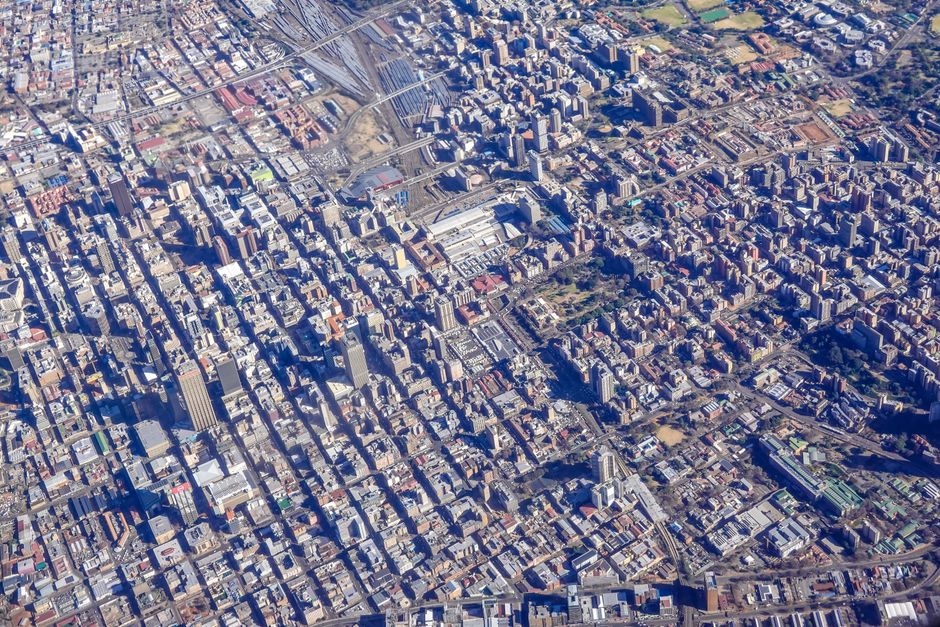
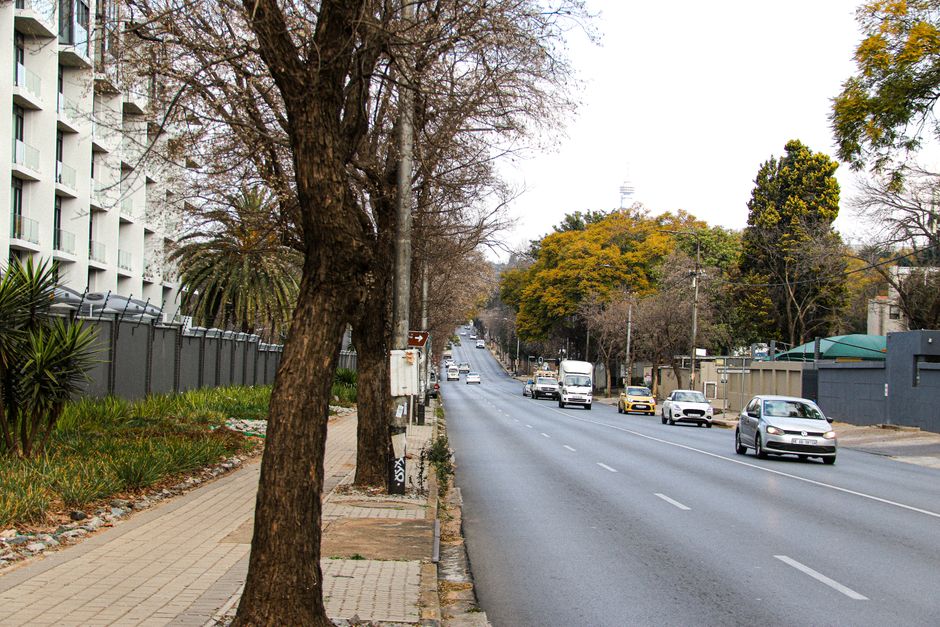
Walk down Pretoria Street on any weekday morning and you will count more mobile money agents, fruit vendors, and airtime resellers before breakfast than formal bank branches in the entire suburb. Hillbrow — roughly 1.5 square kilometres wedged between the Johannesburg CBD and Berea — now sustains an estimated 200,000 residents almost entirely on the strength of its informal economy, according to figures compiled by the Gauteng City-Region Observatory in its 2025 urban density report. Formal retail investment in the area has not meaningfully recovered since the late 1990s.
The timing matters. Johannesburg's ANC-DA coalition government in Gauteng has spent the better part of two years promising a renewed inner-city regeneration push, with City of Johannesburg officials pointing to the Vulindlela Inner-City Renewal Programme as the vehicle for change. But Hillbrow residents and urban researchers who have tracked the neighbourhood for decades say the gap between policy announcement and ground-level reality has never been wider. With global economic headwinds squeezing municipal budgets — and load shedding cuts still uneven across Joburg's grid, despite recent Eskom progress — the informal economy is not a stopgap. For most people here, it is the only economy.
From White Flight to Fortress Economy: The Long Unravelling
The story of how Hillbrow arrived at this point begins with the collapse of the Group Areas Act enforcement in the late 1980s. Black South Africans and migrants began moving into the previously whites-only high-rises along Claim Street and Kotze Street well before the formal end of apartheid in 1994. White residents and middle-class tenants left fast. Property owners, seeing the writing on the wall, stopped maintaining buildings. By the mid-1990s, Hillbrow had the highest crime rate of any neighbourhood in the city and buildings on streets like Edith Cavell were already classified as "bad buildings" by the Johannesburg Property Company — a designation that would balloon to more than 300 structures by 2010.
The post-apartheid city tried. The Inner City Housing Company, established in the early 2000s, refurbished a handful of buildings near the Hillbrow Tower. The Greater Johannesburg Metropolitan Council's 1997 inner-city strategy identified the neighbourhood as a "priority intervention zone." Neither initiative moved fast enough, or with enough capital, to stem the decay. By the time the City of Johannesburg launched the Corridors of Freedom public transport project in 2013 — linking Hillbrow via Louis Botha Avenue to Alexandra and Sandton — the formal private sector had already written the suburb off entirely. No anchor tenant followed the bus rapid transit infrastructure. No major retailer opened on Claim Street. The Checkers on Kotze Street closed in 2009 and was never replaced.
The Economy That Bureaucracy Forgot
What filled the vacuum was a dense, layered, largely undocumented informal economy driven heavily by migrants from Zimbabwe, Mozambique, and Nigeria, as well as rural South Africans who arrived in successive waves from the 1990s onward. The Hillbrow Health Precinct, anchored by Hillbrow Clinic on Esselen Street, became a node around which food traders, traditional medicine sellers, and informal pharmacists clustered. The area around the Noord Street taxi rank — less than a kilometre south — funnels tens of thousands of rand per day through informal traders who supply Hillbrow's towers.
The Gauteng City-Region Observatory estimated in 2024 that the informal economy in Johannesburg's inner city generates between R4 billion and R6 billion annually in unrecorded turnover, with Hillbrow and Berea accounting for a disproportionate share. A single hairdressing salon operator working out of a building on Edith Cavell Street reported monthly revenues of roughly R18,000 to urban researchers from Wits University's School of Architecture and Planning — no lease, no formal registration, no municipal services beyond sporadic water supply.
The Vulindlela programme's 2026 budget allocation of R220 million for inner-city upgrades sounds substantial until you divide it across the roughly 40 precincts the City of Johannesburg has identified for intervention. Hillbrow's share, based on current spending projections from the City's Development Planning Department, amounts to less than R12 million for the current financial year. Residents and street traders on Pretoria Street will feel little of it. The pragmatic bet, for now, is on the informal networks that have sustained this neighbourhood through every policy cycle since 1994 — and outlasted all of them.