Senior City of Johannesburg officials, private sector economists and civil society leaders gathered this week to present what they describe as a make-or-break infrastructure and economic recovery agenda for the metro, with the ANC-DA coalition government facing mounting pressure to show results before the 2026 municipal mid-term review scheduled for October.
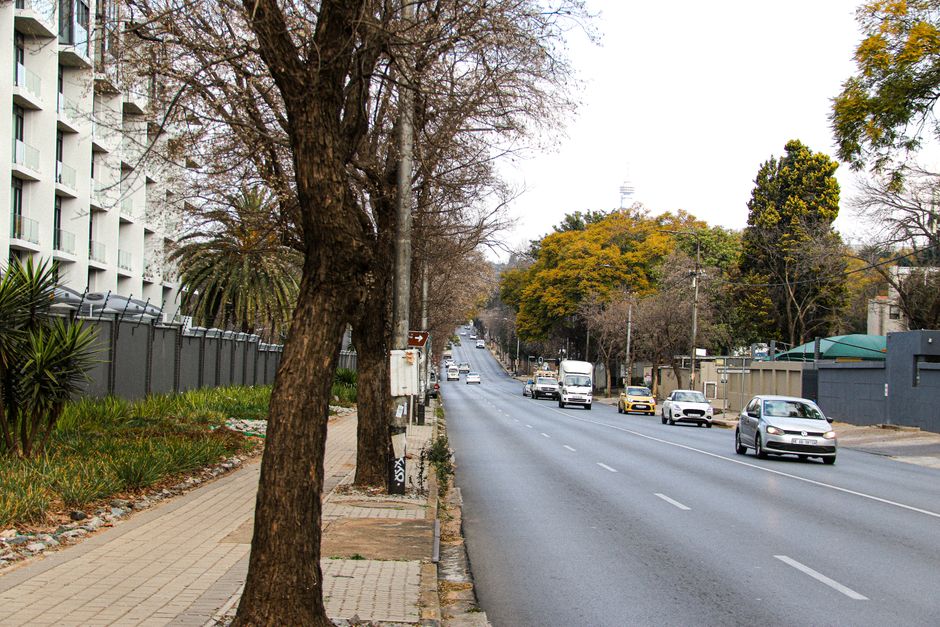
The timing is not accidental. Load shedding, while reduced from the Stage 6 peaks of 2023, still cost Johannesburg businesses an estimated R4.7 billion in lost productivity last year, according to the Johannesburg Chamber of Commerce and Industry. Roads on key corridors including Empire Road and Louis Botha Avenue have deteriorated to a point where the South African Institution of Civil Engineering rated portions of the city's road network at a 'D-minus' maintenance standard in its most recent infrastructure report card.
Coalition Government Sets Out Priorities
Johannesburg Executive Mayor Dada Morero's office confirmed this week that the city will accelerate its 24-month infrastructure spending plan, which earmarks R12.3 billion across water, electricity and transport upgrades. Officials speaking on background at the Joburg City Hall briefing on Tuesday said the first tranches of that funding will target the Soweto bulk water replacement project and the beleaguered Metrorail commuter corridor between Park Station and Naledi, a line used daily by roughly 80,000 commuters.
The Metrorail issue drew pointed commentary from the Urban Mobility Research Institute at Wits University, whose researchers have argued since at least January that the Passenger Rail Agency of South Africa's Joburg operations cannot recover without direct city oversight rather than a national government mandate. Institute director Dr. Sipho Nkosi — who has testified before the Gauteng Legislature on rail reform — told a panel at the Sandton Convention Centre on Wednesday that the current governance structure was the single biggest obstacle to a functional rail network. His position: municipalities must have binding authority over Prasa operations within their boundaries, not just advisory status.
The private sector has its own list. The Johannesburg Property Owners and Managers Association, which represents landlords across the CBD and nodes like Rosebank and Midrand, released a position paper Thursday calling for the city to resolve its billing system crisis by December 2026. The association says members are sitting on disputed municipal accounts totalling over R900 million — money the city says it is owed, money the businesses say reflects billing errors going back to the 2020 migration to the SAP system. Until that is resolved, several members say they are withholding capital investment decisions.
Economists Warn on Migration Pressure and Informal Economy
The economic recovery debate cannot be separated from demographic reality. Johannesburg now hosts an estimated 1.2 million Zimbabwean and Mozambican migrants, according to the African Centre for Migration and Society at Wits, and a significant proportion work in the informal economy concentrated in areas like Jeppestown, Fordsburg and along Bree Street in the inner city. Economists at the Bureau for Economic Research argue that formalising even a fraction of this labour market could add between R6 billion and R9 billion annually to the city's taxable economic base.
That argument has not yet translated into policy. The city's Inner City Regeneration Programme, relaunched under the coalition agreement in February, focuses heavily on building refurbishment and street trading management but critics say it lacks a clear pathway to economic inclusion for migrant workers. Planact, the non-governmental urban development organisation based in Braamfontein, has submitted formal comments to the city asking that the programme incorporate livelihood support components by the time it reaches Alexandra and Hillbrow in phase two.
What happens next depends largely on whether the coalition partners can hold together through budget votes expected in late August. DA Gauteng officials have signalled they want faster movement on private sector partnerships for electricity distribution — a model piloted with mixed results in Cape Town — while ANC caucus members remain wary of what some describe privately as creeping privatisation. The October mid-term review will be the first hard test of whether this coalition can move from press conferences to tarmac.