How Braamfontein Became the Flashpoint for Gautrain's Long-Delayed Expansion
Years of competing promises, budget fights and shifting political alliances have brought Johannesburg's most contentious rail project to a critical juncture in 2026.
Years of competing promises, budget fights and shifting political alliances have brought Johannesburg's most contentious rail project to a critical juncture in 2026.
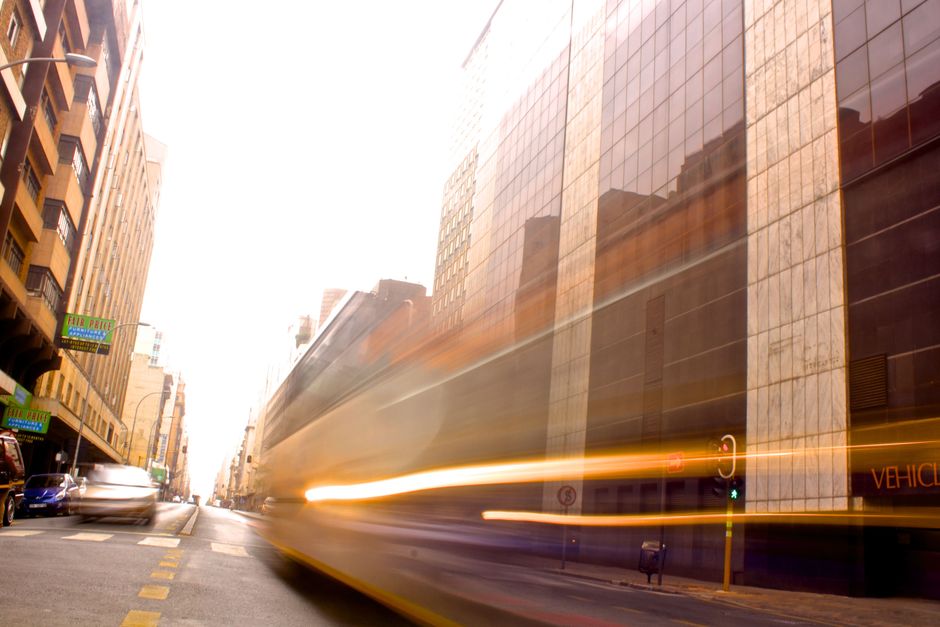
The Braamfontein Gautrain extension is finally moving from architectural renders to actual concrete — but the road that brought this project to July 2026 is littered with broken deadlines, redrawn routes and a funding dispute that nearly killed it twice. The Gauteng Provincial Government confirmed in March that preliminary civil works on the Braamfontein spur would begin in the third quarter of this year, connecting the existing Park Station interchange to a new station at the intersection of De Korte Street and Jan Smuts Avenue, a stretch of roughly 2.3 kilometres that has been contested since at least 2018.
The timing matters for a specific reason. Johannesburg's inner-city commuter infrastructure has been under acute pressure since 2022, when Metrorail's Central Line effectively collapsed for routine passengers, pushing an estimated 80,000 daily commuters onto an already overwhelmed minibus taxi network and a Rea Vaya Bus Rapid Transit system that was never designed to absorb that load. The Gautrain Management Agency, which operates under a concession agreement with the province set to expire in 2026 before its recently renegotiated extension, identified Braamfontein as the single highest-density unserved corridor in the metropolitan area.
The story of how this particular route was chosen is not a straight line. The original Phase 2 proposals, first circulated publicly by the Gauteng Department of Roads and Transport in 2014, envisaged extensions reaching Soweto's Bara taxi rank, Sandton's Katherine Street precinct, and OR Tambo's cargo terminals simultaneously. All three were shelved by 2019 as the province's infrastructure budget was redirected toward load-shedding mitigation and the collapsing Prasa rolling stock programme. Braamfontein survived the cuts largely because of its proximity to Wits University's Education Campus and the Constitutional Hill precinct on Kotze Street — two anchor institutions that generate predictable, all-day passenger demand rather than the peak-only flows that plague most commuter investments.
The ANC-DA coalition government in Gauteng, which took formal shape after the May 2024 elections, gave the project a political lifeline it had lacked under single-party administration. The Democratic Alliance pushed for private-sector co-financing, eventually securing a R4.2-billion commitment from a consortium that includes the Raubex Group and a pension fund vehicle managed under the Government Employees Pension Fund's infrastructure mandate. That figure covers civil construction and rolling stock adaptation but excludes station fitout, which the City of Johannesburg is separately budgeting at approximately R680 million across two financial years.
Opposition from residents along the proposed surface alignment on Empire Road was fierce between 2021 and 2023. The Braamfontein Residents' Association and the Parktown Heritage Trust both filed formal objections with the Gauteng Environmental and Heritage Resources Agency, citing concerns about vibration impact on Victorian-era structures on Raleigh Street and the potential loss of 340 mature plane trees along the median. A revised tunnel option, running the final 800 metres underground beneath the University of the Witwatersrand's East Campus, added an estimated R900 million to the project cost but resolved most of the heritage objections by late 2024.
Current Gautrain ridership across the entire network sits at roughly 62,000 daily boardings, according to the Gautrain Management Agency's April 2026 operational report — still below the 80,000 peak recorded in 2019 before the pandemic. Modelling done by the South African National Roads Agency suggests the Braamfontein station alone could generate between 12,000 and 18,000 additional daily trips once operational, drawing students, Médecins Sans Frontières staff based at their Johannesburg offices in Braamfontein, and workers commuting from Pretoria who currently walk from Park Station through an underpass that ranks among the city's most reported crime hotspots.
For commuters, the practical question now is whether the 2029 projected opening survives contact with South African construction timelines. The Gautrain Management Agency has built a six-month contingency buffer into the schedule, and the civil contractor, whose appointment is expected to be gazetted before the end of August 2026, will be subject to a penalty clause structure tied to quarterly milestones. Residents along the De Korte Street corridor should expect preliminary utility relocation work — water, fibre and Eskom cables — to begin as early as October, ahead of any visible station excavation.
How does this story make you feel?
Spread the word
About this article
Published by The Daily Johannesburg
Daily brief
Free, in your inbox before 7am. Weekdays.
More in News