At least 14 foreign nationals were displaced from their homes in Germiston's Khumalo Street last month after neighbours threatened to burn down a block of flats housing Zimbabwean and Mozambican families, according to the South African Human Rights Commission's Gauteng office. Three people were hospitalised. No arrests have been made.
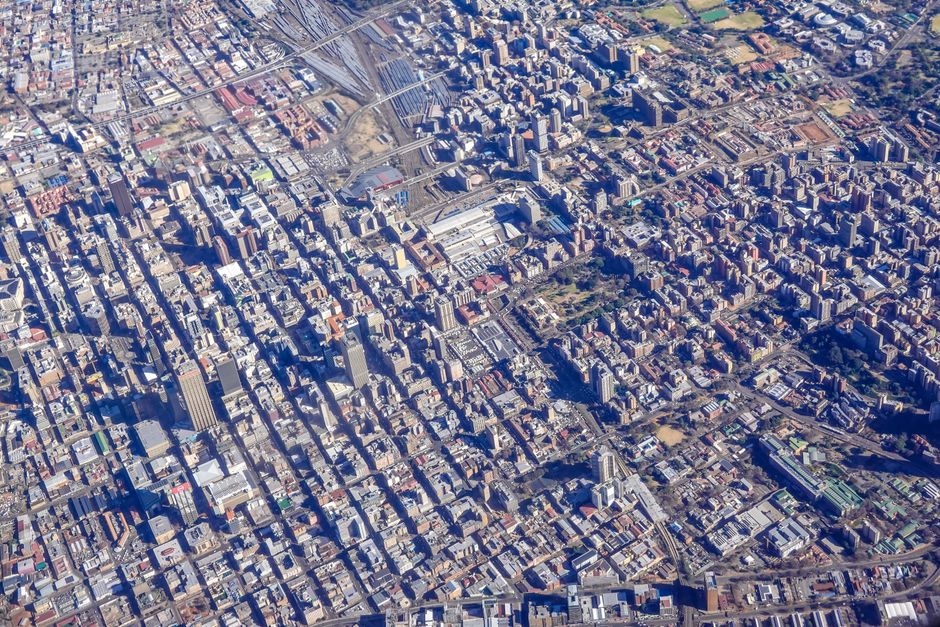
That incident sits inside a broader pattern that community workers say is accelerating. South Africa absorbed an estimated 3.95 million migrants as of the 2023 Community Survey — a figure that Johannesburg's inner city alone accounts for a disproportionate share of, given the density of cheap rentals in Hillbrow, Berea and the Johannesburg CBD. Now, with Gauteng's coalition government between the ANC and the DA struggling to find coherent ground on immigration enforcement, those communities are caught between an understaffed police service and local ward councillors who are themselves facing constituent pressure to act tough on foreigners.
What Johannesburg Is — and Isn't — Doing
The City of Johannesburg's Social Development Department runs a programme called the Migrant Help Desk, which operates out of the Joubert Park government precinct on Plein Street. It was established in 2019 and, at its peak, processed roughly 400 cases a month. Community paralegals working through the Wits Law Clinic say that number has dropped sharply since 2024, partly because funding from the Swiss Agency for Development and Cooperation, which supported a companion legal aid project, was not renewed. Migrants who once had a referral pathway now have very little.
Compare that to Nairobi, where the UN Refugee Agency and the Kenyan Urban Refugee Protection Programme jointly run walk-in centres in Eastleigh and South B that handled over 11,000 cases last year alone. Or São Paulo, where the city government passed Municipal Decree 57,533 in 2016 and has since built a dedicated migrant services network — Casa do Migrante on Rua Glicério being the most prominent — that continues to receive city budget allocations even under fiscal pressure. Johannesburg has no equivalent ring-fenced budget line.
The Scalabrini Centre of Cape Town, which tracks displacement trends nationally, noted in its June 2026 quarterly bulletin that Johannesburg recorded 38 separate incidents of property destruction or physical assault targeting foreign nationals in the first quarter of this year — up from 21 in the same period in 2025. Most incidents were concentrated in Turffontein, Rosettenville and along Jules Street in Malvern.
The Political Fault Lines Making It Harder
The ANC-DA arrangement in Gauteng has not produced the kind of joint provincial-city task team that advocates have been calling for since 2022. The DA, which controls the Johannesburg mayoral committee through Mayor Dada Morero's successor administration, has prioritised what it describes as enforcement of the Immigration Act. The ANC's provincial structures continue to push back against anything that looks like a crackdown, wary of how it plays in townships like Soweto, where Zimbabwean traders are a fixture at the Bara taxi rank and Orlando Ekhaya market but also a source of ongoing resentment among some local vendors.
Meanwhile, the South African Police Service's Johannesburg Central precinct — which covers Hillbrow and Berea — is operating at roughly 68 percent of its authorised personnel complement, according to the SAPS annual report tabled in Parliament in March 2026. Officers are stretched, and community policing forums in those areas have told the Human Rights Commission they lack the capacity to respond to xenophobic incident reports within the recommended 24-hour window.
For migrants on the ground, the practical advice from organisations like the Jesuit Refugee Service South Africa — which maintains a drop-in centre on Harrow Road in Berea — is to document every incident and report to both the SAHRC and the police, even when nothing seems to happen. The SAHRC has subpoena powers and has used them in the past. Migrants are also being urged to register with UNHCR's Johannesburg office on Rissik Street, which can provide protection letters that carry weight with landlords and some local officials. None of that addresses the structural gap. But until the city produces a funded, standalone migrant safety strategy — the kind Nairobi and São Paulo built years ago — it is the best available option.