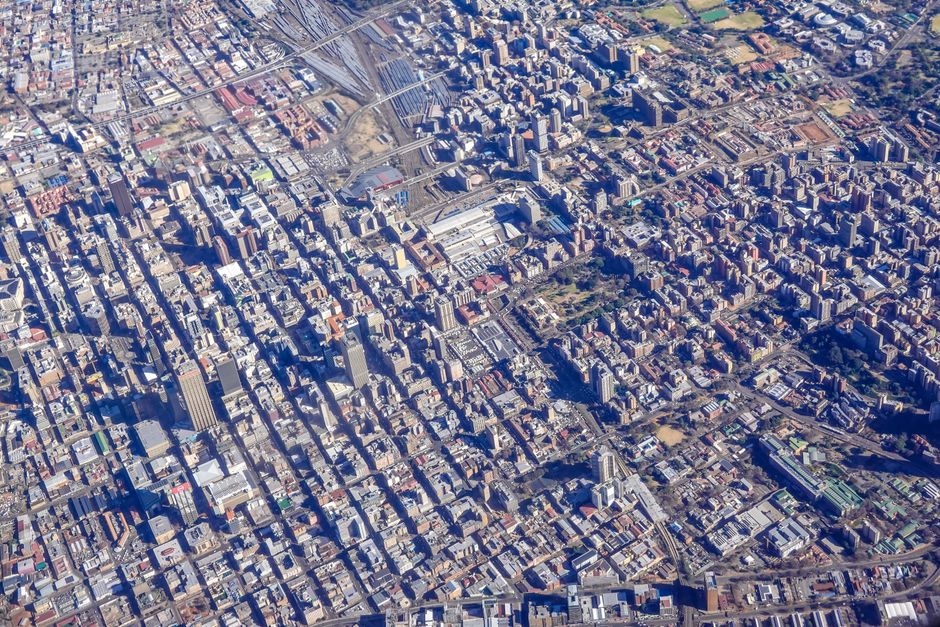
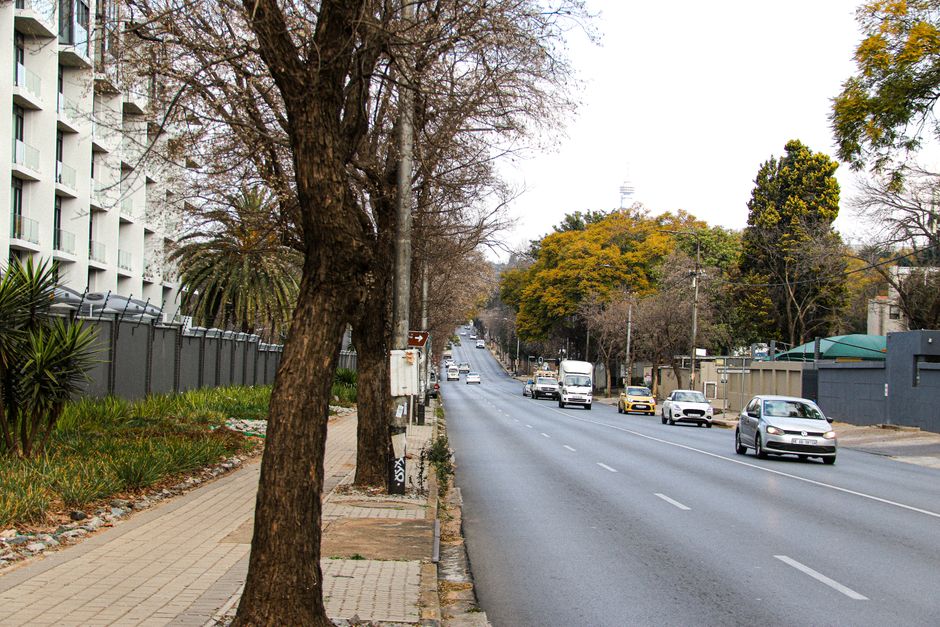
Johannesburg's city government on Thursday formally endorsed a multi-year infrastructure and economic recovery framework valued at R14.2 billion, covering road rehabilitation, water-main replacement and expanded broadband access across all seven administrative regions. The plan, tabled before the Gauteng provincial executive committee this week, targets completion of its first phase by March 2028 and is being held up by coalition partners as proof that the ANC-DA arrangement in the province can actually govern.
The timing is deliberate. With fuel queues stretching around city blocks in Moscow and European capitals absorbing the human cost of record heatwaves — France recorded more than 2,000 excess deaths during its July peak alone — the pressure on major urban centres everywhere to demonstrate resilience has never been more acute. Johannesburg, with a metropolitan GDP estimated at $83 billion and a population pushing 6 million, cannot position itself as a regional financial hub while its arteries crumble.
What the Plan Actually Commits To
The framework identifies Sandton's Katherine Street interchange, the M1 south corridor through Doornfontein, and the Soweto Highway extension near Meadowlands as priority road projects. The City of Johannesburg's infrastructure directorate has also ring-fenced R2.1 billion specifically for the Johannesburg Water entity to replace an estimated 420 kilometres of asbestos-cement piping laid before 1970 — pipe that has been rupturing at a rate of roughly 30 major breaks per week across the south of the city.
On public transport, the Joburg Metrorail reform programme — a joint initiative between the City, the Gauteng provincial government and the Passenger Rail Agency of South Africa — commits to returning 42 additional train sets to active service on the Central Line by December 2026. The Central Line, which links Park Station in the CBD to Soweto's Chris Hani station, has been running at under 30 percent capacity since the height of cable theft and vandalism in 2022. The Rea Vaya Bus Rapid Transit system is separately earmarked for a fleet expansion of 68 articulated buses, with routes extended into Johannesburg South communities including Turffontein and Eldorado Park that have had no formal transit link since 2019.
How Joburg Measures Up
Urban infrastructure analysts who track African and Latin American cities draw an instructive comparison with Bogotá, Colombia, which executed a comparable debt-funded recovery programme after its COVID-era fiscal collapse. Bogotá allocated roughly $2.4 billion between 2021 and 2024 specifically to road and transit infrastructure and managed to cut commute times on its TransMilenio BRT network by 18 percent within three years. Nairobi's Nairobi Metropolitan Services programme, launched in 2020, delivered 494 kilometres of road repairs in 24 months, though critics noted that maintenance funding dried up almost immediately after the initial construction phase.
Lagos presents a starker contrast. Africa's largest city by population has repeatedly announced multi-billion-naira infrastructure packages since 2015, but the World Bank's 2025 Urban Infrastructure Index ranked Lagos 138th globally on infrastructure delivery efficiency, citing chronic gaps between budget announcements and actual disbursement. Johannesburg sits at 97th on the same index — meaningfully better, though still well behind Casablanca at 61st and Accra at 84th.
The R14.2 billion figure also needs context. The City of Johannesburg's own infrastructure maintenance backlog was independently assessed in a January 2026 audit commissioned by the Gauteng treasury at R38 billion. That means the new framework, even fully executed, addresses just over a third of the identified gap.
Migration from Zimbabwe and Mozambique continues to add roughly 80,000 residents annually to informal settlements in areas like Diepsloot and Ivory Park, places where the new framework's Phase One commitments are largely silent. Community organisations in those areas, including the Diepsloot Development Forum, have flagged that water and road upgrades concentrated in the formal city core risk entrenching a two-speed urban economy.
Phase One project tenders are expected to go to public procurement by September 2026. Residents tracking progress can access the City of Johannesburg's open capital expenditure dashboard at the Civic Centre on Braamfontein's Loveday Street, where ward-level spend data is updated monthly.