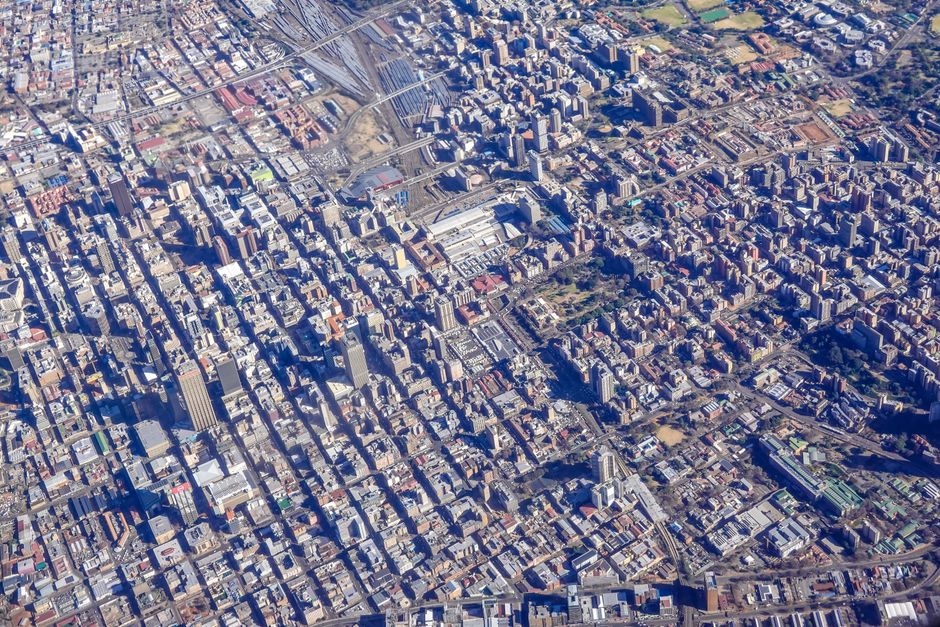
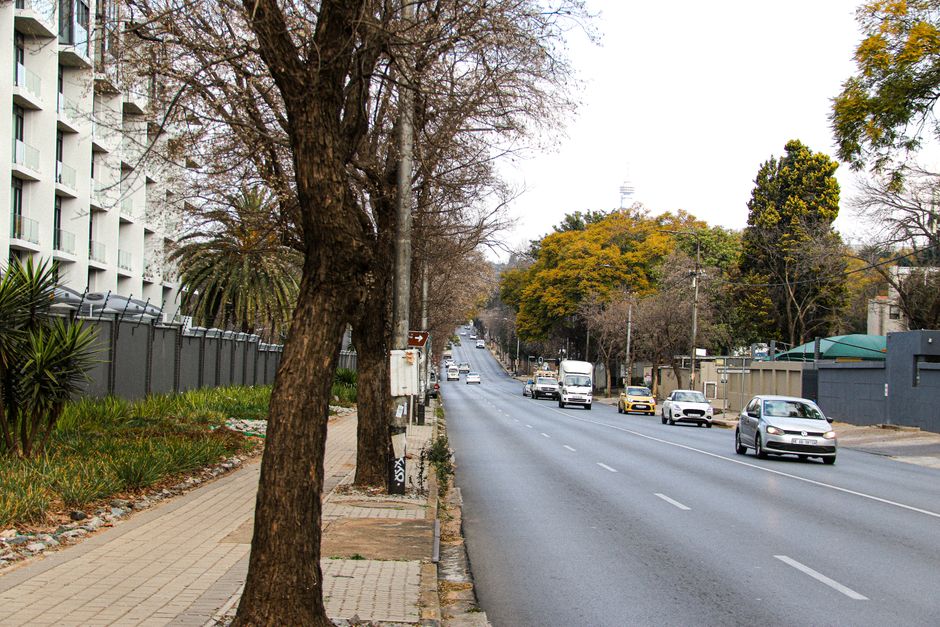
The formal economy largely abandoned Hillbrow decades ago. Banks closed branches. Retailers pulled out. Yet on Pretoria Street on a Thursday morning, R2-million worth of produce, airtime, secondhand clothing and cooked food changes hands before noon — most of it unregistered, untaxed and entirely keeping families fed. Estimates from the Johannesburg inner-city management body, the Inner City Partnership, put the number of residents in the Hillbrow-Berea-Joubert Park corridor above 200,000, making it one of the densest urban zones on the African continent.
The timing matters. South Africa's national unemployment rate sat at 32.9 percent in the first quarter of 2026, according to Statistics South Africa, and Gauteng's ANC-DA coalition government is under pressure to show economic results ahead of the 2027 local government cycle. Load shedding, though reduced since Eskom's Stage 2 average in late 2025, still disrupts formal retail hours in the inner city. That pressure pushes more people — many of them recent arrivals from Zimbabwe and Mozambique — into street trading, informal rentals and mobile money businesses that need no grid connection to function.
Joburg's Approach: Tolerance With Friction
The City of Johannesburg's current posture toward the informal economy is best described as managed ambivalence. The Expanded Public Works Programme funds some street-trader support through the Joburg Market in City Deep, where wholesale prices for fresh produce reach informal vendors before dawn. The city's Informal Trading Policy, last formally updated in 2009, still theoretically designates trading zones — but enforcement is inconsistent along Claim Street and across the Bree Street taxi interchange, where vendors operate in corridors the municipality has never officially demarcated.
The Social Housing Regulatory Authority has committed R480 million to refurbish buildings in the inner-city precinct through 2027, but critics, including housing advocacy group Ndifuna Ukwazi's Joburg affiliate, argue the pipeline favours above-R3,500-per-month rental brackets that price out current Hillbrow residents earning informal incomes of between R4,000 and R7,500 a month. The result: upgraded buildings, displaced tenants, and the same street economy reconstituting itself one block further east.
What Other Cities Show — and What Joburg Can Take From It
Lagos runs the closest parallel. Nigeria's commercial capital counts roughly 300,000 street traders in its Lagos Island and Oshodi corridors alone, and the Lagos State government shifted in 2023 toward a licensing model that charges traders N5,000 per quarter — approximately R120 — in exchange for designated pitches and access to a mobile payment system linked to the Lagos Internal Revenue Service. Early data from the scheme's first 18 months showed a 22 percent increase in formalised trader registration in the Oshodi-Isale area, without displacing existing operators.
Nairobi tried a harder line. The Nairobi Metropolitan Services attempted mass evictions of Gikomba Market vendors in 2022 and 2024, both times triggering legal challenges from the Kenya Human Rights Commission. Traders returned within weeks. The evictions cost the city an estimated KSh 180 million in enforcement and litigation and produced no lasting change in the market's footprint.
Joburg sits somewhere between those two models, closer to Nairobi's friction than Lagos's pragmatism, according to researchers at the South African Cities Network, whose 2025 State of Cities report flagged the inner Joburg informal sector as structurally unintegrated despite generating an estimated R6.8 billion annually in economic activity within a 5-kilometre radius of Park Station.
What happens next likely depends on whether the Joburg metro administration uses the R1.2 billion Neighbourhood Development Partnership Grant, allocated to inner-city precincts for the 2026-27 financial year, to build infrastructure that serves traders rather than displaces them. Practically, that means covered trading stalls with electrical points on Kotze Street, formalised pitch registration that does not require a fixed address, and mobile sanitation facilities that already exist on paper in the 2024 Inner City Regeneration Charter but have not been tendered. The street economy will not wait for the paperwork to catch up. It never has.