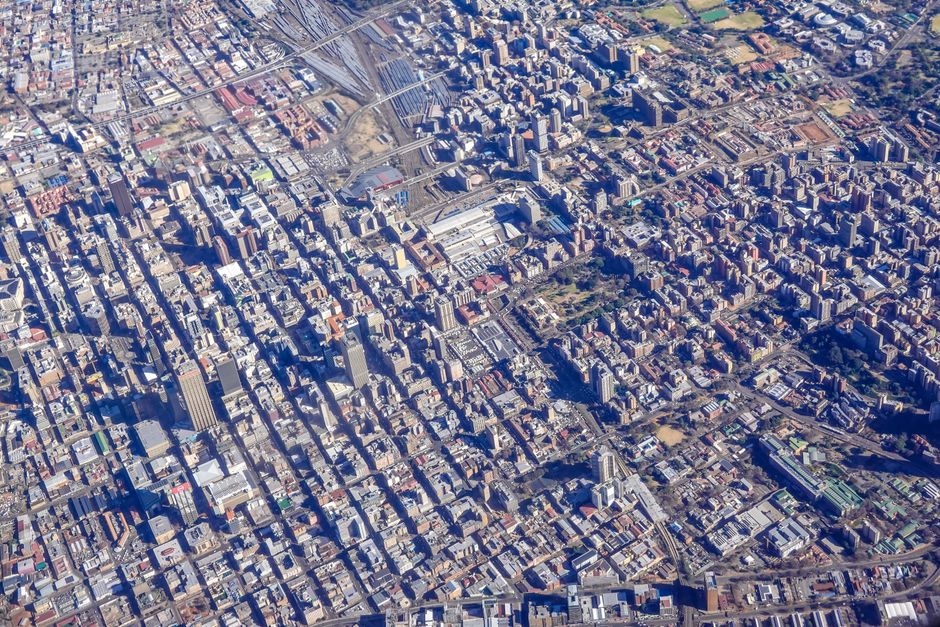
The City of Johannesburg's housing committee met for the third time this year without agreeing on a single new affordable unit target, and the consequences of that deadlock are landing squarely on the roughly 500,000 households the city classifies as living in inadequate or informal shelter. This week, ANC councillors publicly rejected a DA-backed proposal to fast-track private-sector partnerships under the Urban Development Zone incentive framework — a scheme that would have opened tax concessions to developers willing to build rental stock priced below R6,500 a month in designated inner-city precincts.
The timing is not accidental. Gauteng's provincial government is under pressure to show measurable housing delivery before the 2026 municipal budget cycle closes in August. The coalition that has governed the province since 2024 is increasingly strained, and housing — always a politically combustible file — has become the fault line both parties are using to draw distance from each other ahead of positioning for 2027 elections.
Why This Matters on the Ground in Alexandra and Soweto
Talk to anyone renting a backyard room in Alexandra's 10th Avenue corridor and the numbers tell the story fast. A single-room structure with shared ablutions was fetching R2,800 a month in 2023. The same room now averages R4,200, according to data compiled by the Inner City Resource Centre in their June 2026 rental tracking survey. That is a 50 percent jump in three years, against a national CPI increase of roughly 18 percent over the same period.
In Soweto, the Johannesburg Social Housing Company — known as JOSHCO — has a waiting list of approximately 34,000 applicants for units across its 14 managed complexes, including the Kliptown precinct near the Walter Sisulu Square precinct. The organisation confirmed to The Daily Johannesburg that it expects to open no new units before the first quarter of 2027 at the earliest, citing stalled budget transfers from the City. Meanwhile, the City's own Corridors of Freedom urban renewal programme, which was designed to link affordable housing nodes along the Louis Botha Avenue and Empire-Perth Road corridors, has delivered fewer than 1,200 residential units since the programme was relaunched under its current framework in 2021 — well short of the 10,000-unit target set for this decade.
Foreign nationals, many of them Zimbabwean and Mozambican migrants concentrated in areas like Bertrams and Hillbrow, are particularly exposed. They are largely excluded from social housing waiting lists and have few legal protections against the informal landlords who dominate supply in those precincts. Advocacy groups including Lawyers for Human Rights flagged in a May 2026 report that eviction disputes in the Johannesburg CBD had increased by 27 percent year-on-year.
What Happens Next — and What Residents Should Know Now
The city council is scheduled to table a revised housing delivery framework on July 22. If adopted, it would set a binding target of 7,500 new affordable units by December 2028 and require any developer accessing City-owned land in the Wynberg industrial node and the Turffontein regeneration zone to allocate at least 30 percent of units at below-market rentals. Whether the coalition can hold together long enough to pass the framework is an open question — but the vote will be one of the clearest signals yet of how functional the ANC-DA arrangement actually is when financial trade-offs are on the table.
For residents currently on JOSHCO waiting lists, the Inner City Resource Centre advises keeping all application documentation updated and resubmitting proof of income annually, since outdated files are the most common reason applications are deprioritised. Residents facing eviction in the CBD can contact the Johannesburg Legal Aid Clinic on Rissik Street, which has extended its housing dispute walk-in hours to Saturdays through September 2026. The practical reality is that the political fight will outlast this budget cycle. The housing shortage won't.