Cost of Living in Johannesburg 2026: Australian Expat Guide
Johannesburg offers Australian expats strong value and professional opportunity in Africa's economic hub. Here is what it actually costs to live in Johannesburg in 2026.
Accommodation
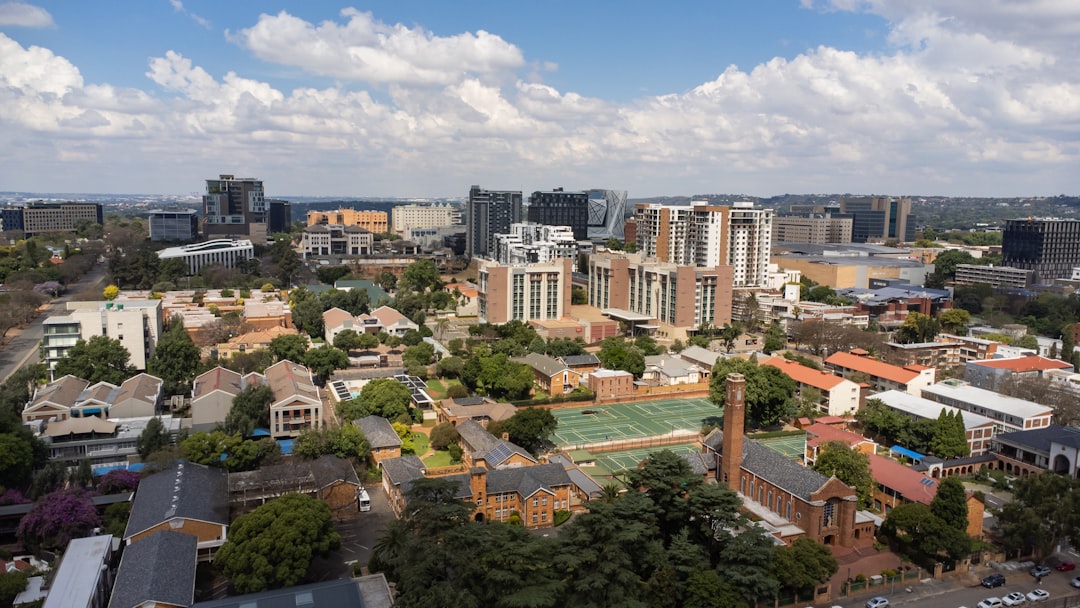
Johannesburg's expat community is heavily concentrated in the northern suburbs — Sandton (the financial centre, home to the JSE, major corporate headquarters, and the premier shopping destination of Sandton City), Rosebank, Melrose, Hyde Park, Illovo, and the newer gated developments of Fourways, Dainfern, and Waterfall. Security is the dominant consideration in housing choice; most expats live in security estates (gated and access-controlled communities with 24-hour guards, electrified perimeter fencing, and security cameras), sectional title apartment complexes with active security, or houses in boomed-off roads. A furnished 2-bedroom apartment or townhouse in Sandton, Rosebank, or Melrose costs approximately ZAR 18,000-30,000 per month (approximately AUD 1,350-2,250); a larger house in a security estate in Fourways or Dainfern costs ZAR 25,000-45,000 per month. Armed response subscriptions (approximately ZAR 700-1,200 per month) are standard for all residential properties.
Load Shedding and Infrastructure
Load shedding — Eskom's system of rotational power blackouts introduced in 2008 and continuing into 2026 in reduced form — is the most significant infrastructure issue for Johannesburg expats. At its worst (Stage 6 in 2022-2023), households faced up to 12 hours without power per day. The situation improved significantly through 2024-2025 as private solar generation expanded; however, most premium expat properties now have solar panels, inverter backup systems, or diesel generators, and these represent either landlord-provided infrastructure (in premium security estates) or an additional setup cost (ZAR 30,000-100,000+ for a quality home solar and battery system). Water supply interruptions (not as severe as Cape Town's 2018 Day Zero crisis but present as a risk) require similar contingency planning.
Groceries, Eating Out and Transport
Food costs are very favourable for Australians. Woolworths Food (the upscale supermarket, unrelated to the Australian chain), Pick n Pay, and Checkers stock comprehensive ranges; a weekly grocery basket costs approximately ZAR 1,000-1,800 (approximately AUD 75-135). South African wines are outstanding and inexpensive — excellent bottles from the Winelands cost ZAR 100-250 (approximately AUD 7.50-19) at retail. Restaurant meals range from cheap (a traditional South African braai at a casual restaurant costs ZAR 150-250) to mid-range (fine dining in Sandton and Rosebank ZAR 400-700 per person). Private security-escorted transport or Uber (which operates safely in Johannesburg's northern suburbs) is the practical transport mode; Johannesburg's public transport is not suitable for most expats.
South African Visas for Australian Expats
The same visa options as Cape Town apply — Critical Skills Visa for professionals, General Work Visa (employer-sponsored), and 90-day visa-free tourism entry for Australians. The South African government has periodically introduced (and delayed) a Digital Nomad Visa; verify current status with the Department of Home Affairs. South Africa's immigration bureaucracy is notoriously slow; starting visa applications with lead time of several months is essential.
Typical Monthly Budget for an Australian Expat in Johannesburg
A single Australian professional in Sandton or Rosebank should budget approximately AUD 3,500-5,500 per month for a secure and comfortable lifestyle: rent AUD 1,400-2,200, food and restaurants AUD 600-900, transport (Uber-dominant) AUD 250-400, health insurance (international medical insurance) AUD 200-350, security subscriptions AUD 60-100, utilities AUD 100-200, entertainment AUD 300-500, personal expenses AUD 200-350. Johannesburg delivers strong value versus Sydney at these cost levels.
This article was compiled by AI and screened before publishing. See our editorial standards.