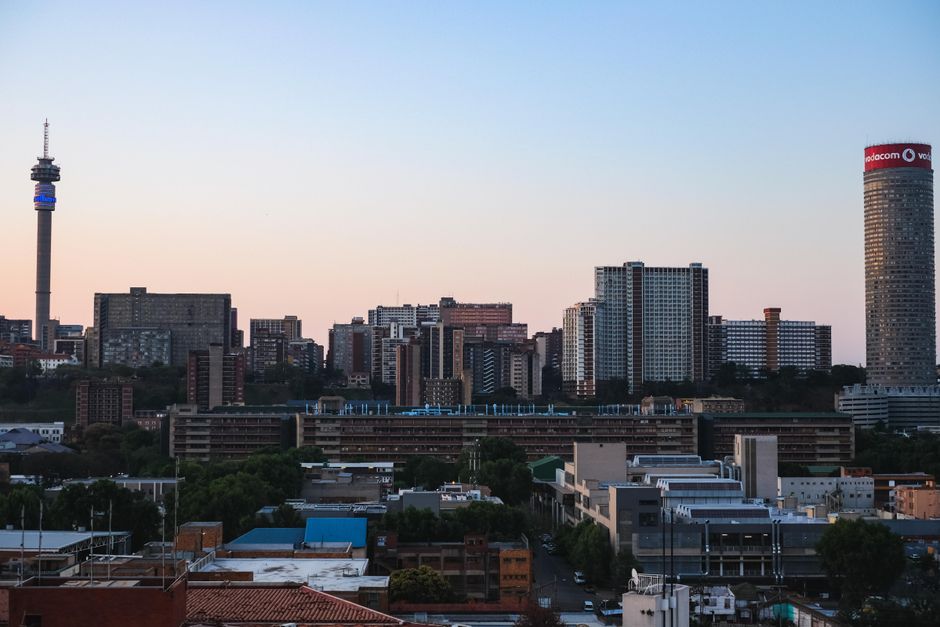
Johannesburg's commercial property market is sending mixed but readable signals to investors willing to decode them. After three years of uncertainty, the office sector is stabilizing—but not uniformly across the city, and that's the story worth watching.
Recent data from the South African Property Owners Association shows office vacancies in Sandton holding steady at around 13%, while the broader Johannesburg CBD has seen modest uptick to 18%. These aren't crisis figures, but they matter. They indicate where capital is flowing and where it's retreating.
The Sandton corridor—from Grayston Drive through to the Michelangelo precinct—continues to absorb institutional investment. Average rental rates hover around R210 per square metre annually for Grade A space, a figure that reflects both stability and selective demand. Several multinational financial services firms have renewed or expanded leases in the area over the past eighteen months, suggesting confidence in high-specification office infrastructure.
Contrast this with the Rosebank and Illovo nodes. Once secondary markets, these neighbourhoods are now attracting a different investment profile entirely. Younger tech companies and creative sector businesses are driving demand for smaller floorplates at R155-R180 per square metre. This isn't displacement from Sandton; it's segmentation. Capital is stratifying by tenant profile, not by distress.
The broader economic indicators validate this picture. South Africa's prime lending rate has remained relatively stable, and while GDP growth remains modest, corporate profit margins in financial services and professional services have improved slightly year-on-year. This matters because these sectors occupy roughly 45% of Johannesburg's Grade A office stock.
Foreign direct investment flows tell another story. Capital from African financial hubs—particularly Lagos and Nairobi—has increased inquiries for Johannesburg office space, signalling renewed confidence in South Africa as a regional financial centre. This contrasts sharply with the period between 2022 and 2024, when international investor attention had substantially diminished.
What should Johannesburg's property stakeholders extract from these signals? First, the market is re-segmenting by quality and tenant type rather than collapsing uniformly. Second, capital remains available for well-positioned assets in established nodes. Third, emerging secondary nodes are finding their investment niche—not as fire-sale destinations, but as efficiency plays for different user categories.
For investors and occupiers alike, the message is clear: the city's commercial property market isn't recovering uniformly, but it is recovering intelligently. Reading where money actually flows—not where sentiment suggests it should—remains the most reliable economic indicator available.
This article was compiled by AI and screened before publishing. See our editorial standards.