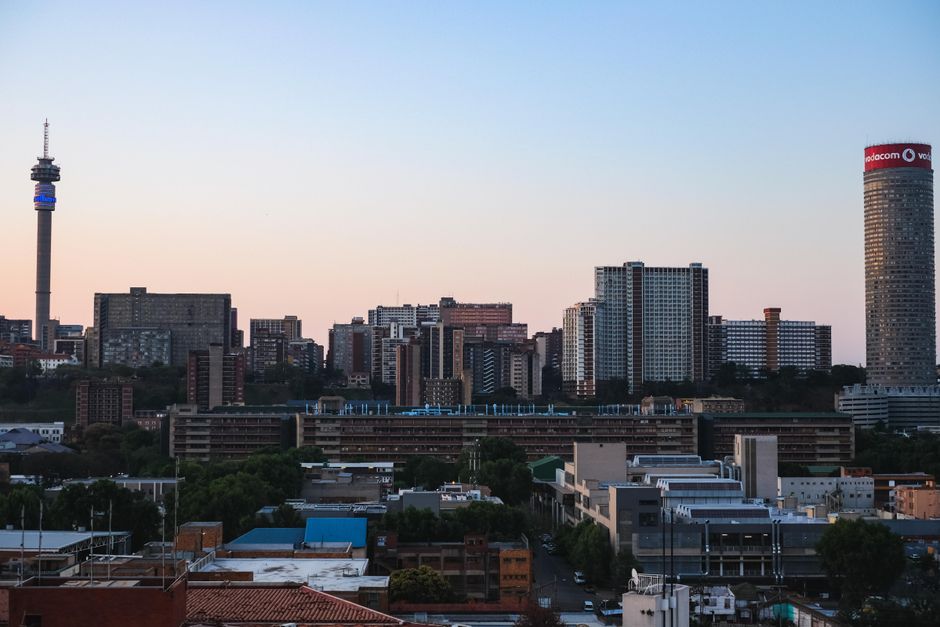
For decades, Johannesburg's role in global commerce has been largely defined by what flows out of the mines and into the world. But 2026 is rewriting that script. As political upheaval in the Middle East forces shipping companies to reroute cargo away from traditional maritime passages, and US-Iran tensions reshape trade patterns, Johannesburg is emerging as a critical logistics and redistribution hub for goods heading to and from Asia, Europe, and beyond.
The opportunity is tangible. Container volumes through the Port of Durban—Johannesburg's primary access point to international shipping—have surged 23% year-on-year, according to maritime logistics analysts. That surge is translating into pressure on warehousing, transport, and customs brokerage across the Johannesburg metropolitan area, particularly in Isando, where the city's industrial heartland converges with major freight corridors.
Early winners are clear. Logistics firms operating from business parks in Midrand and Sandton are reporting backlogs of 40-60 days for container processing—a stark contrast to the 14-day average from two years ago. One consequence: rental rates for warehouse space in Isando have climbed 18% since January. Smaller operators are struggling to find affordable facilities; larger, well-capitalised firms are securing long-term leases at premium rates.
The shift extends beyond warehousing. Trade finance specialists in Johannesburg's financial district are fielding unprecedented volumes of letters of credit for re-export businesses. Import-export agents working from offices along Commissioner Street report new client inquiries daily from companies in Europe and Asia seeking to establish local distribution networks.
What's driving the shift? Geopolitical fragmentation is making traditional Suez Canal routing riskier and costlier. Shippers are increasingly willing to absorb longer transit times if it means avoiding hotspots. Southern Africa's political stability—relative to regional comparators—is suddenly an asset. Johannesburg, with its established banking infrastructure, customs expertise, and transport networks, is positioned to intermediate goods that might previously have moved directly between origin and destination.
But the window may not stay open indefinitely. As tensions ease or resolve, routing patterns could normalise. Smart operators are using this moment to build relationships, expand capacity, and establish themselves as irreplaceable nodes in reconfigured supply chains.
For Johannesburg's business community, the lesson is straightforward: sometimes upheaval abroad creates clarity at home. The question now is whether local firms can move fast enough to capture what may prove a temporary but lucrative advantage.
This article was compiled by AI and screened before publishing. See our editorial standards.