Johannesburg (Joburg or Jozi), South Africa's largest city and economic powerhouse, provides one of Africa's most complex and rewarding photography environments: the history of apartheid, the resilience of township culture, the explosion of creative energy in the post-apartheid city, and the extraordinary natural landscape of the Highveld plateau create a photographic richness that rewards photographers prepared to engage seriously with the city's layered narrative. Here are the best photography spots in Johannesburg for 2026.
Apartheid Museum: Documentary Interior Photography
The Apartheid Museum (Gold Reef City precinct, south of the CBD), the comprehensive documentary museum of apartheid South Africa built on the site of the old Gold Reef City amusement park, provides one of the world's most powerful documentary photography environments: the museum's architectural design uses the physical experience of apartheid (visitors are randomly assigned either a "white" or "non-white" entry path at the entrance, leading through physically different exhibits) to create an immersive experience of the apartheid system. The museum's photographs — the 7 pillars of the South African Constitution installation, the Mandela archive gallery, the hanging nooses exhibit — are among the most powerful documentary photography environments in any museum in the world. Photography is permitted throughout the museum.
Soweto: Orlando Towers and Vilakazi Street
Soweto (South Western Townships), the historically significant township of 1.3 million people southwest of Johannesburg, provides two of South Africa's most photogenic neighbourhood locations: the Orlando Towers (the decommissioned coal power station cooling towers, now painted with street art murals and used as a bungee jump/abseiling tourist attraction), and Vilakazi Street in Orlando West (the only street in the world to have housed two Nobel Peace Prize winners: Nelson Mandela at number 8115 and Archbishop Desmond Tutu). Soweto is safely visited with a licensed guide from the Johannesburg CBD; township photography requires sensitivity and permission when photographing individuals in their neighbourhood environment.
Maboneng Precinct: Creative Urban Photography
The Maboneng Precinct (Xitsonga for "place of light"), the pioneering post-industrial creative district in inner-city Johannesburg (bounded by Fox Street and Main Street in the Jeppestown neighbourhood), provides Johannesburg's finest street photography and creative culture documentation: the converted warehouses housing galleries, design studios, restaurants, and apartments, the Arts on Main building's weekend market (Saturday and Sunday, 9am-3pm), and the Maboneng street art murals provide a visual portrait of post-apartheid South African creative energy. The Sunday market in the Arts on Main courtyard provides the most photogenic environment, with live music, food vendors, and a diverse Johannesburg crowd in a converted heritage warehouse.
Constitution Hill: Old Fort Prison Photography
Constitution Hill (Hillbrow, adjacent to the Constitutional Court of South Africa), the former Johannesburg Prison complex (the Old Fort, 1892; Number Four, the black male prisoner section) where both Gandhi and Mandela were imprisoned, provides one of South Africa's most emotionally powerful photographic environments: the preserved prison cells, the punishment yard, the graffiti scratched by prisoners into the cell walls, and the contrast with the bright Constitutional Court building (which incorporates elements of the old prison architecture in its design) create a photography experience of profound historical resonance. The site is open Monday-Saturday 9am-5pm; photography is permitted throughout.
Gold Reef City Mine: Highveld Industrial Heritage
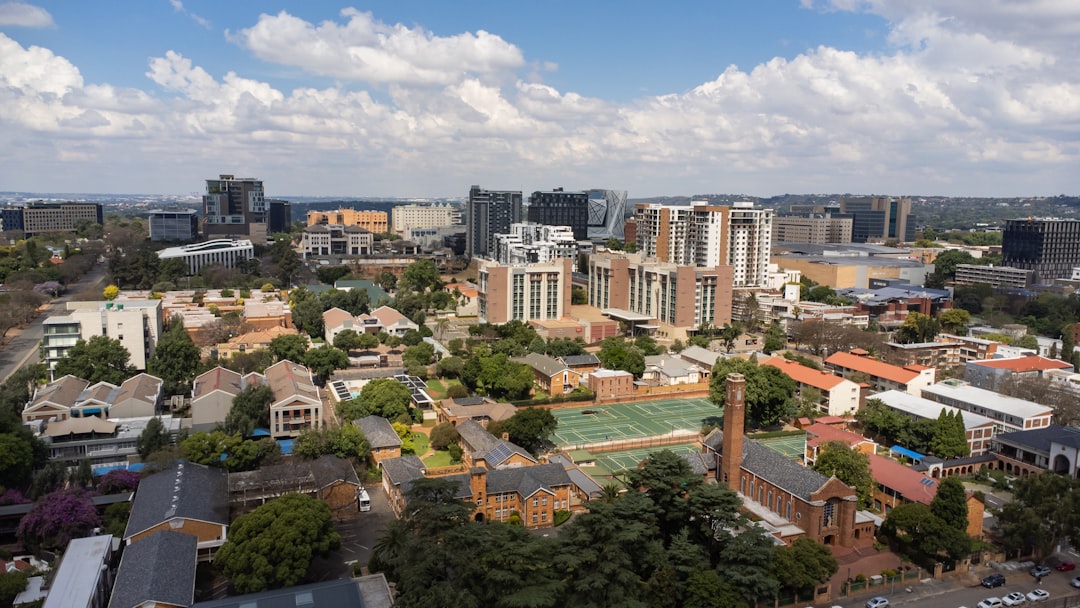
The Gold Reef City Crown Mine area (the surviving headgear and mine infrastructure of the original Witwatersrand gold mine that triggered the 1886 Johannesburg gold rush) provides a unique industrial heritage photography subject on the Highveld plateau: the massive wooden and steel mine headgears, the corrugated iron mine buildings, and the flat Highveld horizon with the Johannesburg CBD skyline in the distance (the cluster of skyscrapers rising above the flat plateau is one of southern Africa's most distinctive skylines) create a composition of industrial and urban history unique to South Africa.
Practical Photography Tips
Johannesburg's personal safety situation requires that photography be planned with security awareness: the CBD, Soweto, and inner-city areas are best visited with a licensed guide or in an organised group. The Highveld's altitude (1,753 metres) means the UV radiation is significantly stronger than at sea level; lens hoods and UV filters are advisable. Johannesburg's thunderstorm season (October-April) provides dramatic afternoon storm-light photography with the flat Highveld horizon allowing the full storm cell to be photographed from a safe distance.
This article was compiled by AI and screened before publishing. See our editorial standards.